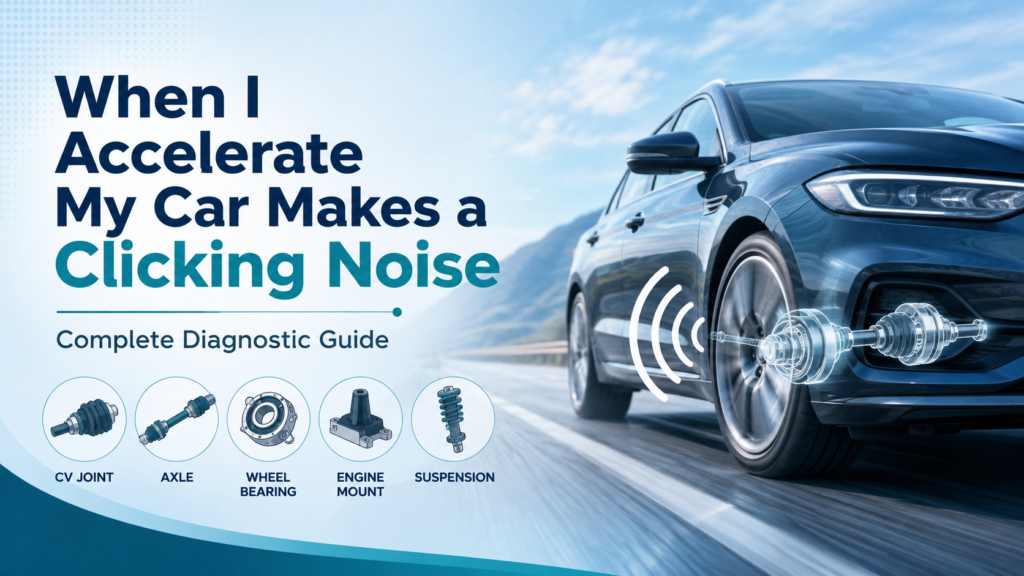
When your car makes a clicking noise during acceleration, the most common culprit is a failing outer Constant Velocity (CV) joint on front-wheel-drive vehicles. However, if the clicking aligns with engine speed rather than vehicle speed, the issue is likely low engine oil causing collapsed valve lifters or an exhaust manifold leak.
Key Facts / At a Glance
- CV joints cause a rhythmic click that speeds up with the vehicle and worsens during sharp turns.
- Valve lifter tick matches engine RPMs directly and usually indicates low or severely degraded engine oil.
- Exhaust leaks create a snapping, clicking sound that is loudest on a cold engine and often fades as the metal heats up.
- A clicking CV axle requires total replacement averaging $1,114 to $1,295.
- Ignoring a clicking axle can lead to catastrophic suspension failure at highway speeds.
Why Does My Car Click Under Acceleration?
Because a “click” can mean different things, isolating the trigger condition is the fastest way to find the root cause. This interactive tool helps filter the mechanical possibilities based on your driving conditions.
1. Drivetrain Failures (The CV Axle)
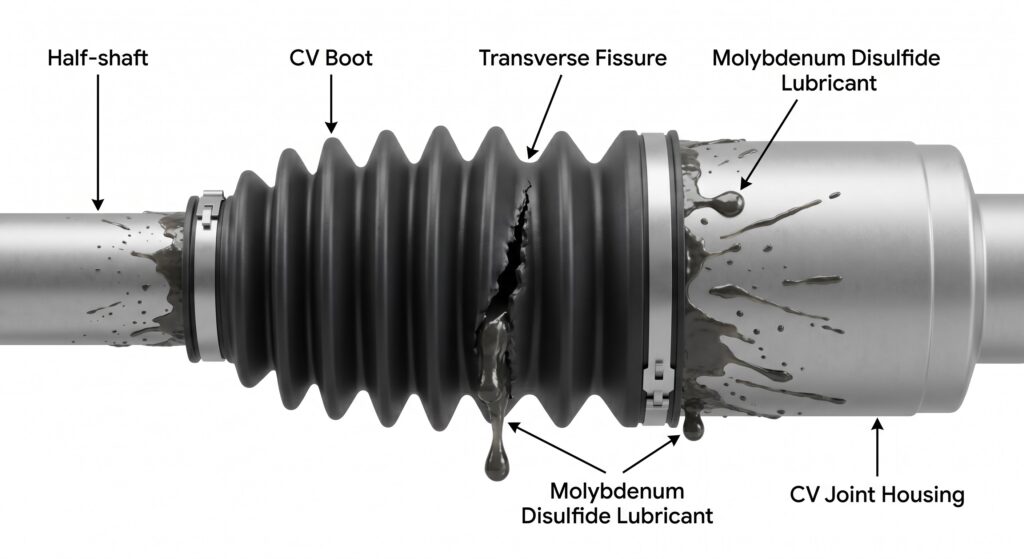
The Constant Velocity (CV) axle transfers rotational power from your transmission to your drive wheels. The outer CV joint relies on a cage holding six steel bearings that roll along precision-machined grooves, allowing the wheels to pivot for steering while rotating at a constant speed.
When the protective rubber boot tears, the heavy-duty molybdenum grease escapes. Dirt and grit enter the unsealed environment, grinding away the metal tracks. Under acceleration especially while turning the steel balls bind in these worn grooves and violently release, producing a sharp, metallic clicking.
How Do I Test for a Failing CV Joint?
You can isolate a bad CV joint using the “Empty Lot Test.” Find a clear parking lot, roll down your windows, and execute slow, tight circles in both directions while gently pressing the gas pedal. If the car clicks loudly while steering left, the right outer joint is failing, as the load shifts to the outside wheel.
Safely lifting the vehicle and inspecting the area behind the wheel hub will usually reveal a torn rubber accordion boot actively leaking thick, dark grease onto your suspension components.
How Much Does a CV Axle Replacement Cost?
The average cost to replace a CV axle is between $1,114 and $1,295, with independent shops typically offering better rates than dealerships. Parts alone run between $914 and $1,001 for a complete assembly. While mechanics can technically replace just the torn rubber boot for $404 to $520, it is almost always more reliable to replace the entire axle assembly because the internal joint is likely already damaged by road grit.
2. Engine Valvetrain & Lubrication (Lifter Tick)
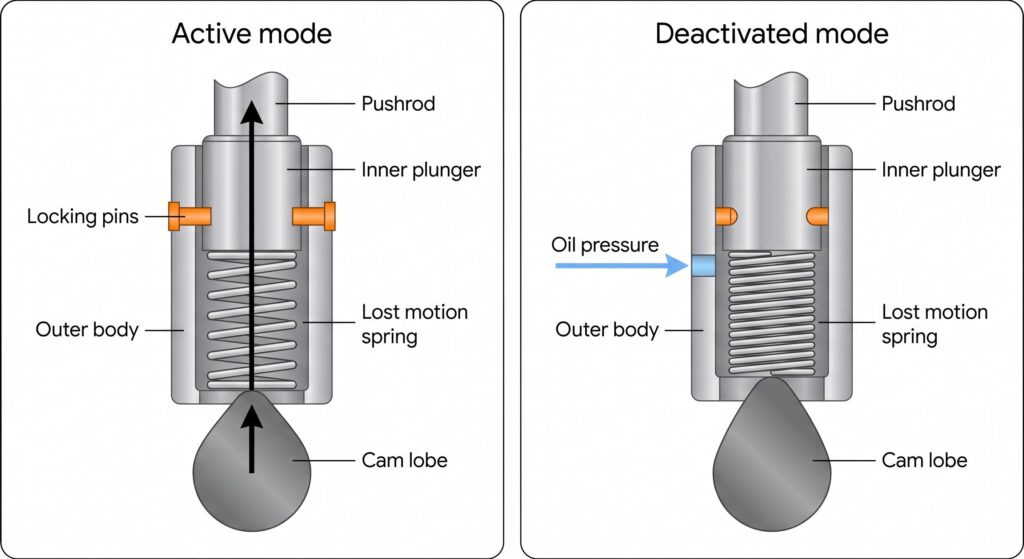
The top end of your engine uses hydraulic lifters sitting directly between the spinning camshaft and the valves. These cylinders fill with high-pressure engine oil to eliminate microscopic gaps in the valvetrain.
When oil levels drop or sludge blocks the pinhole channels, the lifters lose pressure and collapse. This leaves physical slack in the system, forcing the hard metal camshaft lobes to snap against the un-cushioned valves.
How Do I Know if It’s Lifter Tick?
Perform the “RPM Match Test.” Park the car in neutral and gently rev the engine while listening closely. If the fast, metallic “tap-tap-tap” scales cleanly up and down with engine speed regardless of whether the car is moving, the issue is inside the engine bay.
Always check your oil dipstick first. If the tip is dry or below the minimum line, immediately add the manufacturer-specified synthetic oil. A basic oil top-off runs $30 to $80, whereas replacing physically dead hydraulic lifters requires camshaft removal and costs upwards of $1,200.
3. Exhaust Manifold Leaks
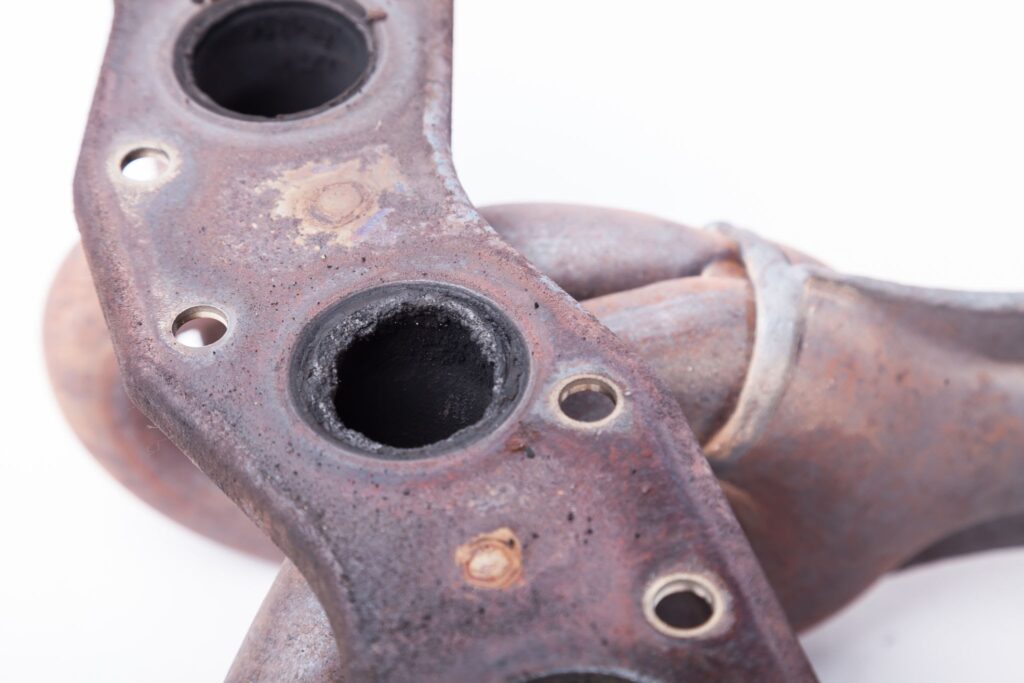
The exhaust manifold collects spent combustion gases from the engine cylinders. Because this heavy metal part cycles between freezing ambient temperatures and scorching operating heat, it suffers brutal thermal expansion. Over time, the cast iron manifold can warp, crack, or snap its mounting bolts.
When you accelerate under load, high-pressure exhaust bursts escape through the tiny crack. This generates a sharp, snapping “click” or puffing sound that strongly mimics a mechanical metal tick.
Can I Drive With an Exhaust Leak?
You should not drive long-term with an exhaust manifold leak. While it seems like just an annoying noise, the escaping gases can interfere with your engine’s air-to-fuel ratio, resulting in reduced fuel economy and poor acceleration. Furthermore, toxic carbon monoxide fumes can enter the cabin.
To confirm an exhaust leak, listen to the engine during a cold morning start. An exhaust leak is usually loudest when cold and often fades after 5 to 10 minutes because the metal manifold expands as it heats up, temporarily sealing the crack.
4. The Often Overlooked Culprit: Wheel & Tire Area
Before spending thousands on drivetrain or engine diagnostics, rule out the simplest and cheapest issues located directly on your wheels.
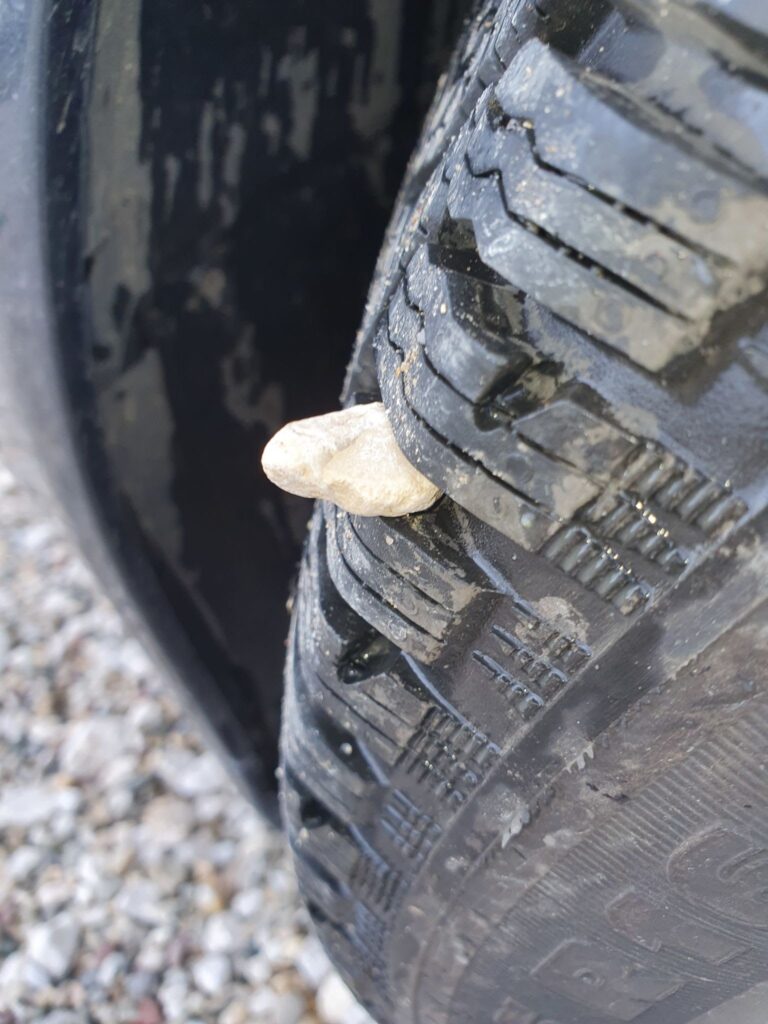
A large rock, screw, or nail stuck in the deep tread of your tire will strike the pavement once per revolution. This creates a distinct, rhythmic ticking that speeds up exactly with the vehicle but disappears entirely when you come to a stop. Visually inspect all four tires by rolling the car forward slowly. Similarly, loose lug nuts or a rattling brake heat shield can cause a metallic click when you first apply the throttle over bumps.
Frequently Asked Questions
Is it safe to drive with a clicking CV joint?
No. Driving long-term on a clicking CV joint is a major safety risk. If the structural bearing cage shears completely at highway speeds, the axle spins freely, instantly cutting power to that wheel and potentially destroying nearby brake lines or suspension components.
Why does my modern engine click even when it’s healthy?
Modern Gasoline Direct Injection (GDI) engines use high-pressure fuel injectors. These injectors fire rapidly and create a distinct, almost diesel-like ticking or clicking sound under the hood. This is normal operating behavior and does not require repair.
Does my warranty cover a broken CV axle?
Virtually all powertrain warranties, whether from the original manufacturer or an extended warranty company, include coverage for drive axles as long as the part hasn’t totally failed due to extreme neglect.
What is the difference between an exhaust leak and a lifter tick?
Lifter tick is a sharp, metallic tapping coming from the top of the engine that persists until oil pressure normalizes. An exhaust leak sounds more like rhythmic air puffing coming from the side or bottom of the engine, and it often disappears entirely once the engine warms up and the metal expands.
To see what a failing exhaust system actually sounds like under load, check out this diagnostic breakdown: CAR HAS TICKING SOUND NOISE WHEN ACCELERATING OR REVVING UP. This video provides excellent audio examples of the clicking noises created by exhaust manifold pressure leaks during acceleration.