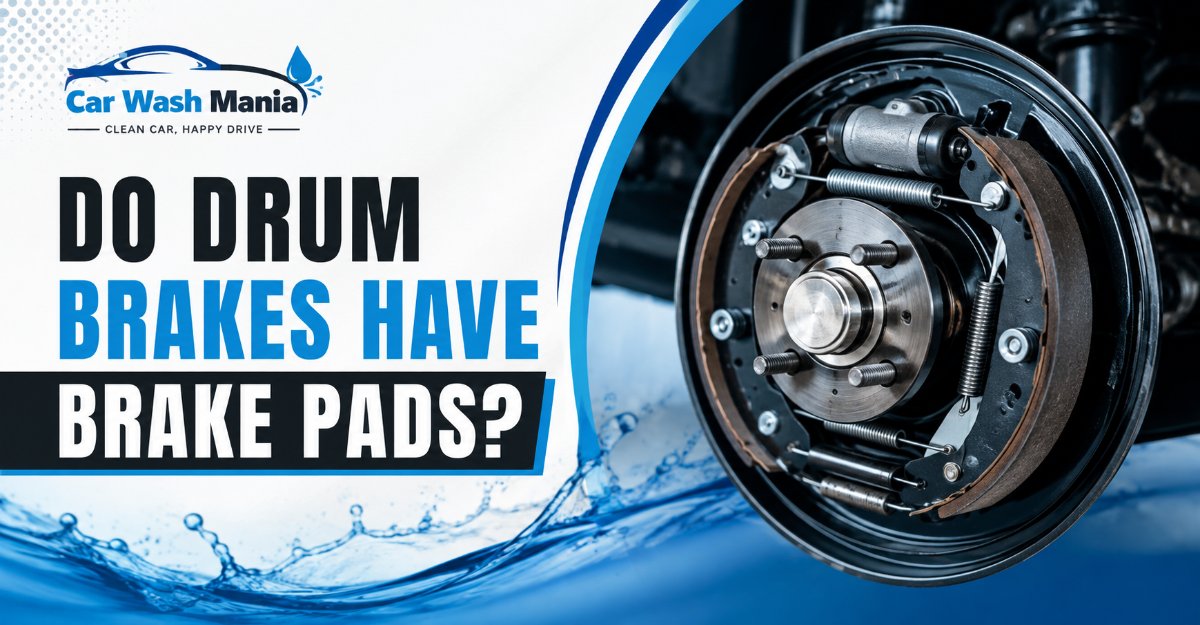
No, drum brakes do not have brake pads. Drum brake systems utilize curved brake shoes lined with friction material. While disc brake systems clamp flat brake pads against a spinning rotor, drum brake systems push these crescent-shaped brake shoes outward against the inside of a spinning metal drum to stop the vehicle.
At a Glance:
- Brake pads press inward on flat rotors; brake shoes push outward against hollow drums.
- New brake shoe linings typically measure 4 mm to 5 mm and require replacement at 1.5 mm.
- Brake shoes generally last 80,000 to 120,000 kilometers, frequently outlasting front brake pads.
- Drum brakes are primarily found on the rear axles of modern passenger cars and trucks.
- Automakers prefer rear drum brakes because they are cost-effective and integrate a mechanical parking brake easily.
How do I know if my vehicle has brake pads or brake shoes?
To determine if your vehicle uses brake pads or brake shoes, look through the spokes of your wheel assemblies.
- Check for a rotor and caliper: If you see a flat, shiny metal disc with a caliper clamping over its edge, the vehicle uses brake pads on that axle.
- Check for a sealed drum: If you see a solid, enclosed cylindrical metal housing with no visible brake components inside, the vehicle uses brake shoes.
- Check front versus rear: Most modern commuter vehicles use a hybrid setup. You will likely find disc brakes (pads) on the front wheels and drum brakes (shoes) on the rear wheels.
What is the difference between drum brakes and disc brakes?
The primary difference between drum brakes and disc brakes is the direction of force and the friction component utilized to stop the vehicle. Disc brakes provide superior heat dissipation, while drum brakes offer a more durable, enclosed design for off-road conditions.
| Feature | Drum Brakes (Brake Shoes) | Disc Brakes (Brake Pads) |
| Action | Pushes outward against a drum | Clamps inward on a flat rotor |
| Stopping Power | Prone to brake fade under heavy heat | Consistent, linear braking power |
| Environment | Enclosed system blocks mud and water | Open design sheds heat rapidly |
| Parking Brake | Built-in mechanical integration | Requires separate, complex mechanisms |
Are brake shoes and brake pads made of the same material?
Yes, modern brake shoes and brake pads utilize the same categories of friction material, though their structural backing shapes differ entirely. Historically, brake shoes were manufactured using asbestos because of its extreme heat resistance. Today, manufacturers bond or rivet organic, semi-metallic, or ceramic friction linings to the steel shoe backing. If you install semi-metallic pads on your front axle, you can install matching semi-metallic shoes on your rear drum axle to maintain consistent braking feel.
How do drum brakes work?
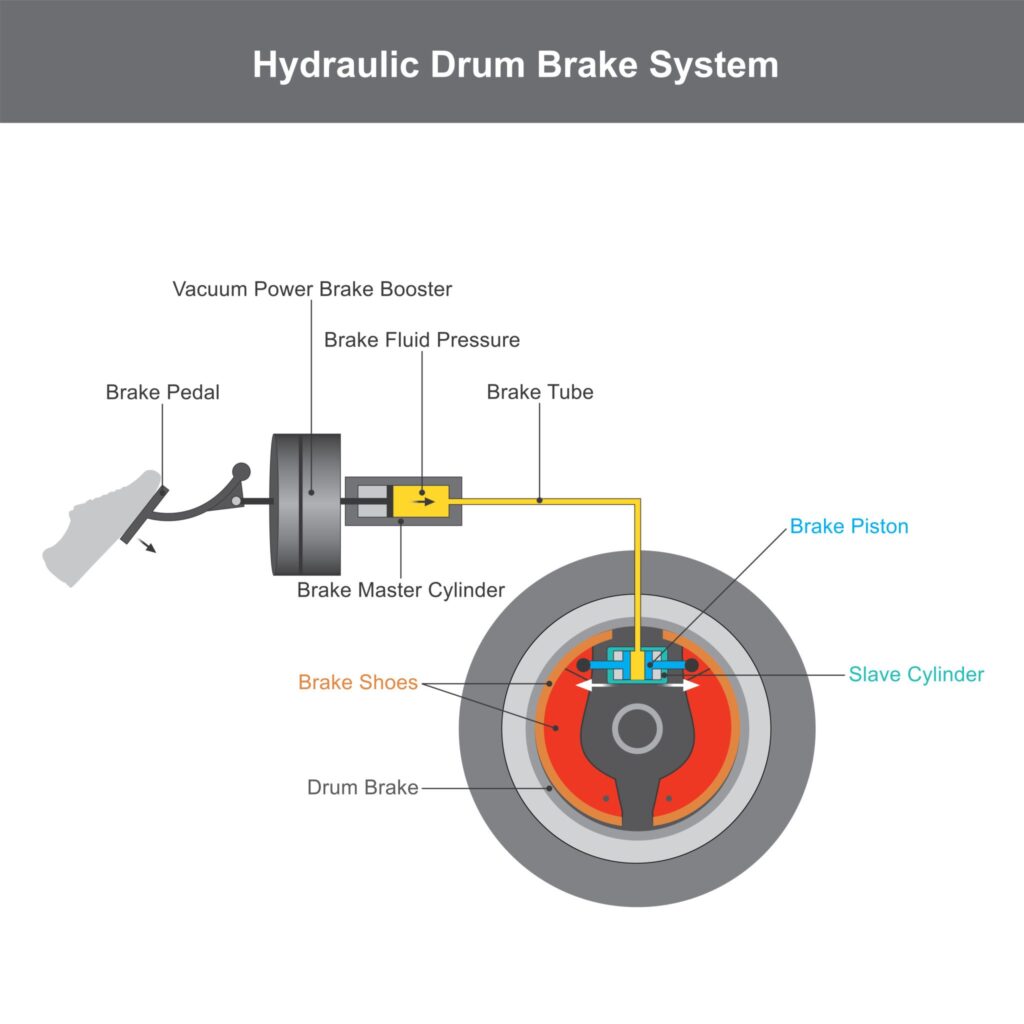
Drum brakes operate by converting hydraulic fluid pressure into mechanical force to push friction material against a rotating cylinder.
- Pedal Depressed: The driver presses the brake pedal, pushing brake fluid out of the master cylinder.
- Hydraulic Pressure: Brake fluid travels through steel lines into the wheel cylinder located inside the brake drum.
- Piston Extension: The hydraulic pressure forces two small pistons inside the wheel cylinder outward in opposite directions.
- Friction Applied: These pistons push the curved brake shoes outward against the smooth inner surface of the spinning brake drum.
- Deceleration: Friction between the shoe lining and the drum converts kinetic energy into thermal energy, slowing the wheel.
- Return: When the pedal is released, heavy return springs pull the brake shoes inward, resetting the system.
What are the main types of drum brake systems?
The two primary types of drum brake systems are the Leading/Trailing Shoe system and the Twin Leading Shoe system.
- Leading/Trailing Shoe System: Found on nearly all modern passenger cars. One shoe (the leading shoe) is pulled into the rotation of the drum, creating a self-energizing wedging effect for maximum stopping power. The trailing shoe is pushed away by rotation, providing smoother braking when the vehicle reverses.
- Twin Leading Shoe System: Utilized mostly on heavy trucks or vintage high-performance motorcycles. Both shoes act as leading shoes when the vehicle moves forward. This delivers massive stopping power in a forward direction but significantly reduces braking efficiency when backing up.
Can you put brake pads on a drum brake system?
No, you absolutely cannot put brake pads into a drum brake system. Brake pads and brake shoes are not interchangeable under any circumstances. Brake pads are flat and designed to clamp inward onto a spinning rotor via a brake caliper. Drum brake housings lack calipers and rely entirely on the curved geometry of a brake shoe expanding outward. If you want to use brake pads on a vehicle equipped with drum brakes, you must purchase a complete drum-to-disc conversion kit and replace the entire wheel hub assembly.
Why do modern cars still use drum brakes on the rear?
Automakers continue outfitting modern cars with rear drum brakes because they are cheaper to manufacture and effortlessly integrate a mechanical parking brake. During a hard stop, up to 70% of a vehicle’s weight transfers to the front axle. Because the front brakes handle the vast majority of the stopping force, the rear brakes do not need the extreme heat dissipation capabilities of a disc brake system. A drum brake on the rear of a lightweight commuter car like a Toyota Yaris or Honda Civic is more than sufficient for safe deceleration.
Which brake shoes are best for different driving styles?
The best brake shoe depends entirely on your vehicle’s weight, intended use, and typical driving environment.
| Driving Style | Recommended Brake Shoe Material | Key Benefit |
| Commuting (Budget) | Standard Organic | Excellent cold bite; highly cost-effective and quiet. |
| Towing / Heavy Loads | Heavy-Duty Semi-Metallic | Withstands high temperatures without severe brake fade. |
| Off-Road / Mudding | Premium Semi-Metallic | Enclosed drum design keeps abrasive mud out; metallic lining resists wear. |
How long do brake shoes and drums last?
Brake shoes generally last between 80,000 and 120,000 kilometers under normal driving conditions. Because they sit on the rear axle and handle only 30% of the braking load, brake shoes frequently outlast front disc brake pads by a factor of two. The metal brake drums themselves are incredibly robust and can easily last up to 200,000 kilometers before structural wear or warping requires their replacement.
How much does it cost to replace drum brake shoes?
Replacing rear drum brake shoes typically costs between €30 and €70 for the parts alone. If you require a comprehensive drum kit—which includes new shoes, the metal drums, and a complete set of replacement springs and hardware—the parts will cost between €100 and €250. Factoring in professional labor at a repair facility, expect to pay an additional 1 to 2 hours of labor per axle, bringing the total repair bill to roughly €250 to €450 depending on your region.
What are the most common drum brake maintenance mistakes?
The most frequent drum brake maintenance mistakes involve incorrect hardware assembly and ignoring the hydraulic wheel cylinders.
- Incorrect Spring Orientation: Mixing up the heavy return springs or installing them backward prevents the shoes from retracting, causing severe drag.
- Neglecting the Wheel Cylinder: Replacing worn shoes without inspecting the wheel cylinder often leads to catastrophic failure. If an old cylinder leaks brake fluid onto the brand-new shoes, the friction material will be ruined instantly.
- Upside-Down Shoes: Installing the primary shoe on the secondary side is a classic DIY error. The primary (leading) shoe typically features a shorter strip of friction material than the secondary shoe.
What happens if you forget to adjust the star wheel?
If you forget to manually pre-adjust the star wheel before reinstalling the brake drum, the wheel cylinder pistons must travel too far to push the shoes against the drum surface. This creates an incredibly low, spongy brake pedal. The automatic adjuster mechanism relies on minor adjustments; it cannot bridge a massive initial gap on its own without requiring dozens of hard reverse stops to catch up.
Why is my drum brake squealing, grinding, or spongy?
Squealing, grinding, or a spongy pedal usually indicates worn friction material, trapped debris, or hydraulic issues within the drum assembly.
- Squealing or Grinding: This sound points to metal-on-metal contact because the 4 mm of friction material has worn away completely. It can also occur when heavy brake dust becomes trapped inside the enclosed drum housing, glazing the shoes.
- Spongy Brake Pedal: A soft pedal indicates air trapped inside the hydraulic brake lines or a seized automatic adjuster that leaves too much distance between the shoe and the drum.
- Overheating or Dragging: If a wheel is excessively hot after driving, a broken return spring or a frozen wheel cylinder is failing to pull the brake shoes back to their resting position.
The Bottom Line
Drum brakes do not use brake pads; they rely on curved brake shoes to push outward against a metal drum to stop your vehicle safely. While disc brakes dominate the front axles of modern vehicles due to superior heat dissipation, drum brakes remain highly effective and economical for rear axles. When servicing your drum brakes, always rebuild the complex spring hardware correctly and pre-adjust your star wheel to ensure a firm, responsive brake pedal.


