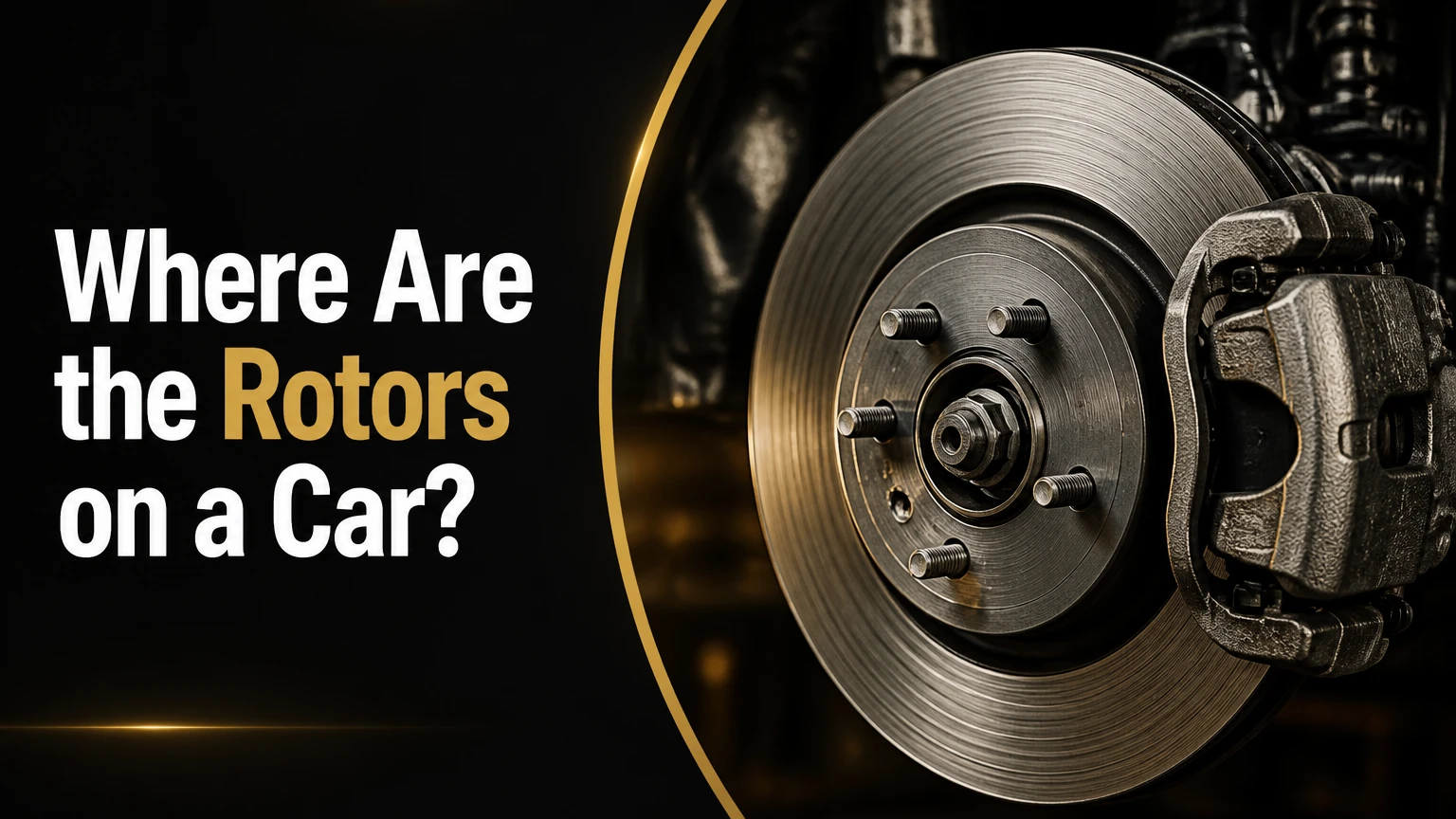
Brake rotors are located directly behind the wheel assemblies of a vehicle, mounted flush against the rotating wheel hub. Looking through the spokes of a car wheel rim reveals the smooth, round metal disc clamped by a stationary metal caliper containing the brake pads.
At a Glance
- Modern passenger cars typically feature four brake rotors located directly behind each wheel assembly.
- Budget vehicles and older trucks often use two front brake rotors combined with two rear drum brakes.
- Standard automobile rotors measure between 10 to 15 inches in diameter depending on vehicle weight and braking demands.
- Minimum safe rotor thickness is stamped onto the inner hub hat and requires replacement if worn beyond that limit.
- Inboard brake rotors exist deep inside the vehicle chassis near the differential on select classic or specialized cars.
How Many Brake Rotors Does a Modern Passenger Car Have?
A modern passenger vehicle typically has four brake rotors, with one rotor installed on each wheel assembly. This four-wheel disc brake configuration provides maximum stopping force, rapid heat dissipation, and balanced hydraulic force distribution across all four tires.
Budget compact cars, subcompact hatchbacks, and older pickup trucks frequently utilize a split system consisting of two disc brake rotors on the front axle and two traditional drum brakes on the rear axle. Front wheels handle approximately 60% to 80% of a vehicle’s stopping load due to forward weight transfer during deceleration. Consequently, auto manufacturers occasionally retain cost-effective rear drum brakes on lighter vehicles because rear wheels require significantly less braking force. Premium sedan, sports car, truck, and SUV models exclusively utilize four-wheel disc setups with dedicated rotors on every corner to maintain performance during heavy braking cycles.
What Do Brake Rotors Look Like Through the Wheel Rim?
A brake rotor appears as a flat, shiny metal disc positioned directly inside the open space of a vehicle rim. The outer perimeter consists of a wide circular friction ring, while the center section projects outward in a bowl shape known as the rotor hat, which sits flush against the wheel hub studs.
When observing a wheel assembly from the outside, a large metal mechanism shaped like a clamp covers a portion of the rotor ring. This component is the brake caliper, which houses the hydraulic pistons and friction pads. On standard daily drivers, the exposed rotor surface looks smooth and metallic. On sports vehicles or heavy-duty trucks, the visible surface of the rotor ring may feature engineered cross-drilled holes or machined curved slots designed to sweep away gas, water, and debris during hard braking events.
Where Are Brake Rotors Located on Vehicles with Inboard Setups?
Inboard brake rotors are located deep inside the vehicle chassis, mounted directly to the sides of the differential housing or transmission output shafts rather than inside the wheel rims. Power from the braking action reaches the driven wheels through the vehicle flexible axle shafts.
Vehicle engineers developed inboard disc brake placement to drastically reduce unsprung weight, which is the un-suspended mass of components not supported by the vehicle chassis springs. By shifting heavy cast iron brake rotors and heavy hydraulic calipers into the center chassis, suspension springs react much faster to road imperfections, allowing tires to maintain continuous road contact over rough pavement. Historic sports cars such as the Jaguar E-Type, the Alfa Romeo Milano, and the Citroën DS utilized inboard rear brakes. Heavy off-road vehicles like the Hummer H1 mounted inboard disc brakes to protect braking components from rocks and raise ground clearance. Inboard systems require labor-intensive servicing because technicians must disassemble suspension or driveline parts to replace worn rotors.
What Is a Rear Drum-in-Hat Brake Rotor Configuration?
A drum-in-hat brake rotor is a hybrid braking unit featuring a standard primary disc rotor on the exterior combined with a hollowed-out internal drum brake integrated into the center hat. The exterior disc ring operates with a primary hydraulic caliper for regular foot-brake stopping, while internal mechanical brake shoes expand outward against the inner hat wall to hold the vehicle stationary when the parking brake pedal or lever is pulled.
This dual-function design solves the thermal expansion problem inherent to rear hydraulic calipers equipped with mechanical parking cables. Standard hydraulic rear calipers can lose clamping tension as hot rotors cool down and shrink overnight, leading to parking brake slippage. The inner drum surface inside a drum-in-hat rotor remains protected from weather elements and provides a dedicated mechanical lock unaffected by primary hydraulic caliper heat cycles. Modern vehicles equipped with electronic parking brakes frequently bypass drum-in-hat structures in favor of small electric servo motors bolted directly onto the rear disc calipers.
How Do Front Brake Rotors Differ from Rear Brake Rotors?
Front brake rotors are physically larger, significantly thicker, and internally ventilated, whereas rear brake rotors are smaller, thinner, and frequently solid metal discs. This dimensional difference directly reflects the unequal kinetic energy distribution generated during vehicle braking.
Because forward momentum transfers up to 80% of a vehicle total weight onto the front suspension during emergency stops, front brake rotors absorb extreme thermal energy. Front rotors feature two parallel friction plates separated by internal cooling vanes that act as a centrifugal air pump, pulling cool air through the center hub and venting hot air outward. Rear brake rotors encounter far less thermal stress, allowing manufacturers to fit smaller solid iron plates. Installing rear brake pads or rotors on a front axle is impossible due to substantial differences in rotor hat offset, center bore diameter, bolt pattern spacing, and overall ring thickness.
What Are the Standard Dimensions and Thickness Limits of Rotors?
Standard automobile brake rotors measure between 10 to 15 inches (250 mm to 380 mm) in outer diameter, with new plate thickness ranging from 0.4 inches (10 mm) for solid rear discs to 1.2 inches (32 mm) for heavy-duty ventilated front discs. Small commuter cars sit on the lower spectrum around 10 to 11 inches, whereas full-size pickup trucks, heavy SUVs, and sports cars utilize 14-inch to 16-inch rotors to maximize surface area.
Every brake rotor has a precise structural metric known as the minimum discard thickness permanently stamped onto the outer edge or inner metal hat face. This discarded minimum dimension is typically only 0.04 to 0.08 inches (1 to 2 mm) thinner than the rotor original brand-new measurement. Once a cast iron rotor wears past this structural threshold, the metal loses its ability to store and dissipate heat without flexing. Overly thin rotors risk catastrophic structural cracking, severe brake fluid boiling, pedal fade, or piston hyperextension out of the hydraulic caliper housing.
How Can You Tell If Brake Rotors Are Directional or Side-Specific?
Directional brake rotors feature internal cooling vanes or surface machining patterns that sweep specifically toward the front or rear of the vehicle, making left-side and right-side rotors non-interchangeable. Standard replacement rotors on commuter cars feature symmetrical straight internal vanes, allowing the same part number to be installed on either side of an axle.
High-performance directional rotors utilize internal curved cooling vanes shaped like an impeller. When mounted correctly, these internal curved passages scoop air from the center hub hat and pump it outward through the outer perimeter as the wheel spins forward. If a left-side directional rotor is accidentally installed on the right side of a vehicle, the internal cooling vanes rotate backward, trapping hot air inside the disc assembly. This improper airflow direction causes rapid thermal accumulation, severe brake pad glazing, premature fluid degradation, and accelerated rotor warping under repeated high-speed stops. Technicians confirm correct placement by checking directional arrows stamped on the rotor hat or verifying that internal cooling fins curve backward relative to forward wheel rotation.
Why Do Brake Rotors Develop Surface Rust After Rain or Car Washes?
Brake rotors develop a thin coating of orange surface rust because they are constructed from raw cast iron containing high carbon and iron content without protective paints or anti-corrosion coatings on the active friction surface. Exposure to moisture, rain, high atmospheric humidity, or wheel cleaners triggers rapid chemical oxidation on bare iron within hours.
This flash corrosion is completely cosmetic and harmless to vehicle braking performance. When a vehicle is driven after sitting in wet conditions, the very first application of the brake pedal sweeps the abrasive friction pads across the rotating rotor surface, instantly scraping off the microscopic oxidation layer. Drivers may notice a brief scraping or grinding sound during the first two stops, which clears immediately as bare metal is re-exposed. Applying anti-rust chemicals, oil, or grease to a brake rotor surface to stop cosmetic rusting is dangerous, as lubricants destroy pad friction and cause immediate brake failure.
What Causes Brake Pedal Pulsation If Metal Rotors Rarely Warp?
Steering wheel vibration and brake pedal pulsation during braking are primarily caused by uneven brake pad material deposition across the rotor surface rather than physical bending or warping of the heavy iron disc. Under normal road driving conditions, cast iron rotors almost never deform into a wavy or warped geometric shape.
Brake systems operate using two friction mechanisms: abrasive friction and adherent friction. During adherent friction, a microscopic, uniform layer of brake pad material transfers permanently onto the rotor ring surface. If a driver heats the brake system through aggressive mountain driving or sudden highway stops and then remains stationary at a traffic light with the brake pedal firmly depressed, hot friction pad material glues itself heavily to one single spot on the stationary rotor. This localized spot forms a sticky, microscopic high point composed of hard iron carbide (cementite). As the tire rotates during subsequent drives, the brake pads ride over this uneven chemical deposit, causing rapid thickness variation that pulses hydraulic fluid back through the brake pedal and shakes the steering wheel.
Should Brake Rotors Be Replaced Every Time Brake Pads Are Changed?
Brake rotors do not need to be replaced during every brake pad change if the iron disc thickness measures safely above the stamped minimum discard limit and the friction surface remains free from deep scoring, heat cracks, or severe rust lips. However, professional mechanics strongly recommend replacing or machining rotors with every pad change to ensure optimal braking performance.
Installing smooth, flat new brake pads onto an old rotor with uneven microscopic grooves creates poor contact area. This reduced contact patch lowers immediate stopping power, increases brake pedal travel, generates high-pitched squealing noises, and causes premature, irregular wear on the fresh pads. If old rotors retain sufficient structural metal thickness above the safety limit, a machine shop or auto repair facility can resurface (turn) the rotors on a lathe. Resurfacing cuts away shallow surface grooves and restores a clean, perfectly flat non-directional finish, providing an ideal surface for new brake pads to bed into.
| Maintenance Decision | Measured Rotor Condition | Recommended Action | Expected Outcome |
| Pad Replacement Only | Above min thickness, smooth surface, no grooves | Re-use existing rotors | Adequate stopping power; potential minor squeal during pad bed-in |
| Resurface (Lathe Turn) | Above min thickness + margin, minor grooves | Machine flat, install new pads | Excellent contact patch, quiet operation, factory-like pedal feel |
| Full Rotor Replacement | At or below min thickness, deep scores, heat cracks | Install brand-new rotors & pads | Maximum safety, optimal heat dissipation, longest component lifespan |
What Is the Difference Between Smooth, Drilled, and Slotted Rotors?
Smooth rotors provide maximum surface area for everyday driving, drilled rotors optimize heat and water venting for light performance, and slotted rotors provide continuous pad wiping for heavy towing and track applications. Choosing the correct rotor design depends on vehicle weight, climate, and driving intensity.
[Smooth/Blank]   -> Maximum Surface Area   -> Longest Pad Life, Quiet Daily Driving
[Cross-Drilled]  -> Max Water/Gas Venting  -> Superior Wet Performance, Risk of Stress Cracks
[Slotted]        -> Surface Glaze Wiping   -> Consistent Heavy Towing/Track Braking, Higher Pad Wear
Smooth rotors, also referred to as blank rotors, are the standard choice for factory passenger vehicles. They deliver the longest pad wear life, quietest operational sound, and maximum structural mass to absorb heat during typical city and highway commutes.
Cross-drilled rotors feature precision holes drilled completely through the friction plate. These holes allow steam, outgassing resins, and standing water to escape rapidly from between the pad and rotor interface. While effective in wet weather, cross-drilled holes create thermal stress points that can develop structural hairline cracks under high-temperature track driving.
Slotted rotors incorporate directional channels machined along the outer friction surface. These shallow slots act as a squeegee, scraping away glazed pad material, dust, and gas while continuous braking occurs. Slotted rotors maintain consistent brake pedal feel during heavy towing, mountain hauling, or racing, though the sharp channel edges accelerate brake pad wear rates compared to smooth discs.
How Do You Measure a Brake Rotor Minimum Discard Thickness?
Measuring a brake rotor minimum discard thickness requires wiping the rotor clean of debris and taking multiple precise depth measurements using an outside micrometer or a specialized brake rotor digital caliper. Standard vernier calipers often give false readings because they span over the raised rust lip that forms at the outermost edge of a worn rotor face.
To properly assess rotor health, measure the friction ring at four to eight distinct points around the disc perimeter, positioning the micrometer anvil inside the outer rust ridge. Record the lowest measurement value found across all points. Compare this lowest number directly against the minimum thickness specification stamped into the rotor hat casting or outer rim edge. If the lowest measured reading matches or sits below the stamped discard limit, the rotor must be removed and discarded immediately. Furthermore, subtract the lowest reading from the highest reading to calculate parallel variance; any thickness variation greater than 0.0005 inches (0.012 mm) across the face will cause noticeable pedal pulsation and requires rotor replacement or lathe resurfacing.
How Long Do Car Brake Rotors Typically Last Under Normal Driving?
Car brake rotors typically last between 30,000 to 70,000 miles (approximately 50,000 to 110,000 kilometers) under average driving conditions. Rotor lifespan varies widely based on brake pad friction material compounds, driving habits, regional topography, vehicle weight, and exposure to road salt.
Hard organic or semi-metallic brake pads wear down iron rotors much faster than soft ceramic brake pads. City driving involving frequent stop-and-go traffic, aggressive highway tailgating, or heavy cargo hauling subjects rotors to continuous thermal spikes, shortening service life down toward 30,000 miles. Conversely, smooth highway driving in dry climates allows quality cast iron rotors to exceed 70,000 miles without dipping below minimum safety thickness. Inspecting rotor thickness during routine tire rotations every 6,000 miles allows drivers to identify uneven wear patterns before severe component damage occurs.
What Are the Warning Signs of a Worn or Damaged Brake Rotor?
Warning signs of a worn or damaged brake rotor include rhythmic pedal pulsation, steering wheel shaking during deceleration, high-pitched screeching or harsh metallic grinding noises, visual blue heat discoloration, and deep circumferential grooves on the friction face.
A harsh, low-pitched grinding sound indicates that the brake pad friction material has worn completely down to its steel backing plate. The backing plate then digs directly into the iron rotor ring, cutting deep structural gouges and destroying the rotor within miles. High-pitched squealing can occur when a raised rust lip along the rotor perimeter contacts the pad edge. Blue-tinted circular spots across the rotor surface signal extreme overheating, which alters the cast iron molecular structure into ultra-hard spots called martensite. These heat spots prevent brake pads from gripping evenly, leading to severe brake fade, extended stopping distances, and erratic vehicle pulling under heavy braking.
How Much Does Brake Rotor Replacement Cost for Modern Cars?
Replacing brake rotors on a modern automobile costs between $300 and $800 per axle for standard passenger vehicles, including parts and labor. Premium sports cars, luxury vehicles, and heavy-duty trucks equipped with oversized performance rotors can range from $800 to over $1,500 per axle.
Individual replacement rotor parts generally cost between $40 and $150 per wheel for standard smooth aftermarket units, while specialized cross-drilled, slotted, or two-piece floating performance rotors cost $200 to $500 each. Professional shop labor rates average $100 to $180 per hour, with an axle brake replacement job taking roughly 1.5 to 2.5 hours of service time. Mechanics always replace brake rotors in complete axle pairs (both front wheels or both rear wheels) to maintain balanced hydraulic pressure and ensure uniform left-to-right braking performance across the vehicle.
The Bottom Line
Brake rotors are mounted directly behind each wheel hub on modern vehicles, sitting flush inside the rim where hydraulic calipers clamp against them to slow the car down. While standard vehicles position rotors outboard at all four corners, specialized setups like inboard chassis mounts or rear drum-in-hat configurations exist for specific engineering demands. Keeping rotors thick, smooth, and free from uneven pad material buildup maintains short stopping distances and prevents steering wheel vibration during hard braking.


