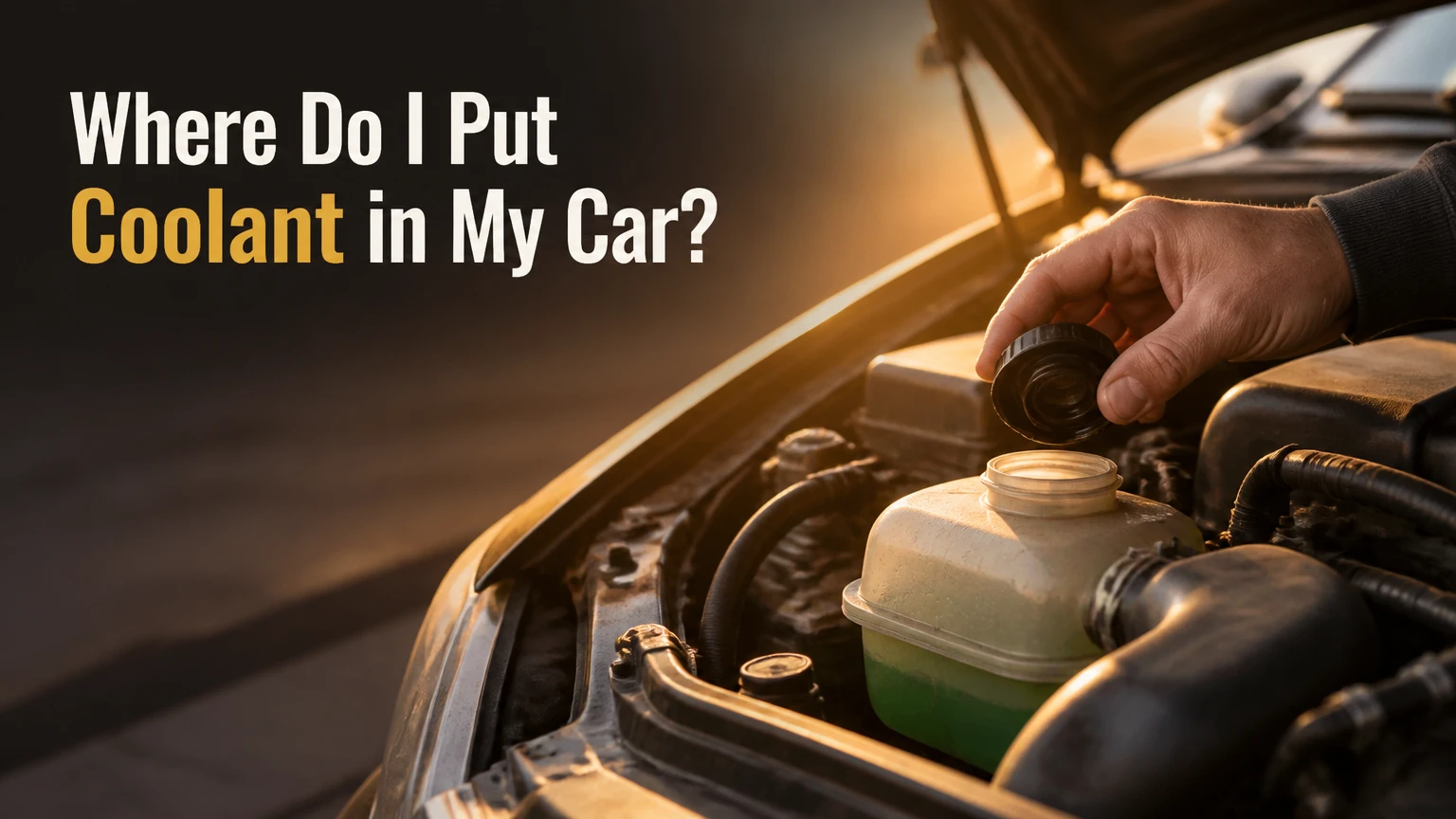
To add coolant to your car, pour the fluid directly into the translucent plastic coolant expansion tank (also called the overflow reservoir) located under the hood. This container features fill level lines marked on its side and is sealed with a plastic or metal cap displaying a thermal warning symbol.
At a Glance
- Pour coolant into the plastic overflow reservoir, not directly into the radiator, unless the system is completely dry.
- Never remove a coolant cap while the engine is hot to avoid severe pressurized steam burns.
- Engine coolant must always be maintained at a 50/50 mixture of distilled water and the correct coolant type.
- Fill the reservoir only to the MIN or COLD mark when the engine is cold to allow room for fluid expansion.
- Mixing different coolant colors can create internal gel sludge that clogs the engine cooling channels.
How Do You Identify the Coolant Reservoir Under the Hood?
You can identify the coolant reservoir by looking for a semi-transparent or milky-white plastic bottle situated near the radiator or wheel arch inside the engine bay. The reservoir typically contains brightly colored liquid, such as pink, orange, blue, or green.
The cap on top of the container is usually colored black or blue and is made of plastic or metal. Most manufacturers stamp this cap with warning text such as “Engine Coolant” or “Antifreeze,” accompanied by a graphic icon depicting a hand avoiding escaping steam. The plastic body of the tank will also feature molded fill lines along the side labeled “MIN” and “MAX” or “COLD” and “HOT.”
How Do You Check if Your Engine Is Cool Enough to Open the Cap?
An engine is cool enough to open safely when the upper rubber radiator hose feels soft and pliable, and the engine valve cover is cool to the touch with a bare hand. You must never rely solely on your dashboard temperature gauge, as it measures internal coolant fluid temperature rather than the pressurized air sitting above the liquid in the tank.
To verify the safety of the system, follow these steps:
- Turn off the ignition and allow the vehicle to park in a shaded area for at least 45 to 60 minutes.
- Touch the hood of the car; if it feels warm, wait longer before unlatching it.
- Reach into the engine bay and squeeze the thick rubber hose running from the top of the radiator to the engine block.
- If the hose feels firm, hard, or under pressure, the system is still hot and dangerous to open.
- If the hose collapses easily under your grip, place a thick shop towel over the coolant cap and slowly twist it counterclockwise to release any remaining vacuum.
What Is the Difference Between Pressurized and Non-Pressurized Coolant Tanks?
The key difference lies in whether the plastic tank operates under active system pressure or functions purely as an unpressurized catch basin for expanded fluid.
| Feature | Non-Pressurized Overflow Tank | Pressurized Expansion Tank (De-Aeration Tank) |
|---|---|---|
| Common Vehicle Types | Asian and American standard passenger cars | European vehicles (BMW, VW, Volvo) and heavy trucks |
| Cap Style | Simple snap-on plastic lid or light twist-off cap | Heavy-duty, threaded pressure cap with an internal valve |
| System Function | Catches excess fluid as the engine heats up and draws it back as it cools | Acts as an active part of the pressurized cooling circuit |
| Pressure Level | Atmospheric pressure (0 PSI inside the tank) | Full operating system pressure (15 to 22 PSI) |
| Burn Risk Level | Low risk at cap (high risk at radiator cap) | Extreme risk; boiling fluid erupts immediately if opened warm |
How Do You Add Coolant if the Reservoir Is Completely Empty?
If your coolant reservoir is completely empty, you must fill the radiator directly through its metal cap first (if equipped) before filling the plastic reservoir, because an empty tank indicates air has entered the engine block.
+-----------------------------------------------------------------------+
| 1. Ensure the engine is completely cold.                             |
+-----------------------------------------------------------------------+
                                   |
                                   v
+-----------------------------------------------------------------------+
| 2. Remove the metal radiator cap directly over the radiator.          |
+-----------------------------------------------------------------------+
                                   |
                                   v
+-----------------------------------------------------------------------+
| 3. Pour 50/50 coolant into the radiator neck until full.              |
+-----------------------------------------------------------------------+
                                   |
                                   v
+-----------------------------------------------------------------------+
| 4. Start the engine with the cap off to let trapped air escape.       |
+-----------------------------------------------------------------------+
                                   |
                                   v
+-----------------------------------------------------------------------+
| 5. Reinstall the radiator cap securely.                               |
+-----------------------------------------------------------------------+
                                   |
                                   v
+-----------------------------------------------------------------------+
| 6. Fill the plastic overflow reservoir to the MIN/COLD mark.          |
+-----------------------------------------------------------------------+
Simply pouring liquid into an empty plastic overflow bottle will leave large air pockets trapped inside the cylinder head. These air pockets prevent heat transfer and cause severe local overheating, even if the plastic bottle looks full.
Where Do You Put Coolant in a Vintage Car Without an Overflow Tank?
In vintage vehicles built prior to the 1980s that lack a plastic overflow bottle, you pour the coolant directly into the top filler neck of the metal radiator.
Because these classic systems lack an external bottle to catch expanding liquid, you must leave an air gap inside the radiator. Fill the radiator until the fluid level reaches roughly 2.5 centimeters (1 inch) below the bottom edge of the filler neck. If you fill a vintage radiator all the way to the top rim, thermal expansion will force the excess coolant out through the overflow tube and onto the ground as soon as the engine reaches operating temperature.
What Do the MIN and MAX Lines on the Coolant Reservoir Mean?
The MIN and MAX lines indicate the precise allowable fluid boundaries for cold and hot engine conditions, respectively.
- MIN (COLD): The correct fluid level when the engine has been turned off and sitting cold. Liquid expands when heated, so starting at this lower line leaves space for the volume to grow.
- MAX (HOT): The absolute maximum fluid level allowed when the engine is operating at full temperature.
If you add fluid to a cold engine, stop pouring the moment the liquid level reaches the MIN or COLD line. Never fill a cold reservoir up to the MAX line.
What Is the Correct Mixture Ratio for Engine Coolant and Water?
The standard correct mixture ratio for passenger vehicle engines is 50 percent concentrated antifreeze and 50 percent distilled water.
Using 100 percent pure antifreeze reduces the heat-transfer capacity of the system, because water is the chemical component that actually absorbs and carries heat away from metal components. Conversely, using 100 percent water lowers the boiling point of the system and risks freezing and cracking the engine block during winter conditions.
In extreme cold climates where temperatures drop below -35 degrees Celsius (-31 degrees Fahrenheit), mechanics increase the concentration to a maximum ratio of 70 percent antifreeze and 30 percent distilled water.
Can You Mix Different Colors or Types of Coolant in an Emergency?
No, you should never mix different colors or chemical types of coolant, because doing so causes a negative reaction that turns the fluid into a thick gel sludge.
Coolant colors represent distinct chemical anti-corrosion additives:
- Green (IAT): Inorganic Additive Technology, common in older vehicles; uses silicates.
- Orange/Pink/Red (OAT): Organic Acid Technology, common in modern vehicles; uses organic acids without silicates.
- Yellow/Turquoise (HOAT): Hybrid Organic Acid Technology; combines organic acids with silicates or phosphates.
When IAT and OAT fluids mix, the silicates drop out of suspension and combine with the organic acids. This forms a paste that clogs the narrow fluid passages in your heater core and radiator tubes. If you are low on fluid and lack the exact matching coolant type, top off the system using pure distilled water instead until a proper system flush can be performed.
Can You Use Tap Water to Top Off Your Engine Coolant?
You should avoid using tap water in your engine cooling system except during an extreme roadside emergency, as municipal water contains minerals that damage internal engine parts.
Tap water contains dissolved minerals like calcium, magnesium, and iron. Under the extreme temperatures inside an engine block, these minerals precipitate out of the liquid and form hard scale deposits along the metal walls. Over time, this scale insulates the engine against proper cooling, accelerates water pump seal wear, and restricts flow through the radiator core. Always use distilled or deionized water, which has been stripped of all mineral content.
Why Is Your Car Losing Coolant if There Are No Visible Leaks?
If your coolant reservoir level drops consistently without leaving puddles under the vehicle, the fluid is either burning internally inside the engine combustion chamber or evaporating off a hot component before reaching the ground.
The three primary causes of non-puddle coolant loss are:
- Failing Head Gasket: Coolant seeps past the damaged head gasket into the cylinder combustion chamber, where it burns off during engine operation, producing sweet-smelling white exhaust smoke.
- Cracked Heater Core: Fluid leaks slowly inside the passenger cabin floor beneath the dashboard carpet or evaporates into the cabin heating vents, fogging up the windshield.
- Micro-Crack in Radiator or Hose: Fluid seeps out under high operating pressure directly onto the hot exhaust manifold or engine block, evaporating instantly without leaving a drip on the pavement.
What Happens if You Accidentally Overfill the Coolant Reservoir?
If you overfill the coolant reservoir past the MAX mark, the expansion tank will vent the excess fluid onto the road through an overflow hose once the engine reaches full temperature.
While overfilling does not typically cause immediate engine destruction, it creates several operational problems:
- High pressure forces liquid out of the pressure cap valve or overflow tube.
- Hot coolant sprays across the engine bay, causing smoking, unpleasant chemical smells, and potential electrical short circuits.
- Environmental contamination occurs, posing a lethal poisoning hazard to domestic pets and wildlife attracted to the sweet taste of ethylene glycol.
If you accidentally overfill the tank, use a clean fluid transfer syringe or turkey baster to extract the excess liquid until the level drops back down to the MIN line.
How Long Should You Wait for an Engine to Cool Down?
You should wait at least 30 to 60 minutes after shutting off the engine before attempting to open any cap on the cooling system.
Aluminum engine blocks retain heat longer than cast-iron blocks, and modern engine bays are tightly sealed with plastic belly pans that trap hot air. To accelerate cooling, park the car in an open area out of direct sunlight and pop the hood latch to let trapped heat escape upward. Never pour cold water over a hot engine block or radiator to speed up the process, as the rapid thermal shock will warp or crack metal castings.
What Are the Signs That Air Is Trapped in Your Cooling System?
The most common signs of air trapped inside a cooling system are erratic temperature gauge fluctuations, gurgling noises from behind the dashboard, and a heater that blows cold air when the engine is idling.
Air pockets (also known as air locks) prevent coolant from making physical contact with metal surfaces and thermal sensors.
Common indicators include:
- Cold Cabin Heat: The heater core sits higher than the rest of the cooling loop, making it a natural trap for air bubbles that block hot fluid from heating the cabin air.
- Rapid Gauge Spikes: The dashboard temperature needle bounces rapidly between normal and redline as alternating pockets of steam and liquid hit the sensor.
- Gurgling Sounds: A sloshing or boiling sound audible behind the interior dashboard right after starting the car or accelerating.
To clear air locks, elevate the front of the car on ramps, remove the reservoir cap, and run the engine with the heater set to maximum heat until the cooling fan cycles twice and bubbles stop rising to the surface.
How Much Coolant Does a Standard Passenger Car Hold in Total?
A standard passenger car or crossover cooling system holds between 4 to 8 liters (1.0 to 2.1 gallons) of total fluid across the engine, radiator, hoses, and heater core. Larger pickup trucks and SUVs equipped with V8 engines or rear passenger climate control systems can hold up to 12 to 16 liters (3.1 to 4.2 gallons).
It is important to distinguish between total system capacity and top-off capacity:
- Routine Top-Off: Usually requires only 0.5 to 1.5 liters of fluid poured into the plastic reservoir.
- System Drain and Flush: Typically removes 60 to 80 percent of total system volume, as some fluid remains trapped inside the engine block heater passages and heater core unless dedicated block drain plugs are removed.
The Bottom Line
To add coolant safely, always identify the translucent plastic expansion tank under your hood and pour a 50/50 mixture of distilled water and vehicle-specific coolant up to the MIN line while the engine is completely cold. Never open a pressurized cap on a hot engine, and avoid mixing different coolant colors or using tap water except in emergency situations. If your reservoir is dry or your car shows signs of air locks, fill the system directly through the radiator first to ensure your engine remains fully protected against dangerous overheating.


