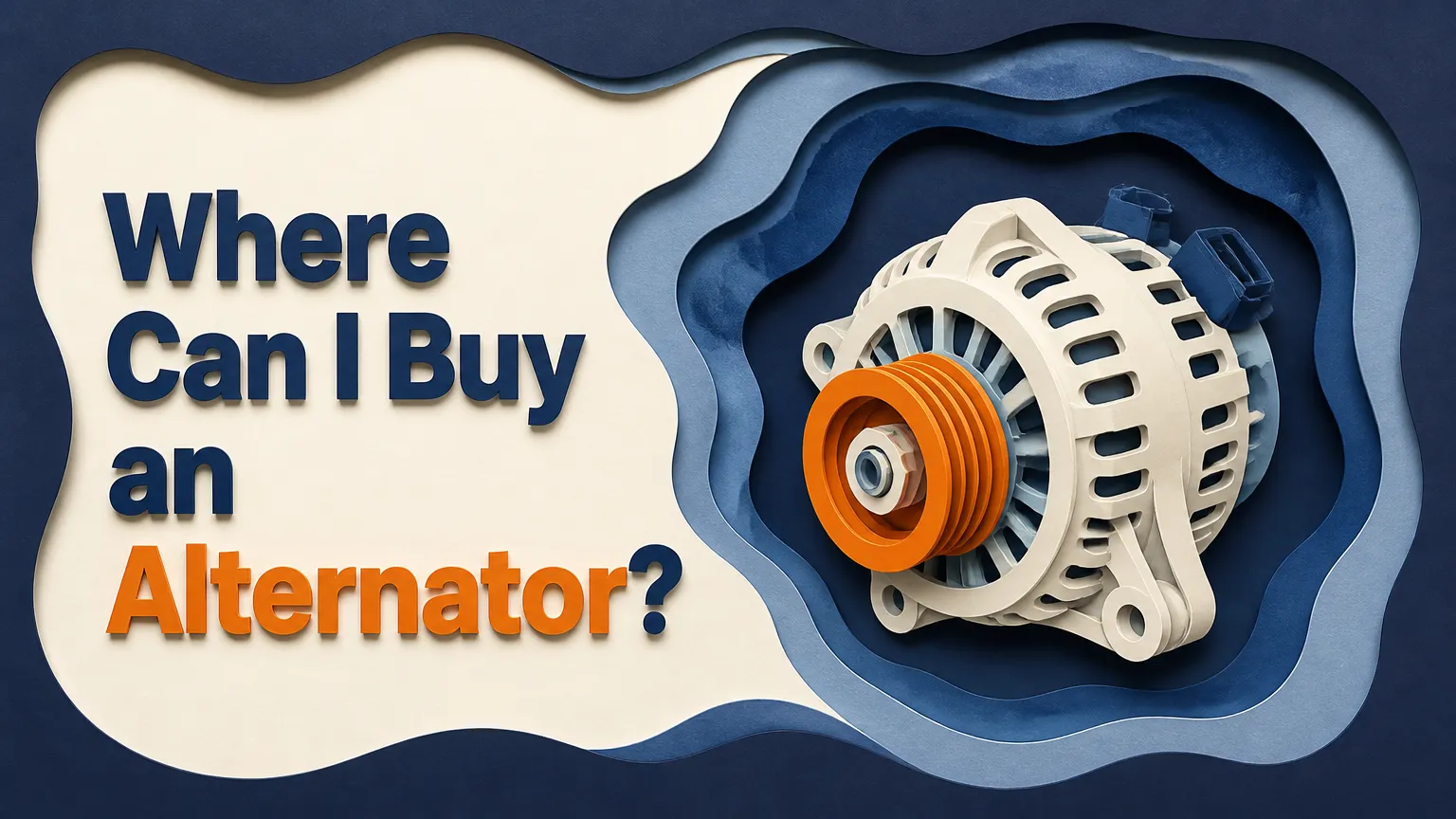
You can buy an alternator from physical auto parts stores, online auto parts platforms, dealership parts departments, or local salvage yards. Auto parts stores offer same-day pickup, while online retailers offer the lowest part prices. Dealerships supply original equipment manufacturer parts, and salvage yards provide low-cost used units.
At a Glance
- Local Auto Parts Chains: AutoZone, Advance Auto Parts, O’Reilly, and NAPA offer same-day pickup and free testing.
- Online Platforms: RockAuto and Carparts.com offer 30% to 50% lower part prices but require return shipping for core refunds.
- Dealership Parts Counters: Dealerships provide exact OEM units costing $400 to $1,000+ for guaranteed fitment.
- Salvage Yards: Junkyards sell used alternators for $20 to $75, sold strictly as-is.
- Core Charges: Upfront deposits range from $20 to $100+ and are refunded upon returning your old alternator.
What Auto Parts Stores Sell Alternators In-Store Today?
National brick-and-mortar retail chains like AutoZone, Advance Auto Parts, O’Reilly Auto Parts, and NAPA Auto Parts sell alternators in-store for immediate pickup. These local auto parts stores typically keep high-demand alternators for popular commuter cars, light trucks, and SUVs directly in their backroom inventory.
+------------------------+-------------------+--------------------+--------------------+
| Store Type             | Average Cost      | Availability       | Key Advantage      |
+------------------------+-------------------+--------------------+--------------------+
| Local Auto Parts Chain | $150 - $350       | Same-Day / In-Stock| Free Testing & Return|
| Online Marketplace     | $80 - $220        | 2 to 5 Business Days| 30% to 50% Savings |
| OEM Dealership Counter | $400 - $1,000+    | 1 to 3 Business Days| Exact Factory Fit  |
| Local Salvage Yard     | $20 - $75         | Immediate Pickup   | Lowest Upfront Cost|
+------------------------+-------------------+--------------------+--------------------+
Physical retail chains charge higher prices than online vendors, with remanufactured alternators running between $150 and $350 and brand-new units costing $250 to $500. However, brick-and-mortar locations provide three distinct advantages: same-day availability, free in-store alternator and battery bench testing, and simple core charge returns. If an alternator fails under its warranty period, you can exchange it at any branch location nationwide without waiting for return shipping or paying freight fees.
What Are the Best Online Retailers to Buy an Alternator?
RockAuto and Carparts.com are the best online retailers to buy an alternator if you can wait two to five business days for delivery. Online parts vendors regularly price their alternators 30% to 50% lower than brick-and-mortar stores, with remanufactured and aftermarket units ranging from $80 to $220.
Buying online eliminates retail storefront overhead, passing those direct savings to the consumer. The primary trade-off is component downtime and core return logistics. When purchasing online, you must pay shipping fees upfront, and returning your old alternator to collect your core refund requires mailing the heavy iron core back to the warehouse. For budget-conscious DIY mechanics who are not in an emergency situation, specialized online auto parts distributors offer the lowest raw purchase price available on new and remanufactured charging components.
How Do You Find the Exact OEM Part Number for Your Alternator?
You can find the exact OEM part number for your alternator by reading the manufacturer label stamped directly onto the metal casing of your current unit. Relying solely on a vehicle’s year, make, model, and engine size during online checkout often results in buying the wrong part because auto manufacturers change alternator specifications mid-production year.
                   +----------------------------------+
                   | Locate Current Alternator Casing |
                   +----------------------------------+
                                    |
                                    v
                   +----------------------------------+
                   |  Wipe Off Oil & Engine Grime     |
                   +----------------------------------+
                                    |
                                    v
                   +----------------------------------+
                   |  Read Stamped OEM Sticker/Tag    |
                   |  (e.g., Denso, Valeo, Bosch)     |
                   +----------------------------------+
                                    |
                                    v
                   +----------------------------------+
                   | Cross-Reference Exact Part #    |
                   | at Retailer or Parts Counter     |
                   +----------------------------------+
Vehicle options such as heated seats, upgraded audio packages, tow packages, and heated steering wheels dictate the required amperage output of the charging system. Two identical vehicles built in the same month can require entirely different alternators with different wiring harness plugs, pulley groove counts, or mounting lug spacing. Before buying a replacement unit, wipe down the body of your existing alternator with a rag, take a clear photo of the manufacturer sticker (often from brands like Denso, Valeo, Bosch, or Mitsubishi Electrical), and cross-reference that exact part number with the auto parts retailer.
Does Your Vehicle Use a High-Output or Water-Cooled Alternator?
Your vehicle uses a high-output or water-cooled alternator if it is a heavy-duty truck, a luxury vehicle with heavy electronic demands, or a specialized European automobile. Standard passenger vehicles utilize air-cooled alternators rated between 80 and 120 amps, but specialized vehicles require high-capacity or liquid-cooled units that carry significantly higher purchase prices.
High-output alternators designed for heavy-duty diesel trucks (such as a Ford F-250) or luxury sedans (like a BMW 7-Series) produce between 180 and 250 amps of current. Replacement high-output alternators cost between $450 and $800 for the component alone.
Water-cooled alternators are found in select European models from BMW, Mercedes-Benz, and Audi. These units are plumbed directly into the engine’s cooling system rather than using an internal fan, sealing them against dirt and engine bay heat. A replacement water-cooled alternator costs between $600 and $1,200 for the part alone, and requires a complete engine coolant drain and flush during the installation process.
Do Hybrid and Electric Vehicles Have a Traditional Alternator?
Hybrid and electric vehicles do not have a traditional alternator driven by an engine accessory belt. Instead, hybrid and electric vehicles use a solid-state DC-to-DC converter to steps down high voltage from the main traction battery pack to charge the standard 12-volt auxiliary battery.
When the 12-volt charging system fails in a mild hybrid, full hybrid, or battery electric vehicle, you cannot buy a standard replacement alternator at a general auto parts store. The DC-to-DC converter is integrated into the vehicle’s high-voltage inverter assembly or power control unit. Diagnosing and replacing a failed hybrid DC-to-DC converter requires specialized high-voltage training and safety gear, with repair costs at specialized shops or dealerships generally ranging from $1,000 to $2,500+.
How Much Does an Alternator Cost Across Different Sellers?
An alternator costs between $20 and $1,200 depending on whether you buy from a salvage yard, an online retailer, an auto parts store, or an OEM dealership. Part pricing varies based on whether the component is used, remanufactured, or brand new.
- Salvage Yards / Junkyards: $20 to $75 for a used OEM unit pulled directly from a donor vehicle.
- Online Parts Retailers: $80 to $220 for an aftermarket or remanufactured unit.
- Local Auto Parts Retail Chains: $150 to $350 for a remanufactured alternator; $250 to $500 for a new unit.
- Dealership Parts Departments: $400 to $1,000+ for a genuine factory original OEM alternator.
- Specialty European or High-Output Units: $450 to $1,200 regardless of the retail channel.
Beyond the baseline part price, buyers must factor in the mandatory upfront core charge deposit and potential professional labor installation fees when calculating total replacement expenses.
How Does an Alternator Core Charge Work at Online vs. Local Stores?
An alternator core charge is a mandatory deposit (ranging from $20 to $100+) added to the purchase price of a new or remanufactured alternator to encourage the recycling of your old unit. You receive a full refund of this deposit when you return your old, broken alternator inside the box of the replacement unit.
Local Auto Parts Store Process:
[Buy Alternator + Pay Core Deposit] ──> [Install Part] ──> [Hand-Deliver Old Core to Counter] ──> [Instant Cash/Card Refund]

Online Retailer Process:
[Buy Alternator + Pay Core Deposit] ──> [Install Part] ──> [Box Core & Pay Return Freight] ──> [Refund Issued Minus Shipping Costs]
The core refund process differs significantly depending on where you purchase the component:
- Local Auto Parts Stores: You pay the core charge at the register, take the new part home, install it, and hand-deliver the old alternator back to the store counter. The store inspects the casing and issues an immediate refund to your credit card or in cash.
- Online Auto Parts Stores: You pay the core charge upfront during digital checkout. After installing the replacement part, you must place your old unit in the box, print a return shipping label, and drop the package off at a shipping carrier.
Because an iron alternator casing weighs between 10 and 20 pounds, return shipping costs online often run between $15 and $30. If your online core deposit is only $25, paying $20 out-of-pocket for return freight makes shipping the core back a financial wash, effectively raising the net price of your online purchase.
Should You Buy a New, Remanufactured, or Used Alternator?
You should buy a remanufactured alternator if you want the best balance of cost and reliability for a DIY repair, a new OEM alternator if the part requires extensive labor hours to access, and a used alternator only as a temporary fix for an older vehicle.
+------------------+---------------------+-------------------+------------------------------------+
| Condition Type   | Internal Components | Price Level       | Recommended Scenario               |
+------------------+---------------------+-------------------+------------------------------------+
| New (OEM)        | 100% Factory New    | High ($250-$1,000+)| Hard-to-access bays (4+ hrs labor) |
| Remanufactured   | New Wear Parts      | Moderate ($80-$350)| Easy-access bays / DIY installs    |
| Used (Salvage)   | Original / Untested | Very Low ($20-$75)| Emergency budget fix / Old cars    |
+------------------+---------------------+-------------------+------------------------------------+
Remanufactured Alternators
A remanufactured alternator utilizes a cleaned, inspected original metal housing, but replaces all internal wearable items with brand-new parts. The copper windings, bearings, carbon brushes, diodes, and internal voltage regulator are completely replaced. Remanufactured components cost 30% to 50% less than new parts and carry robust nationwide store warranties, making them the standard choice for budget-conscious drivers.
New (OEM) Alternators
A new alternator contains zero recycled parts; every casting, mounting bracket, and internal circuit board is factory-fresh. You should purchase a brand-new OEM unit if your vehicle’s engine bay layout buries the alternator deep within the engine compartment (requiring removal of subframes, intake manifolds, or radiator assemblies). Paying extra for a new factory original component minimizes the risk of early part failure when labor time exceeds four hours.
Used Alternators
A used alternator is removed directly from an auto salvage donor car and sold as-is without reconditioning. While extremely affordable ($20 to $75), used alternators carry no long-term performance guarantees. The internal carbon brushes or bearings may be near the end of their operational lifespan, making this option suitable primarily for emergency fixes on high-mileage vehicles.
How Much Does a Mechanic Charge to Install an Alternator?
A professional mechanic charges between $150 and $500 in labor costs to install an alternator. Total repair bills at an independent repair shop or dealership range from $350 to $1,000+ when combining professional labor rates with the retail markup on parts.
Labor rates at independent auto repair shops generally range from $100 to $180 per hour, while dealership service centers charge between $150 and $250 per hour. On engine configurations where the alternator sits at the top front of the engine bay (common on many inline-four engines), replacement takes roughly one hour of billed shop time ($100 to $180). On transverse V6 engines or tightly packaged front-wheel-drive vehicles, mechanics must remove tires, inner fender liners, air conditioning compressors, or cooling fans to maneuver the alternator out, requiring three to four hours of billed labor ($450 to $600+).
Does a Lifetime Alternator Warranty Cover Labor Costs?
A lifetime alternator warranty offered by an auto parts store covers only the cost of replacing the failed component; it does not cover professional mechanic labor costs.
Parts store store warranties guarantee that if your replacement alternator dies, stops charging, or develops noisy bearings at any point while you own the vehicle, the store will hand you a free replacement part over the counter. However, if you paid a repair shop $300 in labor to install that component, neither the parts store nor the component manufacturer will reimburse you for the labor charges required to remove the failed part and install the warranty replacement.
For cars with difficult-to-access engine bays, installing a cheap remanufactured part with a lifetime warranty can become an expensive cycle if the part fails repeatedly and requires multiple labor payouts.
Can You Drive a Car With a Failing Alternator to the Auto Parts Store?
You can drive a car with a failing alternator to an auto parts store only if the distance is under 5 to 10 minutes and you take immediate steps to reduce electrical load. Once an alternator stops generating electrical current, your vehicle relies entirely on the stored power inside the 12-volt starter battery.
A fully charged standard car battery provides only 20 to 40 minutes of operational power to run the engine control unit, fuel pump, and ignition coils before the system voltage drops below the critical threshold, causing the engine to stall completely mid-drive. If you must attempt a short drive to a parts store with a dead alternator:
- Turn off the air conditioning, heater fan, and radio.
- Unplug all phone chargers and accessories.
- Avoid driving at night to keep the exterior headlights off.
- Drive directly to the destination without stopping or idling in traffic.
If the store is more than 10 minutes away, remove the battery and alternator from the vehicle and transport them in another car, or call a roadside assistance tow truck to avoid stalling in live traffic.
The Bottom Line
To buy an alternator, select a local retail chain like AutoZone or O’Reilly for same-day availability and simple core returns, or order from RockAuto if you can wait several days to secure the lowest purchase price. Always locate and match the stamped OEM part number on your current unit rather than relying purely on vehicle year and trim data to avoid fitment errors. Finally, if your alternator requires extensive labor hours to access inside the engine bay, invest in a new OEM component to prevent paying repeated labor fees on early part replacements.


