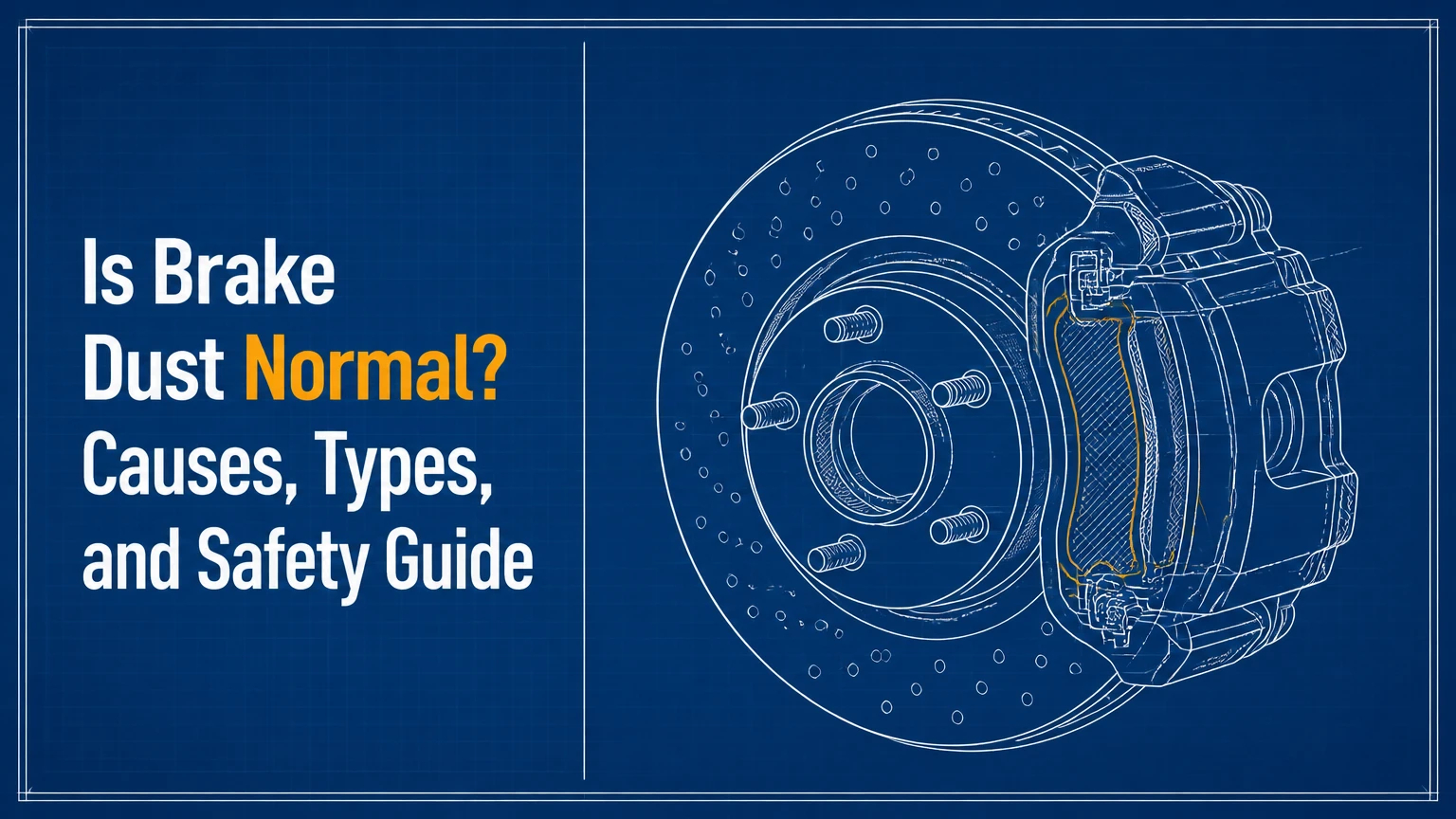
Brake dust is completely normal and represents an unavoidable byproduct of a properly functioning automotive friction braking system. It forms when heat and mechanical abrasion shear fine particles off the brake pads and cast-iron rotors during deceleration. Unless accompanied by pulling, grinding noises, or uneven accumulation on a single wheel, brake dust indicates normal system operation.
Key Facts: Brake Dust At A Glance
- Primary Composition: Consists of 60% to 70% iron particles sheared off the rotor, combined with carbon, metallic fibers, and resin adhesives from the friction pad.
- Primary Cause: Kinetic energy converting into thermal energy through abrasive friction, forcing microscopic wear particles to shed off components.
- Appearance Standard: Light gray or tan dust indicates low-wear ceramic pads; dark gray or black sticky dust indicates high-wear metallic or organic compounds.
- Safety Threshold: Symmetrical dust across front or rear axles is safe; asymmetrical dust concentrated on a single wheel points to a mechanical fault.
- Corrosion Danger: Raw iron particles inside brake dust oxidize rapidly when wet, creating corrosive pits in wheel clear coats if left untreated.
What Is Brake Dust Made Of?
Brake dust is a heterogeneous mixture of microscopic particulate matter shed by both the friction pad and the rotating disc (rotor) during braking. The exact chemical composition varies based on the friction compound installed, but standard street brake dust typically contains the following elements:
- Cast Iron Particulates (60%–70%): Microscopic iron shavings shaved from the disc surface during hard friction engagement. These iron filings give brake dust its highly abrasive, rusty character when exposed to water.
- Carbon Black and Graphite (15%–20%): Used as structural lubricants and friction modifiers within the pad matrix to ensure smooth pedal modulation.
- Polymer Resins and Adhesives (10%): Thermosetting phenolic resins that bind the pad materials together. Extreme thermal loads burn these resins, releasing carbonized dust.
- Metallic or Synthetic Fibers (5%–10%): Steel fibers, copper wire fragments, brass, Kevlar, or glass fibers added to improve structural strength and thermal transfer.
+-----------------------------------------------------------------------+
|                       Brake Dust Composition                          |
+-----------------------------------------------------------------------+
|  [======= Cast Iron Particulates (60-70%) =======]                    |
|  [=== Carbon Black & Graphite (15-20%) ===]                           |
|  [== Polymer Resins (10%) ==]                                         |
|  [= Metallic/Synthetic Fibers (5-10%) =]                              |
+-----------------------------------------------------------------------+
How Is Brake Dust Generated During Braking?
Brake dust generation follows a direct four-step mechanical and thermal degradation process every time you depress the brake pedal.
- Hydraulic Pressure Application: Pressing the brake pedal forces brake fluid down the hydraulic lines, driving the pistons inside the brake caliper outward.
- Mechanical Clamping Force: The caliper pistons clamp the inner and outer brake pads directly onto the surface of the spinning iron brake rotor.
- Thermal Transformation: Kinetic energy of the moving vehicle converts into intense friction heat. Surface temperatures at the pad-rotor interface quickly jump between 300°F and 1,200°F (149°C to 648°C) during routine braking.
- Shearing and Static Attachment: Extreme thermal shearing forces micro-particles off the pad material and rotor face. These hot, electrically charged particles exit the caliper assembly, picking up a static charge that causes them to cling to cold metal and clear-coated alloy wheels.
How Do Different Brake Pad Materials Affect Brake Dust Volume?
The primary factor determining how much brake dust your vehicle generates is the formulation of its brake pads. Automotive manufacturers utilize four main categories of friction materials, each balancing stopping power, thermal capacity, noise, and dust production.
                     +---------------------------+
                     |    Friction Materials     |
                     +---------------------------+
                                   |
         +-----------------+-------+-------+-----------------+
         |                 |               |                 |
         v                 v               v v
  +--------------+  +--------------+  +----------+  +-----------------+
  | Organic(NAO) |  | Semi-Metallic|  | Ceramic  |  | Low-Metallic    |
  | Moderate Dust|  | Heavy Dust   |  | Ultra-Low|  | High Performance|
  +--------------+  +--------------+  +----------+  +-----------------+
1. Ceramic Brake Pads
Ceramic brake pads feature dense glass-ceramic fibers, non-ferrous fill materials, and clay binders pressed together with high-temperature resin matrix compounds.
- Dust Profile: Generates an extremely small quantity of fine, light-gray or tan dust. The dust lacks heavy metallic iron, so it carries a low static charge, does not easily adhere to wheels, and remains virtually invisible on silver or aluminum wheels.
- Operating Range: Effective from 0°F to 1,000°F (-18°C to 537°C).
- Expected Lifespan: 50,000 to 75,000 miles under normal driving conditions.
- Rotor Wear Impact: Very low abrasive impact; maximizes rotor lifespan.
2. Semi-Metallic Brake Pads
Semi-metallic brake pads contain 30% to 65% metallic content by weight, consisting of steel wool, sintered iron powder, copper wire, and graphite lubricants bound by synthetic rubber or resin.
- Dust Profile: Generates large quantities of dense, black, greasy dust. Because of its high iron content, this dust oxidizes into red iron oxide (rust) when exposed to moisture and air, making it corrosive to clear coats if neglected.
- Operating Range: High thermal threshold, performing reliably from 30°F up to 1,300°F (-1°C to 704°C).
- Expected Lifespan: 30,000 to 50,000 miles.
- Rotor Wear Impact: Moderate to highly abrasive; speeds up disc wear.
3. Non-Asbestos Organic (NAO) Brake Pads
Organic brake pads mix soft materials like rubber, Kevlar, glass, carbon, and high-temperature resins.
- Dust Profile: Produces a moderate to high volume of dark, powdery dust. While less corrosive than metallic dust due to minimal iron content, the soft material wears quickly, requiring frequent cleaning.
- Operating Range: Low thermal limit; susceptible to severe brake fade above 600°F (315°C).
- Expected Lifespan: 25,000 to 40,000 miles.
- Rotor Wear Impact: Gentle on rotors, but wears out fast under hard use.
4. Low-Metallic NAO Pads (European Original Equipment)
Low-metallic pads are popular on European performance vehicles (such as BMW, Mercedes-Benz, and Audi). They use an organic base blended with 10% to 30% copper or steel fibers to improve high-speed braking stability.
- Dust Profile: Produces substantial amounts of dark, heavy, clingy dust that quickly covers alloy wheels.
- Operating Range: Performs exceptionally well between 0°F and 1,100°F (-18°C to 593°C).
- Expected Lifespan: 30,000 to 45,000 miles.
- Rotor Wear Impact: Moderate abrasive wear; often requires rotor replacement alongside pad changes.
Comparison of Brake Pad Materials
| Criteria | Ceramic Pads | Semi-Metallic Pads | Non-Asbestos Organic | Low-Metallic (Euro) |
|---|---|---|---|---|
| Dust Volume | Ultra-Low | Heavy | Moderate to High | High |
| Dust Color | Light Gray / Tan | Dark Gray / Black | Dark Brown / Black | Dark Gray |
| Corrosiveness | Very Low | High (Contains Iron) | Low | Moderate to High |
| Braking Power | Excellent (Daily) | Superior (Towing/Track) | Fair (Light City Use) | Exceptional (High-Speed) |
| Cold Bite | Fair | Excellent | Good | Excellent |
| Rotor Wear | Extremely Gentle | Highly Abrasive | Gentle | Moderate |
| Noise Profile | Quietest | Prone to squeaking | Very Quiet | Occasional Squeal |
| Typical Cost | $50–$120 / axle | $30–$80 / axle | $20–$50 / axle | $60–$140 / axle |
When Is Brake Dust Abnormal? (Troubleshooting Diagnostics)
While symmetrical brake dust buildup on both wheels of a shared axle is completely normal, specific dust patterns indicate mechanical failure, safety hazards, or improper component installation.
                            +--------------------------+
                            | Brake Dust Accumulation  |
                            +--------------------------+
                                         |
                     +-------------------+-------------------+
                     |                                       |
                     v                                       v
        +-------------------------+             +-------------------------+
        | Symmetrical (Both Sides)|             | Asymmetrical (One Side) |
        +-------------------------+             +-------------------------+
                     |                                       |
                     v                                       v
            [Normal Component Wear]             [Mechanical Fault Present]
                                                             |
                                      +----------------------+----------------------+
                                      |                      |                      |
                                      v                      v                      v
                             (Stuck Caliper Pin)   (Collapsed Brake Hose)   (Worn Metal Backing)
1. Why Is There Heavy Brake Dust On Only One Wheel?
Heavy brake dust concentrated on a single wheel points to a stuck brake caliper or a seized caliper slide pin. When a caliper pin corrodes or loses lubrication, the brake pad cannot retract away from the rotor after you release the pedal. The pad continuously drags against the spinning rotor, creating excessive frictional heat, rapid pad destruction, and heavy dust accumulation on that single side.
A secondary cause is internal delamination of a flexible rubber brake hose. The inner lining can tear and act as a one-way check valve, keeping hydraulic pressure locked inside the caliper and forcing the pads against the rotor continuously.
2. What Causes Sudden Spikes In Brake Dust Volume?
A sudden increase in brake dust production without changes in your driving habits usually signals that the friction material has worn down past its usable thickness. Once the friction layer drops below 2 to 3 millimeters, the structural backing plate binders begin disintegrating under thermal strain, releasing heavy debris.
3. What Does Metallic Grinding Combined With Dust Mean?
A harsh grinding sound accompanied by shiny, glitter-like metallic dust on the wheel indicates that the brake pad friction material is completely worn away. The steel backing plate of the brake pad is contacting the cast-iron rotor directly. Operating a vehicle in this state causes severe rotor gouging, extended stopping distances, and catastrophic brake failure.
How Can You Safely Clean and Prevent Brake Dust Buildup?
Because brake dust contains sharp iron particles, carbon polymers, and static charges, removing it requires specific chemical cleaning methods. Missteps during cleaning can ruin wheel finishes or damage brake hardware.
Safe Cleaning Steps
- Wait for Wheels to Cool: Never spray cold water or liquid cleaners on hot wheels or brake rotors. Thermal shock can warp iron rotors or cause chemical cleaners to dry instantly, leaving chemical stains on wheel coatings.
- Apply a Dedicated pH-Neutral Iron Remover: Spray a pH-neutral, color-changing wheel cleaner containing sodium thioglycolate onto dry wheels. This chemical selectively dissolves iron filings, turning them into a water-soluble purple liquid without damaging the wheel’s clear coat.
- Agitate with Soft Microfiber Brushes: Use soft synthetic or microfiber wheel brushes to work the chemical into recessed lug nut pockets and spoke corners. Never use steel wool, wire brushes, or abrasive pads, which strip away clear coat protections.
- Rinse with High-Pressure Water: Pressure-wash all dissolved residue off the wheel faces, barrels, and brake calipers.
- Apply Protective Sealants or Coatings: Once dry, apply a dedicated ceramic wheel coating or high-temperature fluoropolymer sealant. These protective barriers lower surface energy, preventing fresh dust from bonding statically to the wheel.
Safety Warning: Never use compressed air to blow accumulated brake dust out of brake calipers or drum assemblies. Inhaling airborne particulate matter poses serious respiratory health risks. Always use a dedicated wet aerosol brake cleaning spray to damp down and wash away dust particles safely.
Which Brake Pad Material Should You Choose?
Matching your friction material to your specific driving requirements minimizes unwanted brake dust without sacrificing necessary stopping power.
+-------------------+--------------------------------+--------------------------------+
| User Profile      | Recommended Material           | Core Benefit                   |
+-------------------+--------------------------------+--------------------------------+
| Daily Commuter    | Ceramic Friction Pads          | Pristine wheels, long life     |
| Heavy Towing / Truck| Premium Semi-Metallic Pads   | High thermal fade resistance   |
| High Performance  | Low-Metallic / Track Pads      | Maximum high-speed friction    |
+-------------------+--------------------------------+--------------------------------+
Daily Commuters and Luxury Car Drivers
- Recommendation: High-grade Ceramic Brake Pads.
- Why: Ceramic compounds keep wheels clean, operate silently, and provide smooth, predictable pedal modulation under everyday traffic conditions.
Heavy Towing Vehicles and Trucks
- Recommendation: Heavy-Duty Semi-Metallic Brake Pads.
- Why: Safety takes priority over wheel cleanliness when hauling or towing heavy loads. Semi-Metallic pads maintain their friction coefficient at extreme temperatures where ceramic pads might experience thermal fade.
Performance and Track Drivers
- Recommendation: Low-Metallic European-Spec or Track-Specific Pads.
- Why: High-speed driving demands instant bite and high thermal conductivity. The increased dust accumulation is a necessary trade-off for fade-free performance at elevated temperatures.
Frequently Asked Questions
Why do front wheels generate more brake dust than rear wheels?
Front wheels generate roughly 60% to 70% of all brake dust because weight transfers forward during deceleration. This dynamic places most of the stopping burden on the front brake assemblies, requiring larger rotors, bigger calipers, and higher clamping force that wear down front pads faster than rear ones.
Can brake dust ruin your car wheels?
Yes, brake dust can permanently ruin alloy wheels if left unwashed. The hot iron particles inside the dust oxidize when exposed to air and moisture, rusting and burning through the wheel’s clear coat. Over time, this leads to deep pitting, surface corrosion, and permanent clear coat failure.
Will installing low-dust ceramic pads ruin stopping performance?
No, modern ceramic brake pads offer excellent stopping power that matches or exceeds original factory standards for normal daily driving. However, for extreme applications like heavy towing or track driving, high-temperature semi-metallic pads perform better under intense continuous heat.
Are front and rear brake pads identical?
No, front and rear brake pads differ in size, shape, and friction area. Front pads are significantly larger to handle higher braking loads and weight transfer, whereas rear pads are smaller and often integrate parking brake mechanisms.
Does wet weather make brake dust build up faster?
Wet weather speeds up brake dust adhesion because rainwater reacts with the iron particles in the dust. This reaction forms sticky iron oxide (rust) that binds strongly to wheel surfaces, making the dust harder to wash away than dry particles.


