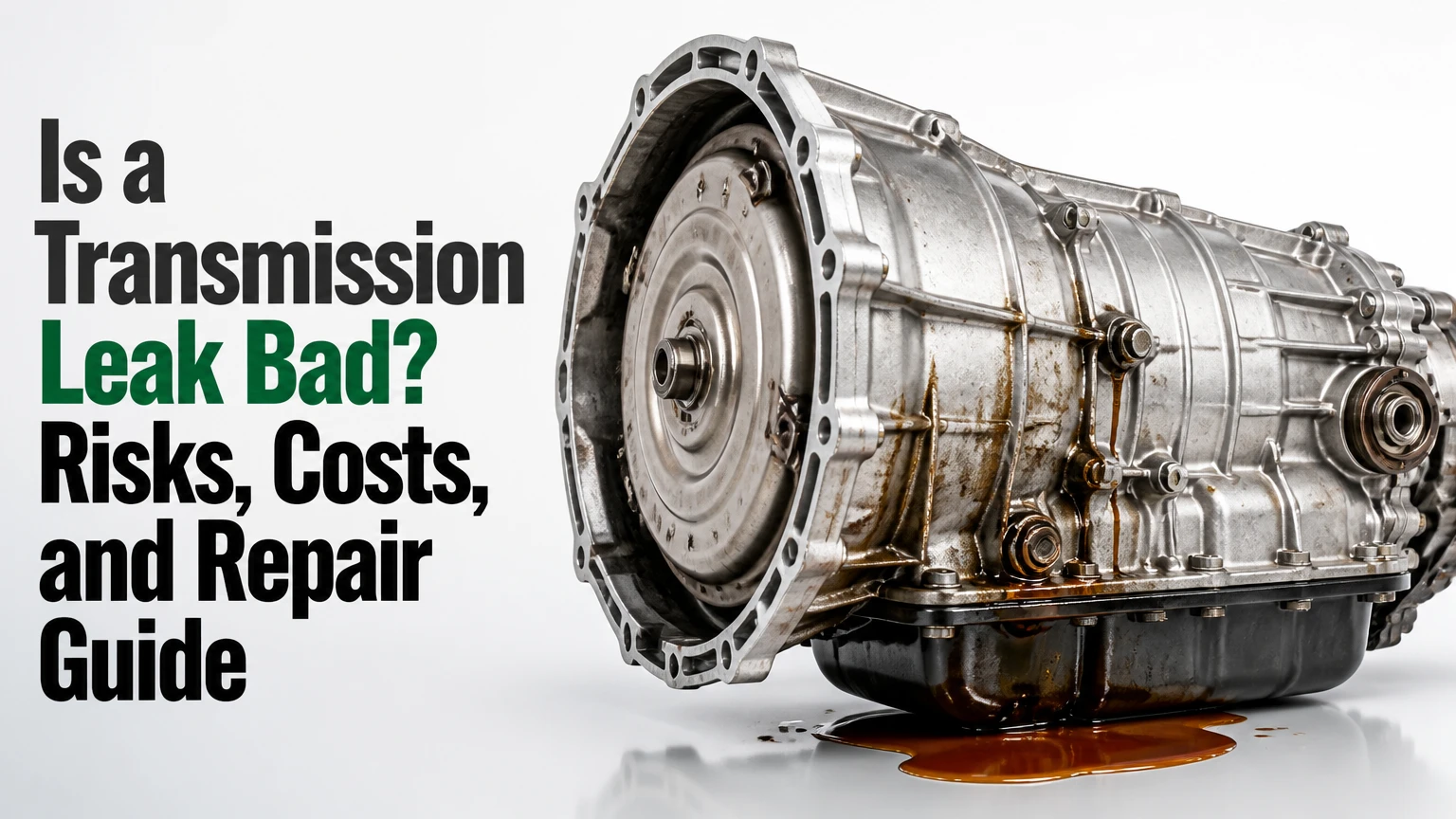
A transmission leak is extremely bad and requires immediate mechanical intervention. Operating a vehicle with insufficient transmission fluid leads to hydraulic pressure failure, excessive friction heat, and clutch slippage that can destroy the internal gear assembly within miles. Full transmission replacements cost between $3,500 and $7,500, whereas resolving a minor seal leak early costs between $150 and $450.
At a Glance: Essential Transmission Leak Facts
- Critical Severity: Driving with a transmission fluid leak can cause permanent catastrophic failure in under 10 miles.
- Primary Cause: Hardened rubber seals, worn oil pan gaskets, degraded axle seals, or corroded cooler lines.
- Fluid Appearance: Healthy fluid is bright red or pink; burnt or failing fluid appears dark brown or black.
- Repair Costs: Minor seal repairs range from $200 to $600, while complete remanufactured units cost $3,500 to $7,000+.
- Immediate Action: Stop driving immediately, check fluid levels if equipped with a dipstick, and tow the vehicle to a certified shop.
Why Is a Transmission Leak Considered a Critical Repair Need?
A transmission leak is critical because transmission fluid serves four distinct, simultaneous functions: hydraulic actuation, gear cooling, component lubrication, and friction control. Unlike engine oil, which primarily lubricates and cools, automatic transmission fluid (ATF) acts as a physical force transmitter.
When fluid leaks out, hydraulic line pressure drops below operational thresholds (typically 60 to 200 PSI depending on vehicle load). Without adequate pressure, the transmission cannot engage internal clutch packs firmly. The resulting clutch slippage creates immediate thermal spikes exceeding 300°F (149°C), causing irreversible mechanical damage.
What Happens When You Drive With a Transmission Leak?
When you drive with a transmission leak, the system undergoes a rapid, six-stage mechanical failure chain.
[Fluid Volume Drops] ➔ [Pump Draws Air] ➔ [Hydraulic Pressure Drops] ➔ [Clutches Slip] ➔ [Thermal Spike Occurs] ➔ [Internal Components Fuse]
- Fluid Volume Depletion: As fluid exits through a damaged seal or gasket, total system volume drops below the minimum safe mark.
- Fluid Aeration (Foaming): The hydraulic pump draws in air pockets along with the remaining liquid. Foamy fluid compresses easily, rendering hydraulic controls inefficient.
- Pressure Collapse: Hydraulic pressure drops below the force required to clamp internal clutches and bands together.
- Friction Material Slippage: Clutch plates slip against mating steel disks during gear shifts, generating rapid surface friction.
- Thermal Degradation: Friction heat rapidly cooks the fluid. Fluid temperatures above 240°F (115°C) cause internal O-rings to harden, accelerate fluid oxidation, and form harmful varnish.
- Catastrophic Seizure: Friction linings burn off, metal components grind directly against each other, and loose debris clogs the microscopic passages inside the valve body.
How to Identify a Transmission Leak by Color and Smell
You can identify a transmission leak by placing a white piece of cardboard under your engine bay overnight to inspect the fluid’s color, viscosity, and odor.
| Fluid Condition | Visual Appearance | Odor Characteristic | Operational Status |
| Fresh / Healthy | Transparent bright pink or cherry red | Slightly sweet or petroleum-like | System functioning normally. |
| Aged / Service Due | Semi-translucent dark brown | Musty or flat | Requires fluid drain and refill service. |
| Severely Degraded | Opaque black or dark brown | Strong burnt toast or acrid smell | Internal clutch wear has occurred; requires professional inspection. |
| Contaminated (Cooler Failure) | Milky pink “strawberry milk” appearance | Odorless or chemical smell | Radiator internal cooler failure; engine coolant mixed with fluid. |
What Are the Most Common Transmission Leak Locations?
Transmission leaks originate from several distinct mechanical seals, gaskets, or lines across the powertrain setup.
1. Transmission Pan Gasket
The oil pan sits at the bottom of the transmission housing and stores the fluid reserve. Over time, rubber or cork pan gaskets degrade due to heat cycling, thermal expansion, or improper bolt torque during past services. Road debris striking the pan can also dent the sealing flange.
2. Torque Converter Front Pump Seal
Located behind the transmission bellhousing, the front pump seal seals the input shaft where it meets the torque converter. Replacing this seal requires completely removing the transmission from the vehicle, making labor the dominant repair cost.
3. Extension Housing Rear Seal
On rear-wheel-drive (RWD) vehicles, the rear extension housing seal seals the connection between the transmission output shaft and the driveshaft slip yoke. Driveshaft vibrations or worn internal bushings accelerate wear on this seal.
4. Transmission Cooler Lines
Flexible metal lines or rubber hoses carry hot fluid from the transmission to an external cooler or radiator heat exchanger. Rust, road salt exposure, and chassis vibrations often cause these lines to chafe, pinhole, or leak near connection fittings.
5. Axle Output Seals
On front-wheel-drive (FWD) vehicles with transaxles, rubber axle seals fit around the left and right CV driveshafts. Wear occurs over high mileages or when replacing CV axles without changing the output seals.
How Much Does It Cost to Fix a Transmission Leak?
Fixing a transmission leak costs anywhere from $150 for simple external repairs to $1,500+ for internal seal replacements, depending on labor requirements.
Diagnostic Fee ($100–$200) ➔ Part Replacement ($20–$150) ➔ Professional Labor ($150–$1,200)
- Transmission Pan Gasket Replacement: $180 to $350 (1 to 2 hours labor).
- Cooler Line Replacement: $250 to $550 (1.5 to 3 hours labor).
- Axle Seal Replacement (Single Side): $200 to $450 (1.5 to 2.5 hours labor).
- Rear Extension Housing Seal: $220 to $400 (1.5 to 2 hours labor).
- Front Pump / Torque Converter Seal: $800 to $1,500 (6 to 10 hours labor due to transmission drop).
- Full Remanufactured Transmission Swap: $3,500 to $7,000+ (10 to 16 hours labor).
Can You Use Stop-Leak Additives for a Transmission Leak?
You should not use over-the-counter stop-leak additives except as a temporary emergency measure to reach a repair facility. Stop-leak products contain chemical solvents and plasticizers that force dry, hardened rubber seals to swell and soften.
While swelling can temporarily pause a minor leak, the chemical reaction continues indefinitely. Over time, it softens healthy seals, causes them to tear under pressure, and leaves gummy residues that clog internal valve body solenoids with passages as small as 0.015 inches.
How to Properly Check Your Transmission Fluid Level
Checking automatic transmission fluid requires a specific procedure because fluid expands significantly as its temperature increases.
- Park Safely: Park the vehicle on a level surface, engage the parking brake, and leave the engine running at idle.
- Warm the System: Ensure the engine and transmission have reached normal operating temperature (typically 160°F–180°F after 10–15 minutes of driving).
- Cycle the Gear Selector: Depress the brake pedal fully and shift slow through every gear position (P, R, N, D, L) holding each for 2 seconds to purge air, returning to Park (P).
- Pull and Clean Dipstick: Locate the transmission dipstick (usually marked red or yellow). Pull the dipstick, wipe it clean with a lint-free shop towel, and reinsert it fully.
- Read the Fluid Level: Pull the dipstick again and verify the fluid sits between the “HOT” crosshatch marks or pinholes. If reading on the “COLD” mark while hot, the system is dangerously low.
Note: Many modern vehicles feature “sealed” automatic transmissions without a dipstick. These systems require a lift, scan tool temperature monitoring, and a bottom check plug to verify levels.
Frequently Asked Questions
Can a transmission leak cause gear slipping?
Yes, a transmission leak directly causes gear slipping. Lower fluid volume reduces internal hydraulic pressure, preventing the friction clutches from fully locking together during shifts.
How long can you drive with a transmission leak?
You should not drive a vehicle with a transmission leak. If the leak is a minor slow weep, you may drive briefly to a service center while continually topping off the fluid. A heavy drip or leak under pressure can destroy internal components within 5 to 10 miles.
Is a transmission fluid leak covered by auto insurance?
Auto insurance only covers transmission fluid leaks if caused by a direct covered impact, such as hitting road debris, a curb, or an accident. Standard insurance policies explicitly exclude leak repairs caused by wear, rust, or aging seals.
What color is transmission fluid on the driveway?
Transmission fluid appears as a translucent bright red, pink, or dark brown puddle on the driveway. It has an oily feel similar to engine oil but carries a distinct petroleum or burnt odor.
Is it safe to top off transmission fluid and keep driving?
Topping off fluid is a short-term temporary workaround, not a mechanical solution. If the leak rate increases suddenly while driving at high speeds, fluid volume can drop rapidly and cause total transmission failure without immediate warning.


