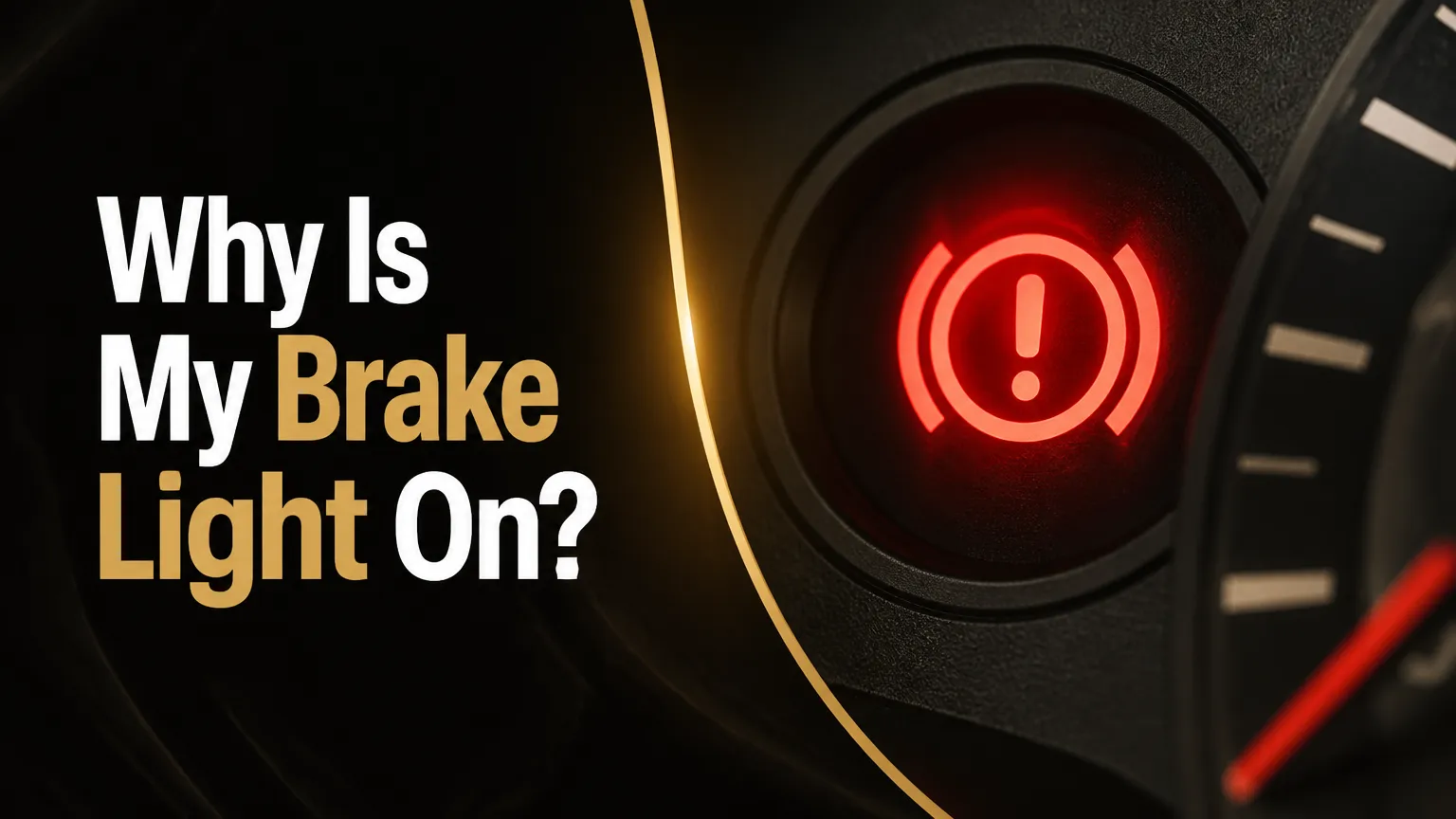
The red brake light on a vehicle dashboard illuminates when the system detects a critical safety hazard. The most common triggers include brake fluid dropping below 70 percent capacity, brake pads wearing thinner than 3 millimeters, or the parking brake remaining partially engaged. Drivers must inspect the hydraulic system immediately.
At a Glance:
- A master cylinder sensor activates the dashboard warning if brake fluid drops below the minimum volume threshold.
- Brake pads wearing down past 3 millimeters require calipers to push more fluid, triggering a low fluid alert.
- A parking brake lever engaged by just 1 degree will close the electrical circuit and illuminate the warning.
- A soft or sinking brake pedal indicates hydraulic failure and means the vehicle is completely unsafe to drive.
- Upgrading factory tail lights to LED bulbs can cause a voltage drop that tricks the system into reporting an error.
What triggers the low brake fluid warning?
A float sensor inside the master cylinder reservoir trips the warning circuit when brake fluid volume falls below the minimum line. Losing approximately 100 to 150 milliliters of hydraulic fluid from a fully topped-off system will cause this sensor to reach the bottom of its travel.
The master cylinder reservoir sits inside the engine bay against the driver-side firewall. The fluid inside transfers the mechanical force from the brake pedal directly to the wheel calipers. When the system develops a leak in a rusted steel line or a degraded rubber hose, the internal fluid volume drops rapidly.
A study published by the Car Care Council (2019) found that 18 percent of vehicles on the road operate with dangerously low or contaminated brake fluid. The sensor acts as an early detection mechanism. Once the float drops below the minimum marker, it closes an electrical contact switch. This switch sends a direct signal to the body control module, lighting up the red dashboard icon.
How do worn brake pads cause the dashboard alert?
Thin brake pads force the caliper pistons to extend further outward to reach the brake rotors. This extension pulls excess hydraulic fluid out of the master cylinder reservoir and down into the brake lines. When brake pads wear down from a new thickness of 12 millimeters to a discarded thickness of 2 or 3 millimeters, the displaced fluid lowers the reservoir level enough to trip the warning sensor.
Automotive braking systems operate on a closed hydraulic loop. The total volume of fluid never changes unless a leak occurs. However, the physical location of that fluid shifts as the friction material on the pads wears away.
Mechanics often see owners mistakenly top off the fluid reservoir when the light comes on due to worn pads. Adding fluid solves the dashboard warning temporarily. When a technician eventually installs new brake pads, compressing the caliper pistons pushes all that extra fluid back up into the reservoir. This causes the master cylinder to overflow and spill corrosive brake fluid onto the engine bay paint.
Why does the brake light stay on when the parking brake is released?
A seized mechanical cable underneath the vehicle often holds the rear brakes slightly closed even after the interior handle returns to the resting position. The physical lever or electronic switch inside the cabin requires less than 5 percent of its total travel to activate the warning light circuit.
Drivers frequently release the handbrake or foot pedal and assume the system has disengaged. The interior lever drops completely flat. However, rust, road salt, or packed mud can freeze the braided steel cable running along the undercarriage. The tension remains fully applied to the rear calipers or drum shoes.
Because the interior switch mechanism relies on the cable returning to its zero-tension resting point, a seized cable keeps the switch engaged. An angle of just 1 degree on the lever hinge will complete the electrical circuit. You can verify this by pulling up firmly on the parking brake handle. If it feels completely loose for the first few inches of travel, the cable underneath the vehicle is stuck in the applied position.
What is the difference between the red brake light and the yellow ABS light?
The red light indicates a fundamental mechanical or hydraulic failure in the primary braking system. The yellow ABS light signals a computer malfunction in the anti-lock sliding prevention module.
Automakers separate these warnings because they carry different safety implications. A red warning means the vehicle might not stop when you press the pedal. A yellow warning means the vehicle will stop normally, but the tires might lock up and skid during a panic braking scenario on wet pavement.
| Warning Light Type | Primary Component Monitored | Typical Causes | Safety Risk Level |
|---|---|---|---|
| Red BRAKE Light | Master cylinder, fluid, parking brake | Low fluid, worn pads, hydraulic leaks | Extreme (Do not drive) |
| Yellow ABS Light | Wheel speed sensors, ABS pump | Damaged sensor wire, dirty reluctor ring | Moderate (Drive to shop) |
| Both Lights On | Electronic Brakeforce Distribution | Catastrophic module failure, cut wire harness | Extreme (Do not drive) |
If a single wheel speed sensor fails, the yellow ABS light illuminates. If multiple sensors fail simultaneously, the vehicle computer cannot safely calculate brake proportioning between the front and rear axles. In this specific scenario, the computer forces the main red warning to illuminate alongside the yellow indicator.
Why does the brake warning flash only when accelerating or turning?
Sloshing fluid inside a marginally low reservoir causes the internal float switch to drop temporarily during physical momentum changes. When brake fluid sits exactly at 75 percent capacity, driving down a steep 10 percent grade or launching the vehicle aggressively pushes the fluid away from the sensor.
The master cylinder reservoir is a wide, shallow plastic tank. The level sensor usually sits near the front or the center of the housing. Acceleration forces the liquid volume toward the rear of the tank. The sudden void at the front of the reservoir allows the magnetic float switch to drop past the minimum threshold.
This creates a flickering or flashing effect on the dashboard. The red icon illuminates while you hold the accelerator pedal and vanishes the moment you return to a steady cruising speed. The liquid settles back into a level pool, lifting the float switch and breaking the electrical circuit. This symptom confirms the hydraulic fluid is right on the edge of the low limit, usually pointing to heavily worn friction pads rather than a catastrophic leak.
Can cold weather cause a false brake system warning?
Extreme cold causes hydraulic brake fluid to contract inside the reservoir, reducing the total fluid volume enough to trigger a temporary sensor alert. A car parked overnight in negative 15 degrees Celsius (5 degrees Fahrenheit) weather will experience a 3 percent to 5 percent drop in fluid volume compared to summer temperatures.
If your fluid level was resting just above the minimum line in autumn, the physical shrinkage of the fluid during a freezing winter morning will pull the level down. The float switch drops, and the dashboard illuminates upon starting the engine.
As the engine block warms up, the ambient heat under the hood transfers into the master cylinder. The hydraulic fluid expands back to its normal volume, lifting the float switch and turning the dashboard indicator off. While this appears to be a false alarm or an electrical glitch, it actually serves as a valid early warning. The system is telling the driver that the baseline fluid level has dropped too close to the minimum safety margin.
Why is the dashboard light on but the fluid reservoir is full?
Degraded internal rubber seals inside the master cylinder allow pressurized fluid to bypass the piston instead of pushing into the brake lines. You can look at the plastic reservoir and see it is completely full to the maximum line, yet the dashboard warning remains active.
This occurs because of a pressure differential switch. Many vehicles monitor the pressure balance between the front and rear brake circuits. When internal seals degrade, fluid slips backward inside the master cylinder bore. The pedal sinks to the floor under your foot. The pressure differential switch detects this severe imbalance and trips the red light, regardless of the fluid level sitting inside the top reservoir.
Another hidden edge case involves gasket suction failure. The rubber diaphragm underneath the master cylinder cap can become deformed over time. As pads wear and fluid drops slightly, the tight seal creates a vacuum. This vacuum suction holds the fluid level sensor float pinned to the bottom of its travel. The reservoir looks completely full to the naked eye, but the sensor is trapped in the empty position.
Do aftermarket LED tail lights trigger system warnings?
Installing LED bulbs creates a significant electrical resistance drop that tricks the body control module into registering a burnt-out incandescent bulb. Modern vehicles monitor the electrical resistance of the exterior lighting circuit to alert drivers when a safety bulb burns out.
Factory incandescent tail lights provide high resistance. Aftermarket LED replacements draw a fraction of the power and provide very low electrical resistance. The vehicle computer measures this drop in voltage and assumes the bulb filament has snapped.
Depending on the specific make and model, this voltage mismatch will trigger a general red braking system error, a specific “lamp out” text warning, or hyper-flashing turn signals. Drivers who recently upgraded their exterior lighting and immediately noticed a dashboard warning can usually solve the problem by wiring load resistors into the tail light harness. These resistors artificially mimic the power draw of an incandescent bulb to satisfy the computer checks.
How do you check the brake fluid level manually?
Owners must locate the translucent plastic reservoir mounted to the firewall inside the engine bay and read the fluid level against the molded exterior markers. You do not need any specialized tools to perform this inspection.
- Park the vehicle on completely flat ground and turn off the engine.
- Open the hood and locate the master cylinder, which sits directly in front of the driver seat position on the back wall of the engine bay.
- Shine a flashlight against the side of the plastic reservoir.
- Locate the “MAX” and “MIN” lines molded into the side of the plastic housing.
- Gently shake the reservoir if the fluid is difficult to see. The movement will create a visible ripple line.
You should also check the condition of the fluid while measuring the volume. The color of the hydraulic liquid provides distinct clues about the health of your stopping system.
| Fluid Color | Condition | Recommended Action |
|---|---|---|
| Clear with a yellow tint | Fresh and healthy | No action required. |
| Dark brown | Absorbed atmospheric moisture | Schedule a fluid flush within 6 months. |
| Pitch black or murky | Contaminated with degraded rubber | Flush immediately and inspect cylinder seals. |
How do you reset the warning after adding fluid?
The red brake system warning resets automatically once the underlying hydraulic pressure, fluid level, or mechanical switch fault is physically corrected. Unlike a Check Engine Light, which often requires an OBD2 diagnostic scanner to clear the stored memory codes, the primary hydraulic warning operates on physical, real-time switches.
If you added fluid to the master cylinder, the internal float switch rises immediately. The moment the float lifts past the minimum threshold, the electrical circuit breaks. Turn the ignition key off, wait ten seconds, and turn the vehicle back on. The red dashboard icon should vanish during the initial startup bulb check.
If the light remains illuminated after you top off the fluid, the physical float switch is likely jammed. You can lightly tap the side of the plastic reservoir with the handle of a screwdriver to dislodge a stuck float. If you replaced thin brake pads, the warning will clear the moment you pump the pedal and build hydraulic pressure back into the newly seated caliper pistons.
How much does it cost to diagnose and fix the underlying issue?
Repairing a brake warning light costs between $100 and $800 depending on whether the vehicle needs a simple fluid top-off, new friction pads, or a complete master cylinder replacement.
Most independent repair shops charge a standard diagnostic fee of $80 to $120 to inspect the hydraulic system and pull body control module codes. This diagnostic fee is typically waived or rolled into the final cost if you authorize the shop to perform the repairs.
| Repair Type | Typical Parts Cost | Typical Labor Cost | Total Estimated Range |
|---|---|---|---|
| System Inspection & Fluid Top-Off | $10 | $80 – $120 | $90 – $130 |
| Brake Pad Replacement (Per Axle) | $40 – $90 | $100 – $150 | $140 – $240 |
| Brake Fluid System Flush | $20 – $40 | $90 – $130 | $110 – $170 |
| Master Cylinder Replacement | $100 – $250 | $200 – $350 | $300 – $600 |
According to the Automotive Service Association (2022), the average master cylinder replacement takes roughly 2.5 hours of labor. If the warning stems from a severed ABS wheel speed sensor wire, you can expect to pay around $150 to $250 for a replacement sensor and one hour of shop labor.
Is it safe to drive to a mechanic with the dashboard indicator illuminated?
Driving a vehicle with a red brake warning light is strictly unsafe unless the brake pedal maintains normal resistance and stopping distance. If the pedal feels soft, spongy, or sinks to the floorboard under steady pressure, do not drive the car.
A sinking pedal indicates a severe hydraulic failure. The pressurized fluid is either leaking out of a broken steel line onto the pavement or bypassing the internal seals of the master cylinder. In both scenarios, the mechanical force from your foot will not transfer to the wheel calipers. You have zero emergency stopping power. You must have the vehicle towed to a repair facility.
If the pedal feels completely firm and the vehicle stops exactly as it normally does, the light is likely triggering due to a stuck parking brake switch, mildly worn pads, or a minor fluid drop. In this specific scenario, driving cautiously at low speeds directly to a mechanic is generally acceptable. Keep your following distance triple the normal length, and test the pedal feel constantly during the trip.
What happens if you ignore a red hydraulic system warning?
Ignoring a primary hydraulic system warning eventually leads to complete brake failure and a total inability to stop the vehicle. The warning light exists specifically to catch progressive wear or minor leaks before they escalate into catastrophic mechanical collapse.
If the light activated due to worn pads, continuing to drive will eventually grind the friction material down to the bare metal backing plates. The steel backing plate will gouge deep trenches into the brake rotor. This destroys the rotor and drastically increases your total repair bill. Metal-on-metal contact also generates immense heat, which can literally boil the hydraulic fluid inside the caliper and cause sudden pedal failure.
The National Highway Traffic Safety Administration (NHTSA, 2021) notes that hydraulic system faults account for over 20 percent of brake-related collisions. If the warning stems from a slow fluid leak, ignoring it guarantees the reservoir will eventually run completely dry. Once air enters the master cylinder bore, the hydraulic pressure drops to zero. Pressing the pedal will yield no physical resistance, and the vehicle will coast until it hits an obstacle.
The Bottom Line
The red dashboard brake light is a non-negotiable safety alert that demands immediate attention. It primarily signals low hydraulic fluid, significantly worn brake pads, or a parking brake cable that refuses to disengage fully. Always check your master cylinder fluid reservoir first, as a drop below the 70 percent capacity mark will instantly trigger the float switch warning. Never attempt to drive the vehicle if the brake pedal feels spongy or sinks to the floor, as this indicates a total loss of hydraulic pressure and stopping capability.


