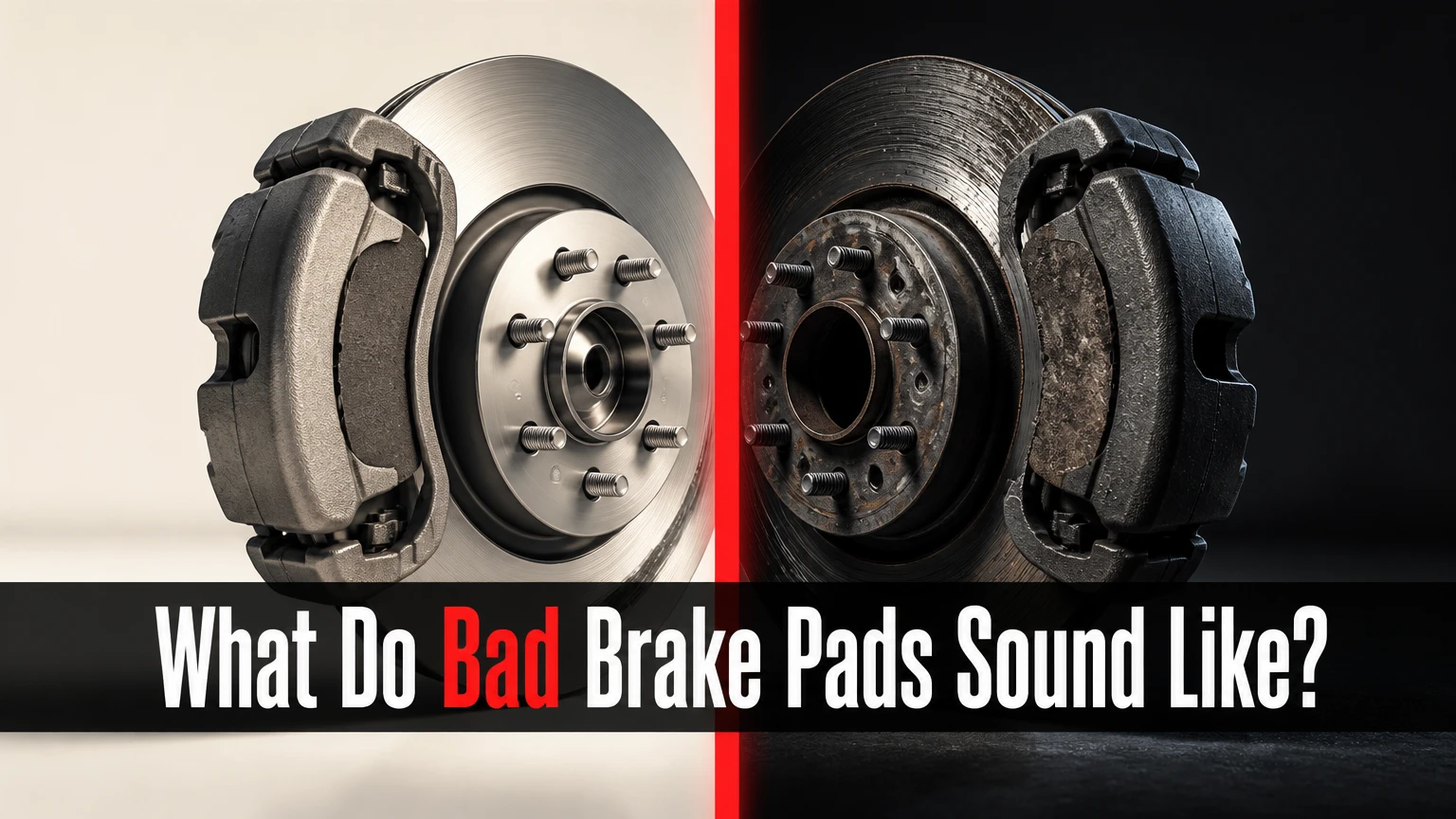
Bad brake pads emit a high-pitched squealing, a harsh metallic grinding, or a rhythmic thumping noise. Squealing indicates the mechanical wear sensor is continuously scraping the rotor. Grinding means the friction material is completely depleted, causing steel-on-steel contact. Thumping suggests uneven pad deposits or warped brake rotors.
At a Glance:
- Brake pad wear indicators trigger a warning squeal at 4 millimeters of remaining friction material.
- A loud grinding sound means the pad backing plate is actively gouging the rotor surface.
- Brake pads can reach complete failure without making any noise if the electronic wear sensors break.
- Thumping or shuddering vibrations indicate rotor runout exceeding 0.002 inches.
- Morning brake squeak is typically harmless surface rust, not a sign of mechanical failure.
What Causes High-Pitched Squealing While Driving?
High-pitched squealing is caused by a small metal clip called a wear indicator dragging against the brake rotor. Manufacturers embed this steel tab into the brake pad material. As the friction material wears down to the manufacturer replacement threshold, the metal tab makes physical contact with the spinning rotor.
This specific noise follows a clear pattern. The screeching remains continuous while the vehicle is in motion and often disappears completely when the driver presses the brake pedal. Pressing the pedal clamps the caliper tight, which temporarily halts the vibration of the metal clip. If you hear a high-pitched squeal that vanishes during braking, the wear indicator has successfully alerted you to a necessary replacement. Mechanics usually find about 4 millimeters of friction material remaining when this noise begins.
Why Do Brakes Make A Harsh Metallic Grinding Noise?
Harsh metallic grinding happens when the brake pad friction material is 100 percent gone. The steel backing plate of the brake pad presses directly against the cast iron brake rotor. This creates an aggressive scraping or crunching sound every time the driver applies the brakes.
Unlike a squeal, grinding indicates active, severe damage. The steel-on-steel contact gouges deep grooves into the rotor surface. Drivers will often feel a rough, scraping vibration in the brake pedal simultaneously. Sometimes, a tiny pebble or road salt crystal trapped between the pad and rotor creates a very similar metal grinding noise. This trapped debris mimics worn-out brakes despite the pads being completely healthy. However, a mechanic must remove the wheel to verify whether the cause is missing friction material or a foreign object.
What Does A Thumping Or Shuddering Brake Sound Mean?
A rhythmic thumping or low-frequency shuddering sound means the brake rotors are warped or possess uneven pad deposits. The brake pads are skipping across an undulating surface instead of clamping onto a perfectly flat disc.
According to guidelines from the National Institute for Automotive Service Excellence (ASE), the maximum allowable rotor runout (warpage) is between 0.002 and 0.005 inches. Any variation beyond this microscopic threshold pushes the brake pads outward aggressively during wheel rotation. This rapid pushback translates through the hydraulic system as a thumping sound accompanied by a violent shake in the steering wheel. Hard braking causes extreme heat, which melts the pad surface into a mirror-smooth glass finish. This glazed pad illusion can also cause low-frequency vibrations because the pad slips and catches against the rotor unevenly.
How Thick Should Brake Pads Be To Prevent Noise?
Brake pads should measure at least 4 millimeters (0.157 inches) thick to prevent warning noises. Standard brake pads measure roughly 12 millimeters (0.472 inches) thick when brand new out of the box.
Maintaining adequate thickness prevents the wear indicator clips from striking the rotor. The lifespan of standard brake pads ranges from 30,000 to 70,000 miles. This lifespan varies heavily based on stop-and-go city driving versus highway commuting.
| Pad Condition | Measurement (mm) | Measurement (inches) | Expected Sound |
|---|---|---|---|
| Brand New | 10 – 12 mm | 0.393 – 0.472 in | Silent |
| Healthy | 6 – 9 mm | 0.236 – 0.354 in | Silent |
| Replace Soon | 4 – 5 mm | 0.157 – 0.196 in | Intermittent Squeal |
| Minimum Safe | 2 – 3 mm | 0.078 – 0.118 in | Constant Screech |
| Failed | 0 – 1 mm | 0.000 – 0.039 in | Harsh Grinding |
Can You Drive With Squeaking Brakes?
Yes, you can drive with squealing brakes for a highly limited time. The squeal functions as an early warning system designed to give drivers a short grace period.
Automotive technicians generally advise that you have 300 to 500 miles of safe driving left once the high-pitched warning screech begins. Pushing the vehicle beyond this 500-mile window rapidly burns through the final millimeters of friction material. Commuting with squeaking brakes does not immediately compromise stopping power. The brake system will still halt the vehicle effectively. However, ignoring the sound guarantees an eventual transition to metal-on-metal grinding.
How Long Does It Take For Grinding Brakes To Ruin A Rotor?
Grinding brakes will ruin a rotor within 50 to 100 miles of driving. Steel-on-steel contact acts like a metal lathe. The hardened backing plate of the brake pad instantly begins cutting deep concentric grooves into the softer cast iron rotor.
Once grinding starts, the structural integrity of the rotor drops immediately. The intense friction generates massive heat spikes that permanently warp the metal disc. Drivers who attempt to commute for a few days with grinding brakes will turn a standard pad replacement job into a mandatory rotor replacement. If the grinding noise is exceptionally loud and accompanied by a soft brake pedal, the vehicle is unsafe to drive at any speed.
Why Do Brakes Squeal Only In The Morning?
Brakes squeal loudly during the first two or three stops in the morning because of normal moisture oxidation. Overnight dew or high humidity creates a microscopic layer of surface rust on bare iron brake rotors.
When you reverse out of a driveway or stop at the first intersection, the brake pads scrape this rust layer off the disc. The resulting sound is a loud, abrasive squeak that completely disappears after the rust is gone. This morning squeal does not mean the brake pads are failing. Parked vehicles located near coastal environments or areas with heavy rainfall will experience this oxidation daily.
Why Do Brakes Make Noise When Reversing?
Brakes make noise when reversing because the brake pads shift slightly within the caliper housing. Forward driving creates a specific wear pattern on the leading edge of the brake pad. Reversing forces the pad to hit the rotor at an unfamiliar, backward angle.
This reversed angle causes rust ridges on the outer edge of the rotor to scrape loudly against the pad backing. Automotive calipers have slight clearance gaps that allow the pads to move back and forth. When the wheel spins in reverse, the pad slams against the opposite side of the retaining clip. This motion frequently produces a single loud click or a brief scraping noise.
Why Do Brakes Squeak Only When Turning?
Brakes that squeak only when turning indicate a failing wheel bearing, not bad brake pads. A loose or damaged wheel bearing allows the entire wheel and rotor assembly to tilt slightly during a cornering maneuver.
This lateral tilt forces the spinning rotor to rub hard against the stationary brake pad. The resulting sound mimics a brake squeal exactly, but it only happens when the steering wheel is turned in a specific direction. Replacing the brake pads will not fix this issue. Mechanics test for bad wheel bearings by elevating the vehicle and checking the tire for lateral play (wobble).
Can Brake Pads Wear Out Without Making Any Sound?
Yes, brake pads can wear down to complete nothingness without making a single sound. The silent killer of brake systems occurs when electronic wear sensors fail or mechanical indicator clips snap off completely.
Corrosion from road salt often weakens the thin metal indicator clips. A rusted clip will simply break off instead of vibrating against the rotor. Electronic wear sensors, common on European vehicles, suffer from frayed wires and sensor blinding. Dirt and brake dust can coat the sensor tip, preventing the dashboard computer from registering a worn pad. Drivers relying entirely on dashboard warnings might experience sudden braking loss without any audible warning.
Why Are Brand New Brake Pads Squealing?
Brand new brake pads squeal if they lack proper lubrication or fail to undergo a mandatory bedding process. Mechanics must apply high-temperature anti-seize lubricant to the back of the pads and the slide pins during installation.
Dry installation causes the metal backing plate to vibrate rapidly against the caliper piston, creating a high-pitched screech. Additionally, new pads require “bedding in,” which is a specific sequence of hard stops designed to transfer a thin layer of pad material onto the rotor. Skipping the bedding process leaves the pad surface incompatible with the rotor face. Track-ready racing pads also squeal aggressively at low temperatures even when perfectly installed.
How Does Ceramic Brake Pad Noise Compare To Metallic Pads?
Ceramic brake pads run significantly quieter than semi-metallic pads. Ceramic compounds absorb vibrational frequencies better than metal shavings, effectively muting the high-pitched sounds that human ears detect.
Semi-metallic pads contain between 30 and 65 percent metal by weight. These steel, iron, and copper fibers provide excellent heat dissipation for heavy towing, but they grind loudly against rotors under heavy braking.
| Pad Material | Noise Level | Dust Production | Best Application |
|---|---|---|---|
| Ceramic | Very Low | Low (Light Colored) | Daily Commuting |
| Semi-Metallic | Moderate to High | High (Dark Colored) | Towing & Heavy Duty |
| Organic (NAO) | Low | Moderate | Lightweight Vehicles |
| High-Performance | Very High | High | Track & Racing |
Can A Stuck Caliper Mimic Worn Pad Noises?
Yes, a seized caliper slide pin causes one single pad to wear down to the metal, creating severe grinding noises. The stuck caliper trap deceives drivers because the visible outer pad often looks brand new.
Visual checks from outside the wheel will falsely report healthy brakes. A brake caliper operates on two slide pins that allow it to float inward as the pads wear down. If one pin rusts and seizes, the caliper clamps down asymmetrically. The inner pad hidden behind the wheel absorbs 100 percent of the braking force. This hidden pad wears out in weeks, hits the rotor, and produces loud grinding while the outer pad remains at 10 millimeters thick.
Is It Safe To Change Brake Pads But Not The Rotors?
It is safe to change brake pads without replacing rotors only if the rotors remain completely smooth, flat, and well above minimum thickness specifications.
Putting new, perfectly flat brake pads onto old, grooved rotors usually leads to immediate squealing. The mismatched surfaces reduce total stopping power because the new pad cannot achieve 100 percent contact with the uneven rotor face. Professional technicians measure rotor thickness using a micrometer. If the old rotor measures thick enough, they can machine (resurface) it on a lathe to create a fresh mating surface. If the rotor is near the discard thickness, putting new pads on it is unsafe.
How Can You Check Pad Thickness Without Removing The Wheel?
You can check brake pad thickness without removing the wheel by shining a high-lumen flashlight through the spokes of your alloy wheels.
- Park the vehicle on a flat surface and turn the steering wheel all the way to one side to expose the brake caliper.
- Aim the flashlight through the wheel spokes directly at the caliper assembly.
- Locate the brake pad. It sits sandwiched between the metal caliper and the shiny brake rotor.
- Look at the friction material (the dark block) attached to the metal backing plate.
- Compare the thickness of the friction material to the metal backing plate. If the friction material is thinner than the metal plate backing it, the pads need immediate replacement.
Vehicles with steel wheels and hubcaps require complete wheel removal to inspect the pads accurately.
How Much Does It Cost To Fix Grinding Brakes?
Fixing grinding brakes costs between $400 and $800 per axle because grinding guarantees that both the pads and the rotors require replacement.
When a driver catches a high-pitched squeal early, a simple brake pad replacement costs roughly $150 to $300 per axle. Grinding implies the steel backing plate has destroyed the rotor. Automotive repair shops mandate replacing rotors in pairs across the same axle to ensure balanced braking dynamics. Luxury vehicles or heavy-duty trucks often see repair bills exceeding $1,000 per axle for grinding brakes due to the high cost of large-diameter cast iron rotors.
The Bottom Line
Bad brake pads primarily sound like a high-pitched squeal or a harsh, metallic grind. Squealing is a designed early warning system giving you roughly 500 miles to schedule a repair. Grinding indicates catastrophic material failure that actively destroys your brake rotors and jeopardizes your stopping distance. Whenever a vehicle exhibits thumping, shuddering, or grinding, immediate professional inspection is non-negotiable.


