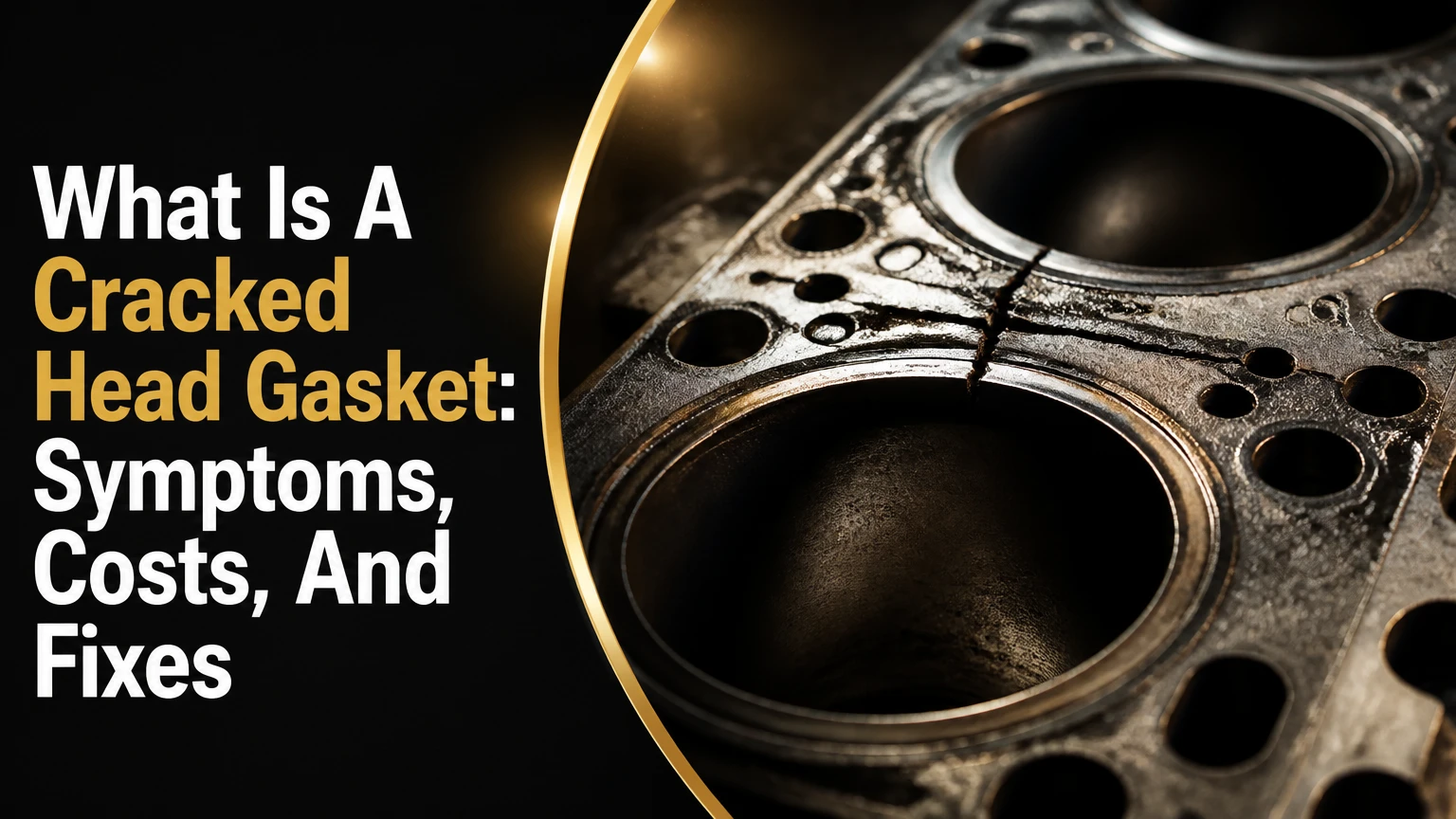
A cracked head gasket is a catastrophic engine failure where the vital seal between the cylinder head and the engine block ruptures. This rupture allows high-pressure combustion gases, engine coolant, and motor oil to mix uncontrollably. Ignoring this failure leads rapidly to engine overheating, warped metal components, and complete mechanical breakdown.
Key Facts / At a Glance
- The head gasket seals combustion chambers, coolant channels, and oil galleries simultaneously.
- Modern Multi-Layer Steel (MLS) gaskets require perfectly flat metal surfaces to maintain their seal.
- The most frequent cause of failure is severe engine overheating, not natural age or mileage wear.
- Professional physical replacement costs typically range between $1,500 and $3,500 depending on engine complexity.
- Chemical sealers offer a temporary fix for older vehicles but cannot repair major physical gasket blowouts.
How Does A Head Gasket Actually Work?
To understand what a cracked head gasket is, you must first understand the intense environment it operates within. The head gasket sits sandwiched between the heavy lower engine block (which houses the pistons) and the upper cylinder head (which houses the valves and camshafts). This thin piece of material serves as the primary barrier for three distinct and highly pressurized systems. If any of these three systems breach the gasket, the engine cannot function properly.
Sealing Combustion Chamber Pressure
The gasket must contain the explosive force of fuel and air igniting inside the cylinders. During the power stroke, combustion chamber pressures can easily exceed 1,000 pounds per square inch (PSI). The gasket maintains this pressure to ensure the downward force drives the piston, rather than escaping out the sides of the engine block.
Routing Engine Coolant Channels
Internal combustion engines generate massive amounts of heat that must be extracted quickly. Liquid coolant circulates through passages cast into both the engine block and the cylinder head. The head gasket features precisely cut holes that align with these passages, allowing the coolant to flow seamlessly between the two metal halves without leaking outward or inward.
Managing Motor Oil Galleries
The engine valvetrain located in the cylinder head requires constant lubrication. The oil pump pushes pressurized motor oil up from the oil pan through specific galleries in the engine block and up into the cylinder head. The gasket isolates these high-pressure oil tracks from the adjacent low-pressure coolant channels and the extreme heat of the combustion chambers.
What Causes A Cracked Head Gasket To Fail?
Head gaskets rarely deteriorate simply from old age or high mileage. They are almost always destroyed by extreme thermal stress. The failure process generally follows a predictable sequence triggered by an external cooling system malfunction.
The sequence begins with a catalyst, usually a stuck thermostat, a ruptured radiator hose, or a failing water pump. This malfunction causes engine temperatures to spike well beyond the normal 195 to 220 degrees Fahrenheit operating range. As the temperature climbs, the metal components of the engine begin to expand.
Modern engines frequently pair an aluminum cylinder head with a cast-iron engine block. Aluminum possesses a higher coefficient of thermal expansion than cast iron. When the engine overheats, the aluminum head expands much faster and further than the iron block beneath it. This uneven expansion creates a violent shearing force directly across the surface of the gasket.
The gasket material eventually warps, cracks, or burns away under this crushing friction. Once the material tears, the tight seal is permanently destroyed. High-pressure combustion gases immediately force their way into the low-pressure coolant tracks. Alternatively, pressurized coolant migrates into the oil channels, flooding the engine crankcase with water.
Expert Insight: Mechanics often see secondary engine damage when owners ignore the initial overheating event. Driving with coolant in the oil washes the protective lubrication away from the main bearings, turning a $2,000 gasket job into a $6,000 total engine replacement.
Head Gasket Material Types Compared
Manufacturers have continuously evolved gasket technology to withstand higher cylinder pressures and hotter operating temperatures. Understanding the material in your specific vehicle helps explain why it failed and dictates the required repair procedure.
| Gasket Material | Common Vehicle Era | Durability Profile | Primary Failure Mode |
| Multi-Layer Steel (MLS) | 2005 to Present | Extremely high durability | Fails if mating surfaces warp beyond 0.002 inches |
| Composite (Graphite) | 1980s to early 2000s | Moderate durability | Susceptible to burning out completely during overheating |
| Copper O-Ring | High-performance racing | Virtually indestructible | Leaks coolant if the block is not perfectly machined |
| Single-Layer Steel | Mid-1990s to 2005 | Low durability | Protective coating degrades over time causing external leaks |
Multi-Layer Steel represents the modern industry standard. It consists of three to five thin layers of spring steel coated in a rubber-like elastomer. These gaskets are incredibly resilient but demand perfectly flat, smooth metal surfaces to seal correctly. Older composite gaskets are softer and forgive slight metal imperfections, but they easily burn through during a single severe overheating event.
What Are The Symptoms Of A Cracked Head Gasket?
A bad head gasket manifests in several distinct ways depending on the exact location of the breach. Because the gasket separates three different fluids and gases, the symptoms vary based on which systems are cross-contaminating.
The Milkshake Oil Test
When a breach occurs between a coolant channel and an oil gallery, the two fluids mix rapidly. Water and oil combine under the intense churning action of the engine internals to form an emulsion. If you pull the engine oil dipstick and see a thick, frothy, milky-brown substance resembling a chocolate milkshake, coolant is actively destroying your engine oil viscosity.
Sweet-Smelling White Exhaust Smoke
If the gasket cracks between a coolant channel and the combustion chamber, the engine will suck liquid coolant directly into the cylinder. The spark plug ignites the fuel, instantly boiling the coolant into steam. This produces heavy, billowy white exhaust smoke pouring from the tailpipe. This smoke often carries a distinctly sweet smell due to the ethylene glycol in the antifreeze.
Rapid Coolant Loss With No Puddles
Many vehicle owners notice their engine overheating and their coolant reservoir running dry, yet they never see a puddle of fluid under the car. A cracked head gasket consumes coolant internally. The engine quietly burns the fluid out through the exhaust system over hundreds of miles, leaving the cooling system dangerously empty.
How Do Mechanics Diagnose A Blown Head Gasket?
Professional mechanics do not guess when replacing a head gasket. They rely on specific chemical and mechanical diagnostic tests to prove the gasket has failed before tearing the engine apart. You can use several of these methods in your own driveway to verify the failure.
| Diagnostic Test Name | What It Measures | Target Contaminant | Required Equipment |
| Chemical Block Test | Combustion gas in coolant | Carbon Monoxide / Dioxide | Combustion leak detector fluid |
| Cylinder Leak-Down Test | Air pressure loss in cylinders | Escaping compressed air | Air compressor and leak gauge |
| Cooling System Pressure Test | External or internal leaks | Dropping coolant pressure | Manual radiator hand pump |
| Spark Plug Inspection | Coolant burning in cylinders | Washed, abnormally clean plugs | Standard spark plug socket |
The combustion gas chemical test, often called a block test, provides the most definitive proof of a failure. A mechanic places a transparent plastic tube over the open radiator neck and draws air from the cooling system through a blue chemical testing fluid (bromothymol blue). If combustion gases are leaking through the gasket into the coolant, the carbon dioxide reacts with the fluid, turning it yellow or green.
The cylinder leak-down test identifies exactly which cylinders have lost their seal. A mechanic threads a specialized hose into the spark plug hole and pumps the cylinder full of compressed air. If they hear air hissing out of the adjacent spark plug hole, the gasket has clearly burned through between those two specific cylinders.
Repair Options: Should You Replace Or Seal It?
When faced with a cracked head gasket, vehicle owners generally choose between a comprehensive mechanical overhaul and an emergency chemical stop-gap measure. The right choice depends entirely on the value of the vehicle and your long-term ownership plans.
| Repair Strategy | Initial Cost Range | Expected Success Rate | Best Application |
| Full Physical Replacement | $1,500 to $3,500+ | 98% (Permanent fix) | High-value vehicles kept long-term |
| Chemical Pour-In Sealer | $30 to $60 | 40% (Temporary fix) | Low-value commuter vehicles |
| Engine Swap (Used Engine) | $2,000 to $4,500 | 90% (Permanent fix) | Engines with severe bearing damage |
| Sell As-Is (Mechanic Special) | $0 | N/A | Totaled vehicles requiring major work |
Physical gasket replacement offers the only definitive, permanent repair. The mechanic fully inspects the engine block and cylinder head for hidden damage, restores the metal surfaces, and installs a brand-new MLS gasket. This restores factory-grade performance and reliability, but it is extremely expensive and leaves the vehicle out of commission for several days.
Chemical pour-in sealers utilize liquid sodium silicate. When poured into the radiator, this liquid circulates until it finds the extreme heat of the combustion leak (usually above 210 degrees Fahrenheit). The heat flash-cures the liquid into a glass-like seal. This takes under an hour and costs very little. Unfortunately, it only works on microscopic cracks, serves strictly as a temporary band-aid, and can permanently clog heater cores if used incorrectly.
How Much Does A Head Gasket Replacement Cost?
The actual replacement head gasket kit is surprisingly cheap. The parts typically run between $50 and $300. The massive price tag associated with this repair stems entirely from the intense labor required to dismantle the top half of the engine.
On average, professional replacement runs between $1,500 and $3,500. The layout of your engine dictates the total labor hours. An inline-four cylinder engine requires one head gasket and offers easy access right at the top of the engine bay. A shop will typically charge 8 to 10 hours of labor for an inline-four repair.
V6 and V8 engines possess two separate cylinder heads, requiring two gaskets. Accessing these heads often requires removing the intake manifold, exhaust headers, and timing chain covers. This pushes the labor requirement to 15 or 20 hours. High-performance, luxury, or large V12 engines can easily soar past $4,000 to $5,000 in total repair costs. Turnaround time ranges from 2 to 5 business days to allow the machine shop adequate time to measure and resurface the metal parts.
Common Mistakes When Replacing A Head Gasket
Tackling a cracked head gasket requires absolute precision. Small oversights during reassembly guarantee the new gasket will blow again within a few thousand miles.
- Skipping Cylinder Head Machining: Installing a brand-new, stiff MLS gasket onto a cylinder head that warped even a fraction of a millimeter during the original overheating event will cause immediate failure. Modern MLS gaskets require a specific Roughness Average (RA) finish that only a professional machine shop can provide.
- Reusing Torque-to-Yield (TTY) Head Bolts: Most modern engines use TTY bolts to clamp the cylinder head down. These bolts stretch permanently when tightened to factory specifications. Reusing old, stretched bolts means they cannot apply enough clamping force to maintain the seal under high cylinder pressures.
- Ignoring the Root Cause: A head gasket is almost always killed by a secondary cooling system failure. Replacing the gasket without identifying and replacing the broken water pump, cracked radiator hose, or faulty cooling fan guarantees a repeat failure the next time you drive in heavy traffic.
Expert Insight: Before reassembling the engine, always clean the bolt holes in the engine block using a thread chaser, not a thread-cutting tap. Fluid trapped in a blind bolt hole can crack the engine block hydraulically when you tighten the new head bolt.
Expert Recommendations Based On Vehicle Value
Deciding how to handle a cracked head gasket requires a blunt assessment of your vehicle’s current market value and your financial situation. Follow these situational guidelines to avoid wasting money.
The Budget Daily Commuter
If the car is worth less than the cost of the mechanical repair (for example, a $2,000 car requiring a $2,500 repair), a professional teardown makes zero financial sense. Try a high-quality, professional-grade chemical pour-in sealer strictly following the flushing instructions on the bottle. If the sealer holds, drive the vehicle gently while aggressively saving money for a replacement car. If the sealer fails, sell the vehicle to a scrap yard.
The Standard Vehicle Owner
If your car is a reliable vehicle that you rely on daily and plan to keep for several more years, do not cut corners with chemicals. Pay for a full physical replacement at a reputable independent shop or dealership. Ensure their written quote explicitly includes cylinder head resurfacing at a machine shop and a brand-new set of TTY head bolts. Request that they pressure test the entire cooling system after the repair to isolate the original cause of the failure.
The Dedicated DIY Mechanic
Tackling a head gasket replacement at home is a massive project requiring intermediate-to-advanced automotive skills. You will absolutely need a factory shop manual, a high-precision angle-torque wrench, a perfectly straight machinist edge, and labeling materials for the dozens of disconnected wires. Take extensive photos during disassembly. Budget a full weekend for teardown, drop the head off at a machine shop during the week, and take another full weekend for precise, sequential reassembly.
Frequently Asked Questions
What does a blown head gasket sound like?
A blown head gasket usually does not make a distinct noise. However, if the breach occurs externally between two cylinders, you might hear a repetitive, rhythmic ticking or sputtering sound resembling an exhaust leak, accompanied by a noticeable loss of engine power.
How long can you drive with a cracked head gasket?
You should not drive a vehicle with a cracked head gasket at all. Continuing to drive introduces coolant into the engine oil, which destroys the main bearings within a few miles. Furthermore, coolant leaking into the cylinders can cause hydrolock, instantly shattering pistons and bending connecting rods.
Can a cracked head gasket ruin a catalytic converter?
Yes. When coolant burns in the combustion chamber, the resulting chemicals travel down the exhaust pipe and coat the honeycomb structure inside the catalytic converter. This contamination permanently ruins the emissions catalyst, adding another $1,000 to your total repair bill.
Is it worth fixing a head gasket on a car with 150,000 miles?
It is worth fixing if the rest of the drivetrain and transmission are in excellent condition and the vehicle holds strong resale value. If the car suffers from severe rust, transmission slipping, or suspension issues, the gasket repair is likely not worth the investment.
How do I tell the difference between a blown head gasket and a cracked block?
Both failures share identical symptoms, including milky oil and overheating. The only definitive way to tell the difference is to remove the cylinder head and have a machine shop magnaflux (magnetically inspect) or pressure test the bare metal castings for microscopic hairline fractures.


