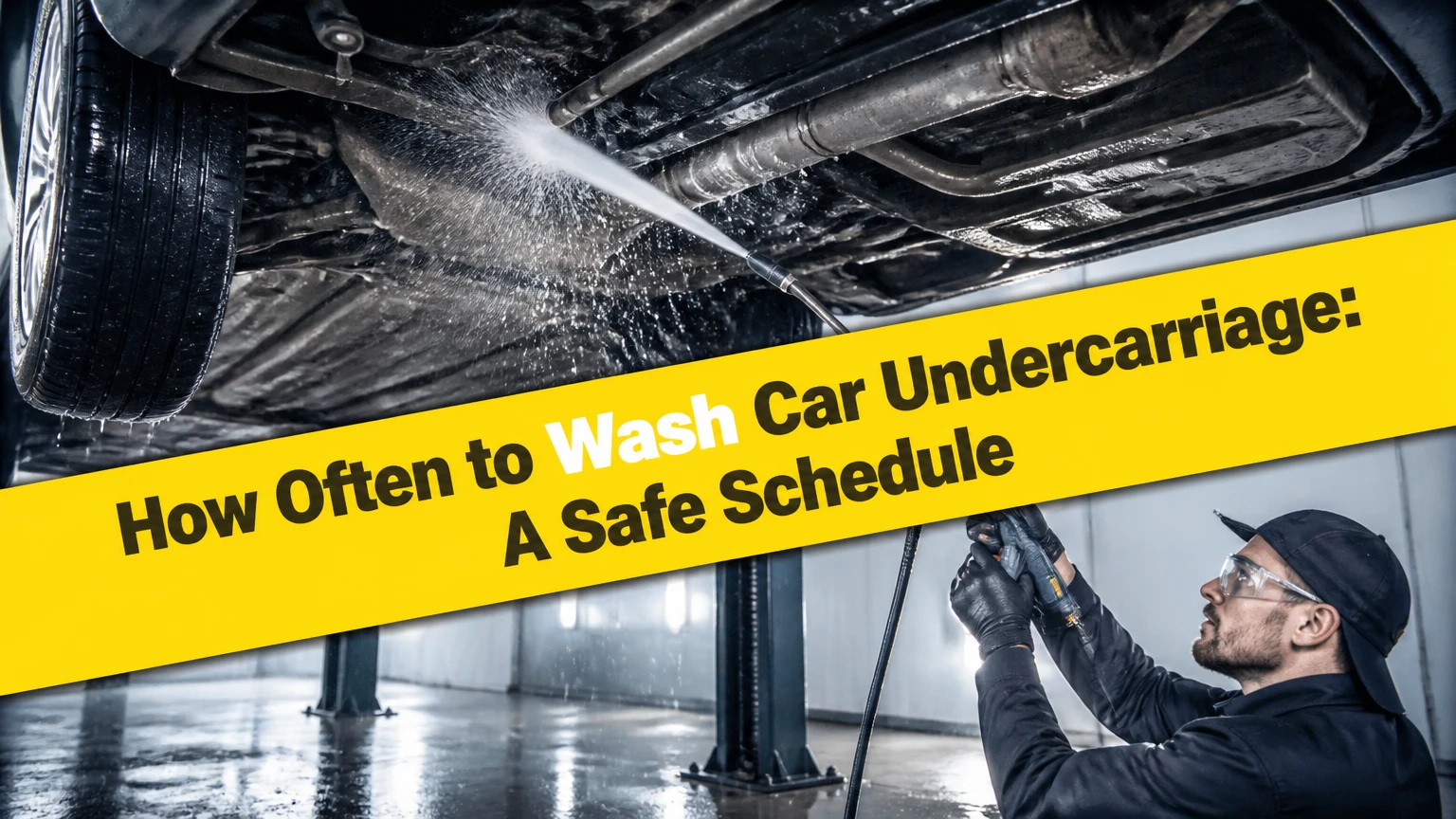
Most drivers should wash the car undercarriage once or twice yearly, ideally after winter and after heavily muddy or salty seasons. Drivers exposed to road salt should rinse the underside after major salting events and roughly every 1-2 weeks during active winter conditions; off-road and beach use requires cleaning within 24 hours.
Key Facts at a Glance
A typical commuter in a dry, non-salted climate needs an undercarriage wash every 6-12 months.
Road salt, brine, beach sand, and dried mud justify event-based cleaning rather than a fixed calendar.
A touchless underbody rinse removes soluble salt, but it does not repair rust or replace an inspection.
Keep a pressure washer around 1,200-2,000 PSI for routine underside cleaning, using distance and a wide spray pattern.
Never direct concentrated spray at wheel bearings, CV boots, electrical connectors, seals, or damaged undercoating.
The best time to wash is when the exhaust and brakes are cool, followed by a drive that allows airflow to dry drainage points.
What Schedule Should Most Drivers Follow?
A normal passenger car in a moderate climate needs its undercarriage washed one or two times per year. The most useful timing is after the final winter salt has washed away and after a season involving mud, construction dust, or repeated wet-road driving.
Calendar frequency is only a starting point. Exposure determines corrosion risk more accurately than mileage because a short trip on brine-covered roads can leave more aggressive residue than several hundred miles on dry pavement.
| Driving environment | Typical undercarriage frequency | Best trigger for washing | Priority areas |
|---|---|---|---|
| Dry inland roads, no snow | Every 6-12 months | Seasonal inspection | Frame seams, wheel wells |
| Rainy temperate climate | Every 4-6 months | Extended wet-weather period | Drain holes, subframes |
| Snow belt with road salt | Every 1-2 weeks in winter | Salting event or thaw | Brake lines, rocker panels |
| Coastal city, no beach driving | Every 1-2 months | Salt spray and humid weather | Fasteners, suspension |
| Beach or saltwater access | Within 24 hours | Each beach trip | Frame, skid plates, axles |
| Frequent off-road use | Within 24 hours | Every muddy trip | Control arms, differentials |
AAA and transportation agencies commonly recommend more frequent vehicle washing during winter salt exposure, particularly when temperatures rise enough for salt brine to remain mobile. The practical rule is simple: wash when residue is present, not merely when a monthly reminder appears.
Why does road salt change the interval?
Road salt changes the interval because dissolved chloride remains electrically conductive and keeps metal surfaces damp. Salt also lowers water’s freezing point, allowing brine to occupy seams and cavities during freeze-thaw cycles where plain dry dust would cause less damage.
Magnesium chloride and calcium chloride brines can be especially persistent because some road authorities use them before or during storms. Rinsing removes the soluble residue, but a brief splash through a wheel arch may not reach the top of a frame rail or the rear side of a crossmember.
Why Does an Undercarriage Wash Matter?
An undercarriage wash removes road grime, salt, mud, sand, and chemical residue from components that cannot be cleaned effectively from above. The target area includes the frame or unibody structure, floor pan, suspension, exhaust, brake lines, wheel wells, subframes, and protective shields.
The underside is not uniformly vulnerable. A plastic splash shield may tolerate repeated rinsing, while a stone-chipped brake line or exposed seam can corrode rapidly when salt remains trapped. Cleaning also improves visual inspection by revealing fluid leaks, loose fasteners, torn boots, and damaged undercoating.
An underbody wash is preventive maintenance, not a rust cure. It reduces contaminant exposure but cannot restore lost metal thickness, seal active corrosion, or prove that hidden cavities are clean.
Which contaminants are hardest to remove?
Dried clay and compacted mud are harder to remove than fresh road salt because clay bonds to textured coatings and blocks drainage routes. Salt is chemically aggressive but generally water-soluble, while oily road film needs a compatible degreaser and sufficient dwell time.
| Contaminant | Solubility or behavior | Recommended response | Main risk if left |
|---|---|---|---|
| Sodium chloride brine | Water-soluble, conductive | Low-pressure fresh-water rinse | Structural corrosion |
| Magnesium chloride | Hygroscopic, retains moisture | Prompt rinse after salting | Persistent damp residue |
| Wet mud | Softens with soaking | Pre-rinse, then wide spray | Blocked drains |
| Dried clay | Bonds to coatings | Soak and agitate, avoid scraping seals | Hidden corrosion |
| Beach sand | Abrasive, collects in seams | Fresh-water flush from multiple angles | Abrasion and trapped moisture |
| Oil film | Repels water | Automotive degreaser, controlled rinse | Dirt adhesion and leak concealment |
How Does an Underbody Wash Work?
An underbody wash uses water jets, angled nozzles, or rotating spray bars to dislodge contamination from the vehicle’s underside. A detergent may emulsify oil and road film, while a rust inhibitor can leave a temporary film, but neither process replaces physical removal and drying.
Automatic car washes usually use fixed or moving jets aimed upward as the vehicle passes. Self-serve bays provide more control, and rolling undercarriage attachments improve coverage without requiring the vehicle to be lifted.
Chemical neutralizers are not universal. Many low-cost wash programs provide only water, and many “rust protection” options are short-lived coatings rather than durable corrosion-control treatments. Read the product label and avoid assuming that an underbody button applies a protective inhibitor.
Can high pressure damage the underside?
High pressure can damage underbody components when the nozzle is too close, the spray is concentrated, or a coating is already loose. Routine cleaning generally works better at 1,200-2,000 PSI, with a wide fan pattern held approximately 12-24 inches from the surface.
The pressure number alone does not determine risk. A narrow zero-degree nozzle at close range can cut or lift material, whereas a wide 25-40-degree fan at greater distance spreads the force.
Avoid direct, sustained spray at:
- CV-joint boots and suspension bushings
- Wheel-bearing seals and hub assemblies
- Alternator vents and exposed electrical connectors
- Damaged seam sealer or flaking undercoating
- Exhaust joints while the exhaust is hot
- High-voltage components identified by the EV manufacturer
How Often Should You Wash After Road Salt?
Wash the undercarriage after significant salting events whenever practical, with every 1-2 weeks as a workable winter interval for drivers in heavily salted regions. A second rinse is worthwhile during the first warm thaw because liquid brine can move deeper into seams and behind splash shields.
Do not wait for spring if the vehicle repeatedly encounters treated roads. A drive-through underbody rinse can remove fresh salt quickly, although a spring inspection remains necessary because automatic jets may miss recessed frame sections.
What should you do during a mild winter?
A mild winter still warrants cleaning if roads receive brine or liquid de-icer. Temperature changes affect how long residue stays wet, but a dry-looking underside can retain hygroscopic chloride that draws moisture from humid air.
For a lightly used vehicle, rinse after each major treatment period and inspect the underside at the end of winter. For a daily commuter, use the underbody option approximately every 1-2 weeks, especially when slush accumulates in the wheel wells.
What Should Off-Road Drivers Do?
Off-road drivers should rinse the undercarriage within 24 hours of every muddy, sandy, or water-crossing trip, before deposits dry into hard layers. Fresh mud releases with less pressure, which reduces the chance of forcing grit past seals or stripping protective coatings.
Start with the wheel wells, skid plates, axles, control arms, and rear suspension. Then inspect the radiator support, differential breathers, drain holes, and exhaust shields. Mud left on a skid plate can conceal a bent mount or a leaking differential.
Rocky trails create a different problem from mud. A post-trip inspection should check for dents, torn boots, loose underbody panels, exposed wiring, and scraped paint before washing hides the evidence under clean water.
When Do Coastal and Beach Conditions Change the Schedule?
Coastal residents should wash the underside approximately every 1-2 months, while beach driving or direct saltwater exposure requires a fresh-water rinse within 24 hours of each trip. Airborne marine salt creates a slower exposure pattern than driving through seawater, but humidity keeps deposits active.
Beach sand needs more than a quick rinse at the vehicle’s front bumper. Flush from the rear and sides, work through both wheel wells, and allow water to carry sand out of seams rather than pushing a concentrated jet into seals.
Do not use ordinary household water softeners or acidic cleaners to “neutralize” salt. Fresh water and a vehicle-safe cleaner are the safer default.
Which Washing Method Is Safest?
A professional inspection and controlled rinse provide the safest option for valuable, heavily corroded, modified, or difficult-to-access vehicles. For a healthy daily driver, a touchless automatic rinse offers the lowest effort, while a self-serve bay or dedicated undercarriage attachment provides better control over missed areas.
| Method | Typical cost | Typical time | Coverage and risk | Best use |
|---|---|---|---|---|
| Automatic touchless add-on | £3-£8 or $4-$10 | 30-60 seconds | Fast, moderate coverage, limited inspection | Routine salt rinse |
| Self-serve bay | £2-£5 or $3-$8 | 3-5 minutes | Adjustable angle, operator-dependent | Wheel wells and fresh mud |
| Home rolling wand | £25-£60 or $30-$75 tool cost | 10-15 minutes | Repeatable coverage, setup required | Frequent DIY maintenance |
| Professional hoist detail | £80-£200+ or $100-$250+ | 1-3 hours | Best access, inspection, treatment options | Corrosion, classics, restoration |
An automatic wash is not automatically unsafe. The main limitations are short spray duration and poor visibility, not the existence of automation. A professional service is not automatically superior either, because an aggressive degreasing process can remove sound protective film if the technician lacks vehicle-specific judgment.
When is a professional underbody clean worthwhile?
Professional cleaning is worthwhile when rust is visible, mud is compacted behind shields, the car has a complex underbody, or the owner needs a documented inspection before rustproofing. A hoist allows technicians to see the top surfaces of crossmembers and the inner faces of suspension components.
Classic cars, low vehicles, modified trucks, and vehicles with known corrosion should not be treated like ordinary commuter cars. Ask whether the service includes a visual inspection, neutralization, drying, and a compatible corrosion coating rather than only a high-pressure blast.
How Should You Pressure-Wash the Undercarriage?
Pressure-wash the undercarriage with the vehicle cool, parked on a stable surface, and treated with a wide spray at moderate pressure. The complete process usually takes 10-20 minutes, excluding setup, and succeeds when residue is loosened without lifting coatings or forcing water into seals.
Before You Start
| Requirement | Typical specification |
|---|---|
| Water and working time | 20-40 liters, 10-20 minutes |
| Pressure washer | 1,200-2,000 PSI, 25-40-degree fan |
| Nozzle distance | 12-24 inches from surfaces |
| Cleaner | pH-neutral or vehicle-safe degreaser, 250-500 milliliters |
| Access equipment | Flat ground, wheel chocks, ramps if needed |
| Safety equipment | Eye protection, gloves, closed footwear |
Never crawl beneath a vehicle supported only by a jack. Use rated ramps or jack stands on approved lift points, and follow the owner’s manual because some EV battery trays and underbody panels have specific support restrictions.
Step 1: Cool the Vehicle
Wait until the exhaust, brakes, and catalytic converter are cool to the touch, often at least 30 minutes after ordinary driving. A hot exhaust can experience rapid thermal contraction when hit with cold water, and hot metal also dries cleaner before it can work.
Success checkpoint: No visible heat shimmer or steam appears when the rinse begins.
Common mistake: Washing immediately after highway driving.
Step 2: Pre-Rinse From the Outside
Rinse wheel wells, rocker panels, and the visible front and rear edges before aiming under the center of the car. This removes loose grit that could otherwise be driven deeper into seams.
Success checkpoint: Loose mud falls away without requiring a close nozzle.
Common mistake: Starting with a narrow jet on dry, compacted deposits.
Step 3: Apply a Compatible Cleaner
Apply a vehicle-safe underbody or degreasing product to oily road film, avoiding hot exhaust surfaces and exposed electrical connectors. Allow 3-5 minutes of dwell time, but do not let the product dry.
Success checkpoint: Oily film becomes visibly wet and begins to break up.
Common mistake: Using strong household detergent, bleach, acid, or solvent without checking material compatibility.
Step 4: Rinse With a Wide Pattern
Move the spray from front to back and keep the nozzle moving. Spend extra time around wheel wells, subframes, suspension arms, brake-line routes, and the underside of skid plates, but do not hold the spray on one rubber boot or seal.
Success checkpoint: Runoff becomes free of visible mud and heavy grit.
Common mistake: Using a zero-degree nozzle or placing the wand within a few inches.
Step 5: Flush Drainage Areas
Rinse around factory drain holes and panel edges without sealing the holes with mud or foam. Do not insert metal tools into concealed cavities because puncturing a coating can create a new corrosion path.
Success checkpoint: Water exits rather than pooling behind shields or rocker-panel seams.
Common mistake: Assuming a clean exterior means hidden drainage is open.
Step 6: Dry and Inspect
Drive for 10-20 minutes so airflow removes water from accessible surfaces, then inspect for leaks, torn boots, loose panels, exposed metal, and rust bubbles. Compressed air can help around fasteners, but avoid directing it into electrical connectors or bearing seals.
Success checkpoint: No standing water remains in obvious recesses.
Common mistake: Parking immediately in a damp garage after washing.
What Mistakes Cause Undercarriage Problems?
The most damaging mistakes are excessive pressure, hot-component washing, chemical incompatibility, and cleaning without inspection. These errors can remove sound coatings or conceal mechanical damage that should have been addressed before the vehicle returned to service.
| Mistake | Likely consequence | Safer correction |
|---|---|---|
| Zero-degree nozzle at close range | Lifted coating, damaged rubber | Use 25-40-degree fan, 12-24 inches away |
| Washing a hot exhaust | Thermal shock, rapid cleaner drying | Allow at least 30 minutes to cool |
| Direct spray into CV boots | Water or grit intrusion risk | Use an oblique, moving spray |
| Leaving mud on drain holes | Trapped moisture and odor | Flush edges and verify drainage |
| Applying wax over wet rust | Sealed-in moisture | Dry, inspect, and treat corrosion correctly |
| Using harsh household detergent | Residue, coating or lubricant damage | Use a vehicle-safe cleaner |
| Jacking on battery or floor pan | Structural or battery damage | Use manufacturer-approved lift points |
A counterintuitive practitioner rule is that more pressure rarely equals better cleaning. Contact time, spray angle, soaking, and repeated passes remove contamination more safely than a close-range blast.
Can an Undercarriage Wash Stop Existing Rust?
An undercarriage wash can slow new contamination but cannot stop established structural rust by itself. Surface oxidation may need cleaning, drying, mechanical preparation, a compatible rust converter, and a properly applied coating, while perforation or weakened frame metal requires professional assessment.
Rust inhibitors also have limits. Lanolin, oil-film products, waxes, and cavity coatings can reduce contact with water and salt, but each product needs a clean, dry substrate and periodic reapplication. Applying protection over loose scale traps contamination and makes later inspection harder.
Do not cover rust around brake lines, suspension mounts, steering components, or frame welds before inspection. A coating can improve appearance while hiding a safety defect.
What Troubleshooting Steps Solve Common Problems?
Most post-wash problems come from trapped residue, incomplete drying, or overly aggressive spraying. A symptom-based response is safer than immediately applying lubricant or another chemical.
| Symptom | Probable cause | First response | Escalate when |
|---|---|---|---|
| Persistent odor | Organic mud or debris | Rinse wheel wells and shields again | Odor remains after drying |
| New squeak | Water displacement or damaged bushing | Inspect, do not blindly lubricate | Noise changes with steering or braking |
| White spotting | Hard-water minerals | Spot-free rinse, dry promptly | Coating becomes chalky |
| Brown flakes | Existing corrosion | Photograph and inspect | Metal is thin, perforated, or structural |
| Wet patch | Oil, coolant, or water retention | Identify fluid before washing again | Fluid is oily, colored, or recurring |
| Loose panel noise | Fastener or shield damage | Check mounting points | Panel contacts tire, exhaust, or road |
Silicone spray is not a universal answer to a squeak. Lubricant can mask a failing bushing, contaminate brake friction surfaces, or damage a component whose design requires dry operation.
How Should EV and Hybrid Owners Adapt the Process?
EV and hybrid owners should follow the manufacturer’s underbody-washing instructions and avoid concentrated spray at battery enclosures, charging components, orange high-voltage cables, and sealed electrical connectors. A normal touchless rinse is generally less intrusive than dismantling panels or using a close-range pressure jet.
The battery enclosure is designed to resist ordinary road water, but pressure washing is a different exposure. Do not lift an EV on improvised ramps, remove battery shields for cleaning, or assume every orange cable is safe to spray directly.
Regenerative braking also changes inspection priorities. Brake corrosion can develop because friction brakes operate less often, so a clean underside should still receive a brake and rotor inspection during scheduled service.
Which Drivers Need a Different Schedule?
The appropriate schedule depends on exposure, vehicle construction, and the consequence of hidden contamination. A daily commuter needs convenient salt removal, an off-roader needs immediate mud removal, and a collector needs controlled access that protects fragile finishes and wiring.
| Driver or vehicle | Recommended plan | Preferred method | Extra inspection |
|---|---|---|---|
| Daily salted-road commuter | Every 1-2 weeks in winter | Automatic or self-serve rinse | Spring brake-line check |
| Off-road SUV or pickup | Within 24 hours of each trip | Rolling wand or self-serve bay | Skid plates, boots, breathers |
| Coastal resident | Every 1-2 months | Touchless or controlled DIY | Fasteners and seams |
| Classic or low-mileage car | Every 6-12 months | Professional hoist service | Coating and metal condition |
| EV or hybrid | Exposure-based, manufacturer-led | Low-pressure touchless rinse | Battery shield and cables |
| Older vehicle with rust | After salt or mud events | Professional inspection | Frame, brake lines, mounts |
A vehicle with existing corrosion may need less aggressive washing, not more. The objective is to remove soluble contaminants while preserving remaining coating and exposing defects for repair.
What Does an Undercarriage Wash Cost?
A routine undercarriage rinse typically costs £2-£8 or $3-$10 at a self-serve or automatic wash, while a home attachment costs approximately £25-£60 or $30-$75 before cleaner and water. Professional hoist cleaning and corrosion treatment commonly cost £80-£200 or more, depending on access and condition.
Prices vary by country, vehicle size, and whether the provider includes degreasing, drying, inspection, or rust treatment. A low-cost rinse is appropriate for fresh salt; it is not equivalent to a hoist-based restoration clean.
FAQ
Is washing the underside of a car worth it?
Yes, undercarriage washing is worthwhile when a vehicle encounters road salt, brine, mud, sand, or coastal moisture. Fresh salt is usually easier to remove than dried deposits, and regular rinsing can reduce the time corrosive residue remains on brake lines, subframes, fasteners, and body seams.
Should I wash my car undercarriage before winter?
Wash and inspect the undercarriage before winter, then rinse it during the season whenever salt or brine accumulates. Pre-winter cleaning removes old residue and reveals damaged coating, while a corrosion-protection product can help only when applied to a clean, dry, sound surface.
Can I use dish soap under my car?
Dish soap can remove grease, but it is a poor default for repeated undercarriage cleaning because it may leave residue and remove protective oils or waxes from some surfaces. Use a vehicle-safe, pH-appropriate cleaner, and keep degreaser away from hot exhausts, brake friction surfaces, and electrical connectors.
How long should I wait to drive after washing underneath?
Drive for approximately 10-20 minutes after washing to promote airflow through wheel wells, seams, and drainage areas. Do not treat driving as complete drying if water is visibly pooling, the garage is poorly ventilated, or the vehicle has blocked drain holes that need attention.
Does an automatic car wash clean the whole undercarriage?
An automatic car wash cleans exposed and accessible underside areas, but fixed jets may miss the upper surfaces of crossmembers, recessed frame rails, skid-plate edges, and deposits behind shields. Use the automatic option for routine rinsing and arrange a manual inspection when mud, rust, or leaks are concerns.
When should I stop washing and call a mechanic?
Stop washing and seek a mechanic when you see perforated frame metal, severely flaking brake lines, leaking fluid, a torn CV boot, loose suspension hardware, or a battery enclosure that appears damaged. Cleaning cannot make a structurally unsafe component serviceable.
The Bottom Line
Most drivers should wash the car undercarriage once or twice a year, but road salt, off-road mud, beach exposure, and marine humidity require shorter, event-based intervals. Use an automatic rinse for convenience, a controlled low-pressure wash for routine DIY work, and professional inspection when corrosion or hidden damage is possible. The right schedule removes contamination without turning cleaning into component damage.


