Are automatic cars faster than manual?
Modern automatic cars are definitively faster than manual vehicles in both shifting speed and straight-line acceleration. Advanced dual-clutch and multi-gear torque-converter transmissions execute shifts in milliseconds, outperforming human mechanical limits. While manual gearboxes historically held a performance advantage, contemporary automatic systems consistently deliver superior raw speed and optimized launch control. At a Glance What is […]
Can a Bad Fuel Filter Cause White Smoke?
A bad fuel filter cannot directly cause white smoke in petrol engines, but it is a frequent cause of white smoke in diesel vehicles. In a diesel engine, a severely restricted filter delays fuel injection timing, leading to low combustion temperatures and unburned fuel vapor exiting the exhaust as thick white smoke. Key Facts / […]
What Refrigerant Is Used in Cars: Complete Guide
Modern vehicles primarily use R-134a or R-1234yf refrigerant. Cars manufactured between 1994 and 2013 typically rely on R-134a, while vehicles built after 2017 predominantly use the environmentally friendly R-1234yf. This specialized fluid cycles continuously between liquid and gas states under extreme pressure to extract cabin heat and release it into the outside air. Key Facts […]
What Is Anti-Lock Braking System in Car: Complete Technical Guide
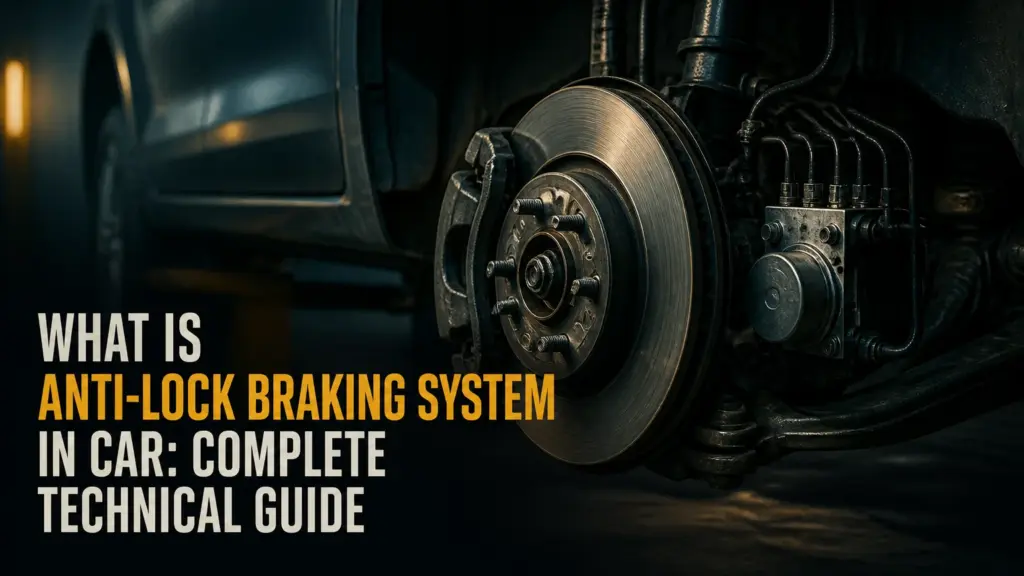
An Anti-lock Braking System (ABS) is an automated safety technology that prevents vehicle wheels from locking up during hard braking. By continuously adjusting hydraulic brake pressure, ABS maintains tire traction, allows the driver to retain directional steering control, and prevents uncontrollable skidding across slippery or emergency stopping surfaces. How Does an Anti-Lock Braking System Work? […]
What Type of Antifreeze Does My Car Need?
Your car requires a specific antifreeze formula dictated by its engine metallurgy, defined by chemical technology (IAT, OAT, or HOAT) and manufacturer specification codes. You must check your owner’s manual or radiator cap for these explicit specification numbers rather than relying on fluid color. Using the wrong chemistry causes chemical fallout, radiator blockage, and water […]
How Long Can You Drive With a Radiator Leak?
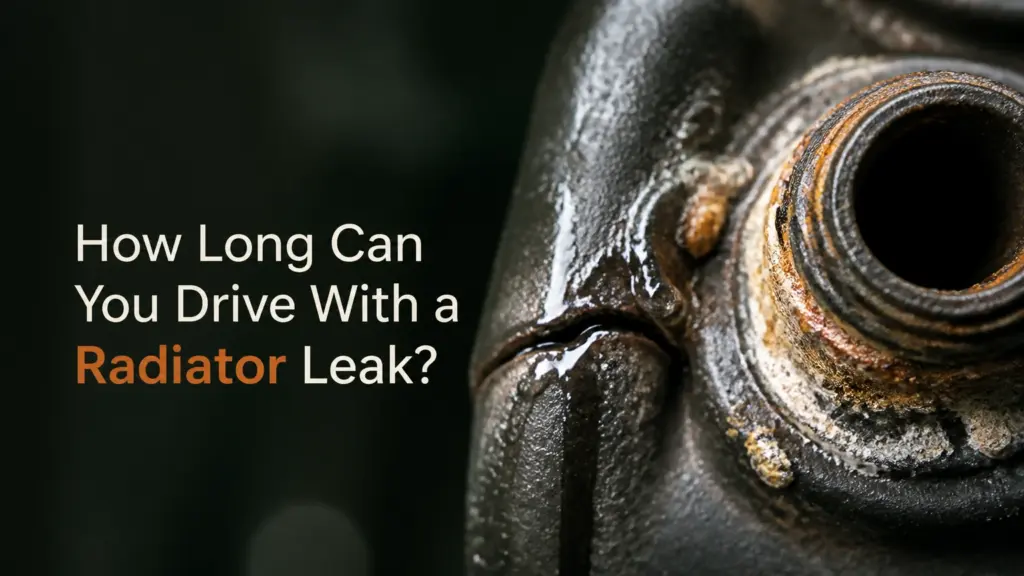
You cannot safely drive more than 5 minutes or 2 miles with an active radiator leak before risking permanent, severe engine damage. If the leak is a heavy gush or spray, you must turn off the engine immediately and drive 0 miles. Operating a vehicle with a leaking radiator drops cooling system pressure, lowers the […]
What Is a Cylinder Misfire? Causes, Symptoms, and Fixes
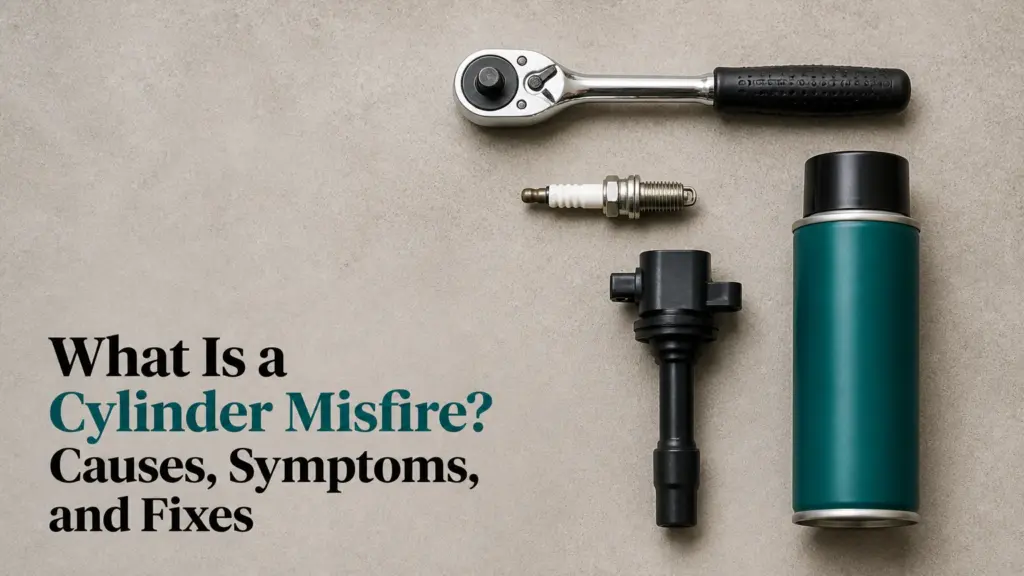
A cylinder misfire is an internal combustion engine operational failure where an individual cylinder fails to generate power during its combustion stroke. This condition occurs when the air-fuel mixture inside the combustion chamber fails to ignite, ignites at the incorrect time, or lacks sufficient compression pressure to drive the piston downward. At a Glance What […]
How Fast Does Coolant Run Out? Causes, Rates, and Diagnostics
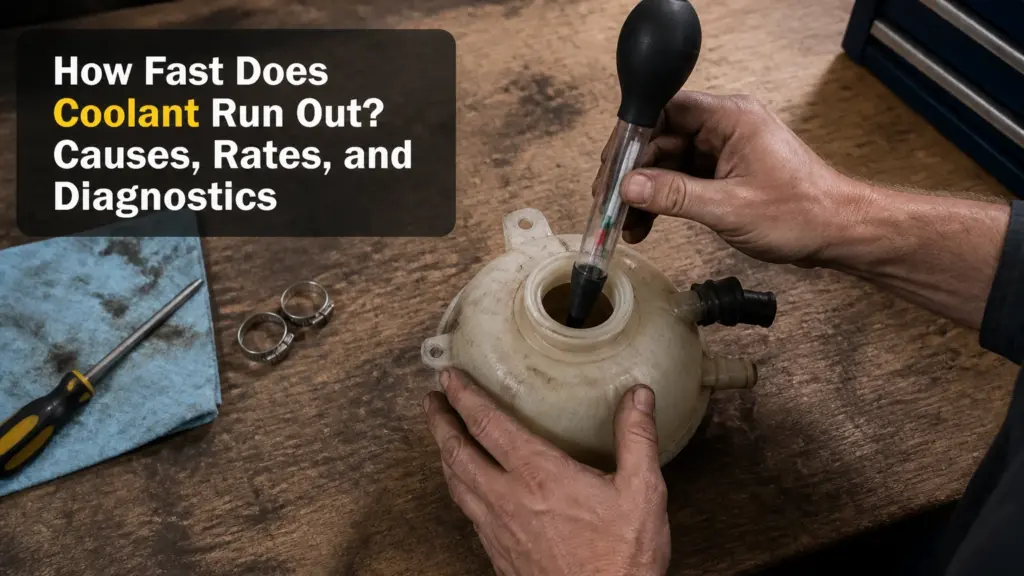
Engine coolant does not consume or burn off during normal vehicle operation because it operates inside a closed, pressurized system. In a healthy vehicle, engine coolant should never run out; instead, it lasts between 3 and 10 years (or 30,000 to 150,000 miles) before chemical degradation requires a fluid flush. If your coolant level drops […]
How to Adjust an Emergency Brake
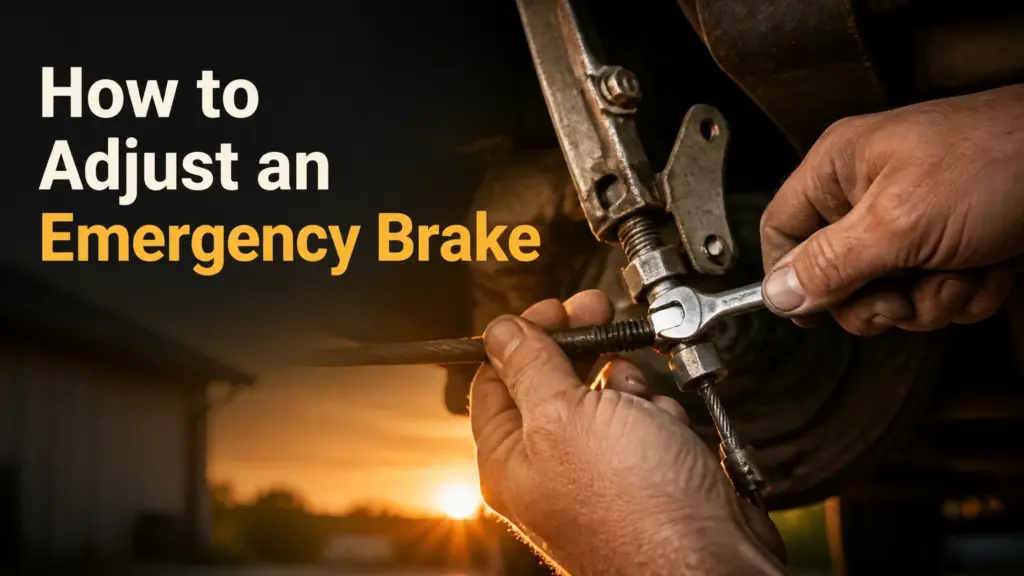
Adjusting an emergency brake involves setting shoe clearance at the wheel hubs and calibrating cable tension at the equalizer bracket. Following this five-step guide requires approximately 30 to 60 minutes, basic hand tools, and a secure lifting setup. Proper calibration ensures complete holding power on inclines while eliminating high-speed brake drag. Step 1: Secure and […]
How Long Can You Drive With a Bad Catalytic Converter?
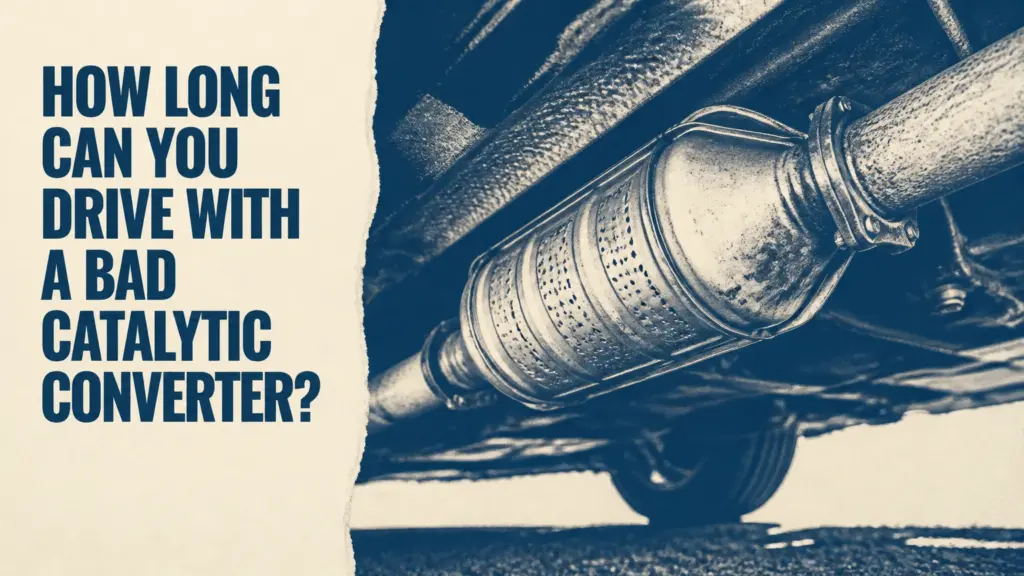
You can drive with a bad catalytic converter for zero minutes up to six months, depending on the specific failure mode. A chemically degraded converter allows normal driving for several months, while a physically melted or clogged converter causes engine stalling, severe overheating, and catastrophic internal engine failure within minutes. Key Facts: At a Glance […]