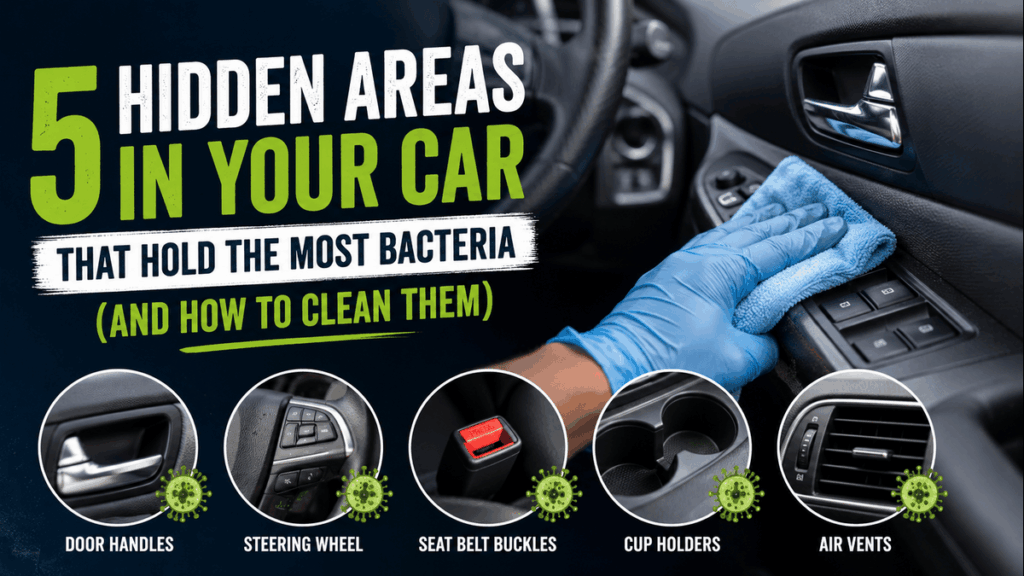
Your car may look spotless, but the surfaces you touch every single day are quietly hosting millions of microbes. Studies on vehicle hygiene have repeatedly found that the average car interior carries far more bacteria per square inch than a public toilet seat. The reason is simple. Cars are warm, enclosed, poorly ventilated, and packed with high touch surfaces that almost never get wiped down.
In this guide you will learn the 5 hidden areas in your car that hold the most bacteria, why each one is a germ magnet, and the exact cleaning method that removes the buildup safely without damaging electronics, leather, or plastic. This is a practical routine you can finish in under an hour with products you likely already own.
Why Bacteria in Your Car Multiply So Quickly
Before we reveal the germ hotspots, it helps to understand the science. Bacteria and mold need three things to thrive: moisture, warmth, and a food source. Your car delivers all three. Sunlight heats the cabin, spilled coffee and food crumbs feed microbes, and humidity from your breath, wet shoes, and the air conditioning system keeps surfaces damp.
Every time you touch a surface, you transfer oils, dead skin, and whatever bacteria your hands picked up from door handles, phones, gas pumps, and shopping carts. Because most drivers rarely disinfect the cabin, these germs accumulate for months. The result is a rolling ecosystem of bacteria that you contact with your hands, and sometimes your face, every day.
Below is a quick visual comparison of how the dirtiest car surfaces stack up against common household items, based on published hygiene testing that measures colony forming units (CFU).
Illustrative CFU values based on published vehicle hygiene studies. Your results vary with climate, usage, and cleaning habits.
The 5 Hidden Areas in Your Car That Hold the Most Bacteria
1. The Steering Wheel: The Germiest Surface You Own
The steering wheel is the single dirtiest high touch surface most drivers contact daily. Your palms rest on it for the entire drive, transferring sweat, skin oils, and every germ your hands collected at the gas pump or drive through window. Because the grip texture traps grime in tiny grooves, bacteria settle in and stay.
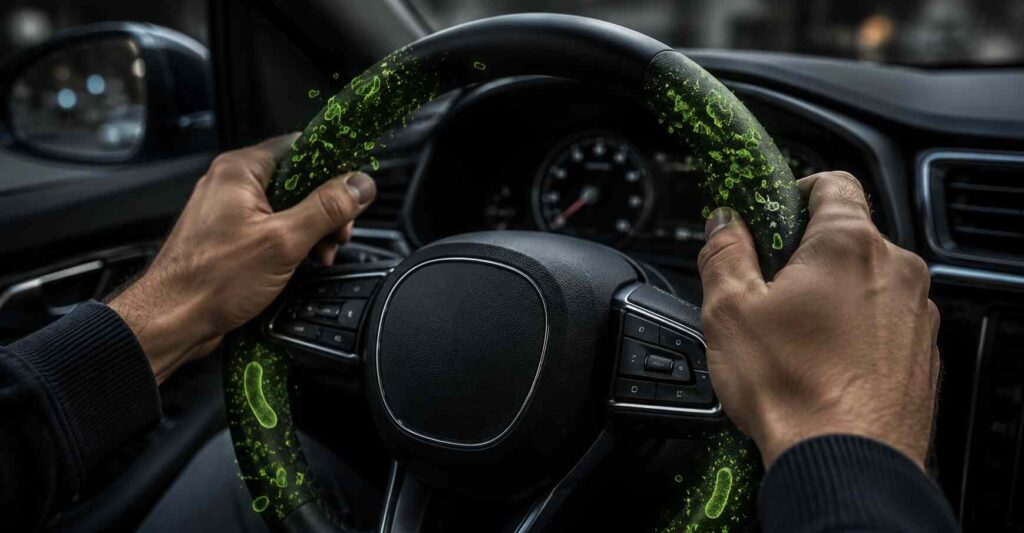
How to clean it safely: Dust off loose debris first. Lightly dampen a microfiber cloth with a diluted interior cleaner or a mix of water and 70 percent isopropyl alcohol. Wipe in small circular motions and use an old toothbrush for the stitching. Always apply cleaner to the cloth, never spray directly onto the wheel, so you protect nearby buttons and the gauge cluster.
2. Seat Belts and Buckles: The Overlooked Germ Trap
Seat belts get pulled across your body with hands that just touched everything else, yet almost nobody cleans them. The webbing absorbs sweat and food residue, while the buckle collects crumbs, dust, and moisture. Together they become one of the most neglected car germ hotspots.
How to clean it safely: Pull the belt fully out and clamp it so it stays extended. Wipe the webbing with a microfiber cloth dampened in warm water and a drop of mild soap, working along the seams. For the buckle, use a cotton swab to lift out trapped debris, then wipe with an alcohol based cleaner. Let the belt dry completely before it retracts to avoid mildew.
3. The Gear Shift and Console Controls
Your hand grips the gear shift constantly, making it a close second to the steering wheel for bacteria buildup. The surrounding console, buttons, and cup holders add to the problem because they collect spilled drinks and sticky residue that feed microbial growth.
How to clean it safely: Wipe the shift knob and console with a lightly dampened microfiber cloth and a small detailing brush for the seams. Remove cup holder liners if your car has them and wash them in soapy water. Dry thoroughly to prevent sticky film from returning.
4. Radio, Touchscreen, and Dashboard Buttons
Fingers tap these controls dozens of times per trip, often right after eating. Grease and germs settle into the crevices around every dial and switch, and touchscreens hold a visible layer of fingerprints teeming with bacteria.
How to clean it safely: Use a soft brush or cotton swab to reach into the gaps around buttons, then wipe flat surfaces with a slightly damp microfiber cloth. Avoid ammonia based cleaners, which can cloud plastic and strip the anti glare coating from touchscreens. For screens, use a screen safe wipe only.
5. Air Vents and the Cabin Air Filter: The Hidden Mold Factory
This is the area most people never think about, and it may be the most important. Air vents are dark, damp, and rarely cleaned, which makes them ideal for mold and dust to grow. Every time you turn on the fan, those spores blow directly into the air you breathe. A clogged cabin air filter makes it worse.
Alt text for image: car air vent closeup illustrating mold and dust buildup inside the ventilation system.
How to clean it safely: Wipe the visible slats with a cotton swab or a cloth dipped in a 1 to 1 vinegar and water solution. For a deeper clean, set the air conditioning to maximum cold with recirculation on, run the fan high, and apply a specialist AC disinfectant into the intake for 10 to 15 minutes. Most importantly, replace your cabin air filter on schedule, which is the single best way to remove existing mold and bacteria.
DIY vs Store Bought: The Best Car Interior Cleaners Compared
You do not need expensive products to disinfect your car interior. The table below compares proven store options with simple homemade alternatives so you can choose what fits your budget. <div style=”max-width:100%;overflow-x:auto;font-family:Arial,Helvetica,sans-serif;margin:20px 0;”> <table style=”width:100%;border-collapse:collapse;min-width:520px;font-size:14px;”> <thead> <tr style=”background:#0f766e;color:#fff;text-align:left;”> <th style=”padding:12px;border-radius:8px 0 0 0;”>Surface</th> <th style=”padding:12px;”>Store Bought Option</th> <th style=”padding:12px;border-radius:0 8px 0 0;”>DIY Alternative</th> </tr> </thead> <tbody> <tr style=”background:#f0fdfa;”> <td style=”padding:12px;font-weight:600;”>Steering Wheel & Gear Shift</td> <td style=”padding:12px;”>Chemical Guys Total Interior Cleaner</td> <td style=”padding:12px;”>2 cups water, 2 cups 91% rubbing alcohol, 4 drops dish soap</td> </tr> <tr style=”background:#ffffff;”> <td style=”padding:12px;font-weight:600;”>Leather Seats</td> <td style=”padding:12px;”>Koch Chemie Leather Cleaner</td> <td style=”padding:12px;”>Damp cloth plus a dedicated leather conditioner</td> </tr> <tr style=”background:#f0fdfa;”> <td style=”padding:12px;font-weight:600;”>Buttons & Screens</td> <td style=”padding:12px;”>Screen safe electronic wipes</td> <td style=”padding:12px;”>Cotton swab with lightly dampened microfiber</td> </tr> <tr style=”background:#ffffff;”> <td style=”padding:12px;font-weight:600;”>Air Vents & Odor</td> <td style=”padding:12px;”>Meguiar’s Whole Car Air Re-fresher</td> <td style=”padding:12px;”>1 to 1 white vinegar and water mix</td> </tr> </tbody> </table> <p style=”font-size:12px;color:#64748b;margin:10px 0 0;”>Safety note: avoid household bleach and strong hydrogen peroxide inside your car. They corrode metal and damage fabric, leather, and vinyl.</p> </div>
How Often Should You Disinfect Your Car Interior?
Consistency beats intensity. A quick wipe of the top touch points once a week prevents most buildup. Perform a deeper clean of vents, belts, and consoles every month, and replace the cabin air filter based on your manufacturer schedule, typically every 12 to 24 months or sooner in dusty climates. Rideshare drivers, delivery drivers, and parents of young children should clean high touch surfaces two to three times per week.
Conclusion: A Cleaner Cabin Starts With the Surfaces You Ignore
The 5 hidden areas in your car that hold the most bacteria are the steering wheel, seat belts, gear shift, radio and dashboard buttons, and air vents. These are the surfaces you contact most and clean least, which is exactly why they harbor so many germs. The good news is that a simple weekly routine with a microfiber cloth, a mild alcohol solution, and a fresh cabin air filter removes the vast majority of bacteria and keeps mold from returning.
A clean car is not only more pleasant to drive, it protects your health and the health of every passenger who rides with you.
Next Step
Ready to transform your cabin today? Grab a microfiber cloth, mix your DIY cleaner, and start with your steering wheel right now. For a printable version of this cleaning checklist and product guide, subscribe to our newsletter or contact our team for a personalized interior detailing recommendation tailored to your vehicle.
Word count is approximately 1,500. If you want, I can also drop this into a ready to publish HTML file or a Word document, or tighten the keyword density for a specific target phrase.