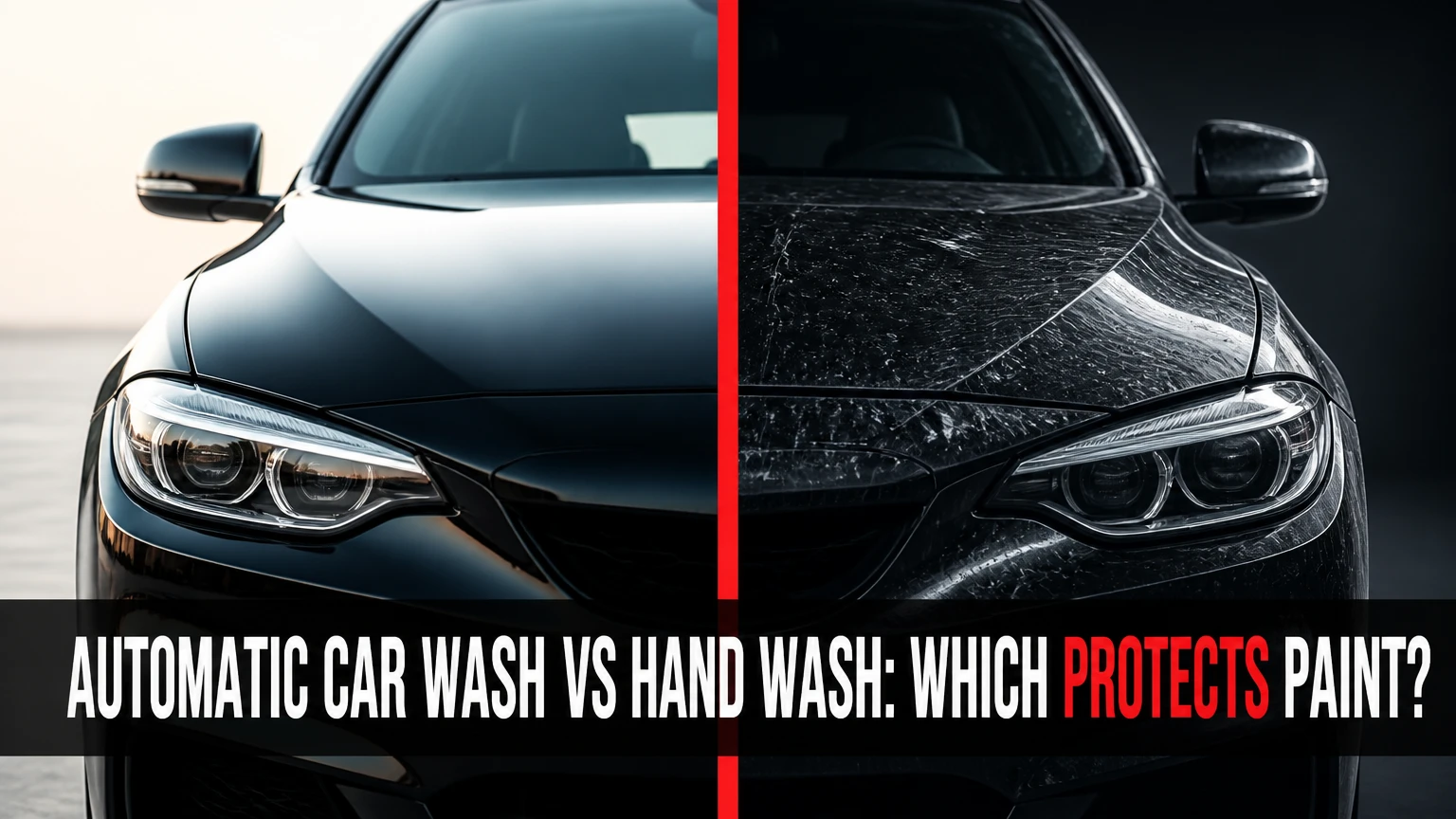
Automatic car wash systems prioritize speed and predictable cost, while hand washing provides greater control over dirt removal and contact with painted surfaces. For the lowest paint-marring risk, choose a careful two-bucket or professional hand wash; for convenience, use a modern touchless wash, especially when the vehicle is moderately dirty.
Key Facts at a Glance
- A typical automatic wash takes 5-12 minutes, while a careful DIY hand wash takes 45-90 minutes.
- Friction tunnels can create swirl marks when dirty brushes or cloth strips drag abrasive grit across paint.
- Touchless washes avoid brush contact but may leave bonded dirt because they rely on water pressure and stronger detergents.
- Correct hand-wash technique reduces scratching more effectively than the label “hand wash” alone.
- A professional detail costs more because it includes labor, wheel cleaning, decontamination, drying, and sometimes paint protection.
- Automatic wash water consumption varies widely because reclaim systems, rinse cycles, and local equipment differ.
What Do the Two Methods Actually Mean?
An automatic car wash uses fixed machinery to apply detergent, water, agitation, and drying with limited human involvement. A hand wash uses a person, mitt, towel, and chosen cleaning chemicals to control where contact occurs and how much pressure reaches the surface.
“Automatic” includes two materially different systems. A friction tunnel or rollover wash uses cloth, foam, or brush media against the vehicle. A touchless system uses chemical pre-soak and high-pressure water without intentional physical contact. Those methods should not be treated as equivalent when paint safety matters.
“Hand wash” also covers several quality levels. A professional detailer may use pressure rinsing, wheel-specific tools, pH-balanced shampoo, multiple wash mitts, forced air, and paint-safe drying towels. A poorly performed hand wash can use one dirty sponge and a rough towel, creating more marring than a well-maintained modern wash tunnel.
The meaningful comparison is therefore controlled contact versus uncontrolled contact, not simply machine versus person.
How Does Each Wash Work?
An automatic wash completes a repeatable sequence in approximately 5-12 minutes, depending on the conveyor, payment package, pre-treatment, drying cycle, and queue. A contact hand wash usually takes 45-90 minutes because the operator must inspect, rinse, agitate, rinse again, and dry each area.
Automatic wash sequence
- An attendant or machine applies a wheel and lower-panel pre-spray.
- The conveyor moves the vehicle through detergent and foam arches.
- A friction system passes cloth, foam, or brush media over the body.
- A touchless system substitutes high-pressure spray for physical agitation.
- Rinse arches remove loosened soil and detergent.
- Optional wax, sealant, or drying-agent programs apply a temporary product.
- Air blowers remove some, but not always all, remaining water.
The main failure point is contact media. If a previous vehicle leaves sand, road salt, or brake dust in the material, the next vehicle can receive that contamination. Touchless systems remove contact risk but may require high-pH or acidic chemistry, which can shorten the life of wax or an incompatible sealant.
Hand-wash sequence
- Clean wheels, tires, and wheel wells with separate tools.
- Rinse loose grit from the roof, glass, panels, and lower body.
- Apply foam or a lubricating pre-wash product when available.
- Wash from the roof downward with a clean microfiber mitt.
- Rinse the mitt frequently in clean water or use multiple mitts.
- Rinse shampoo from panel gaps, mirrors, grilles, and trim.
- Dry with a clean, absorbent microfiber towel or filtered air.
A hand wash succeeds when the operator removes loose contamination before wiping. The bucket count matters less than contamination control, lubrication, light pressure, and clean drying towels.
Which Method Is Better for Paint and Clear Coat?
A careful hand wash generally protects automotive paint better than a friction automatic wash because the operator can use clean tools and avoid dragging grit across high-risk areas. A touchless automatic wash is safer than a contaminated friction tunnel for scratch prevention, but its detergents can remove wax and may not clean bonded contamination completely.
Automotive clear coat is scratched by abrasive particles moving under pressure. The particle can come from road grit, brake dust, sand, or dirty wash media. A circular hand motion does not automatically create a scratch; direction changes can make marks more visible, while excessive pressure and contaminated equipment create the actual damage.
Modern soft-touch material is less aggressive than old nylon brushes, but “soft-touch” does not guarantee a scratch-free result. Media age, cleaning frequency, vehicle soil, conveyor design, and chemical dwell time all affect the result. A facility that replaces or launders its material regularly may outperform an inexperienced hand washer.
| Wash method | Physical contact | Typical paint risk | Main paint-related weakness |
|---|---|---|---|
| Contaminated brush tunnel | High | High | Abrasive grit can create swirls |
| Maintained soft-touch tunnel | High | Medium | Contact remains inconsistent |
| Touchless automatic wash | None | Low contact risk | Strong chemistry may reduce wax longevity |
| Careful DIY two-bucket wash | Controlled | Low | Poor technique can still cause marring |
| Professional hand detail | Controlled and inspected | Lowest typical risk | Quality depends on operator and tools |
How do ceramic coatings and paint protection film change the choice?
Ceramic coatings and paint protection film reduce contamination bonding and simplify washing, but they do not make a vehicle scratch-proof. A coated car can use a touchless wash, provided the chemicals are compatible, while a friction tunnel can still mark exposed clear coat or damage poorly bonded film edges.
A coating usually benefits from pH-neutral shampoo and moderate-pressure rinsing. A professional should inspect PPF edges before using strong pressure near seams, mirrors, badges, and damaged sections. Matte paint requires especially careful product selection because polishing or aggressive cleaners can permanently change its appearance.
Which Automatic Wash Type Is Safest?
A well-maintained touchless automatic wash has the lowest automatic contact risk, while a modern soft-touch wash can clean more effectively but introduces media contact. In practice, the safest choice depends on whether the vehicle has heavy bonded soil, fragile exterior accessories, old paint, or a protective coating.
Touchless automatic wash
Touchless equipment uses alkaline detergents, acidic wheel or mineral treatments, water pressure, and air drying. It is useful for routine dust, light road film, and vehicles whose owners cannot perform a contact wash. It may struggle with tar, tree sap, embedded brake dust, and thick mud.
Soft-touch tunnel wash
Soft-touch tunnels use cloth or foam media after chemical pre-treatment. They often clean side panels and rear surfaces more thoroughly than touchless equipment, but the same media contacts many vehicles. Choose a facility that replaces media, keeps the bay visibly clean, and does not operate with heavily soiled equipment.
Rollover or in-bay wash
A rollover wash keeps the car stationary while one gantry moves around it. Its results vary because the gantry has limited tool coverage around grilles, wheels, spoilers, roof rails, and recessed trim. Confirm vehicle dimensions and remove or retract accessories before entering.
Self-service pressure wash
A self-service bay gives the driver control over spray distance and detergent selection. The shared brush is the highest-risk tool in the bay because it may contain grit from earlier vehicles. Use the pressure wand only, or bring a clean mitt if site rules permit.
Which Hand-Wash Method Fits Your Situation?
A two-bucket wash is the strongest general-purpose hand method for a driveway, while a rinseless wash suits apartments and water restrictions. A waterless wash is appropriate only for light dust on a cool, protected surface, not for mud, sand, winter salt, or visibly gritty paint.
| Hand-wash method | Water requirement | Typical time | Suitable contamination |
|---|---|---|---|
| Two-bucket hose wash | 40-80 liters | 45-90 minutes | Road film, dust, moderate dirt |
| Rinseless wash | 8-15 liters | 30-60 minutes | Light to moderate contamination |
| Waterless wash | 0.5-2 liters | 20-40 minutes | Light dust and fingerprints |
| Professional maintenance wash | 20-60 liters | 60-120 minutes | Routine exterior contamination |
| Professional detail | 40-100 liters | 2-6 hours | Heavy soil, stains, decontamination |
Rinseless products suspend or encapsulate dirt in a lubricated solution, but the towel must be folded and rotated frequently. Use multiple towels when the vehicle is dirty, and presoak lower panels before touching them. Waterless products need even more caution because they provide little margin for grit.
How Much Do Automatic and Hand Washing Cost?
Typical consumer pricing ranges from $8-$25 for an automatic wash, $5-$20 for DIY supplies on a per-wash basis, and $75-$250 for professional exterior detailing. Local labor rates, vehicle size, package contents, water restrictions, and subscription plans can move those figures substantially.
| Service | Typical direct cost | Typical duration | Common inclusions |
|---|---|---|---|
| Basic automatic wash | $8-$15 | 5-8 minutes | Soap, rinse, air dry |
| Premium automatic package | $15-$30 | 8-15 minutes | Wax, wheel spray, underbody rinse |
| DIY two-bucket wash | $2-$8 per wash | 45-90 minutes | Shampoo, towels, water, tools |
| DIY rinseless wash | $1-$5 per wash | 30-60 minutes | Concentrate, towels, bucket water |
| Professional hand wash | $30-$80 | 45-120 minutes | Hand cleaning, wheels, drying |
| Exterior detail | $75-$250 | 2-6 hours | Decontamination, trim, protection |
A monthly automatic membership may reduce the effective per-wash price for high-frequency commuters, but frequent friction washing can increase cumulative marring. A professional wash may cost more initially while reducing the need for later polishing, although no wash method eliminates all correction expenses.
How Much Water Does Each Method Use?
Commercial automatic washes often use less fresh water than an uncontrolled driveway wash because reclaim tanks and high-pressure nozzles can reduce freshwater demand. Exact consumption varies by equipment, and a home wash can use either very little with a rinseless process or a large amount with a continuously running hose.
| Method | Typical water range | Main variable | Environmental trade-off |
|---|---|---|---|
| Rinseless wash | 8-15 liters | Vehicle soil level | Low water use, towel laundering required |
| Automatic reclaim wash | 45-150 liters | Reclaim and rinse design | Captures and treats wastewater |
| Automatic fresh-water wash | 100-250 liters | Program and equipment age | Higher freshwater demand |
| Home hose wash | 100-500 liters | Hose flow and duration | Runoff may carry detergent and grit |
| Professional detail | 40-100 liters | Pressure washer and process | Wastewater handling varies |
The common claim that every automatic wash uses less water than every hand wash is incorrect. A five-minute hose wash with a 10-liter-per-minute flow can consume about 50 liters, while a long rinse can exceed 200 liters. The method and equipment matter more than the label.
What Are the Main Advantages and Drawbacks?
Automatic washing wins on time, predictable access, and low effort. Hand washing wins on inspection, targeted cleaning, and control over contact, chemistry, and drying.
Automatic wash advantages
- Completes routine cleaning during a short fuel or shopping stop.
- Handles frequent commuter washing without storing equipment.
- Provides underbody rinsing at some locations.
- Offers touchless options for vehicles with delicate paint.
- May use reclaim systems that reduce freshwater demand.
Automatic wash drawbacks
- Friction media can introduce swirl marks.
- Touchless chemistry may shorten wax or sealant durability.
- Fixed equipment can miss wheel spokes, badges, grilles, and roof areas.
- Blowers may leave water in mirrors, trim, door handles, and license-plate recesses.
- Conveyor tracks and clearance limits can conflict with low cars, wide tires, or loose accessories.
Hand-wash advantages
- Lets the operator inspect paint, glass, wheels, trim, and rubber seals.
- Allows separate tools for brake dust, tires, paint, and glass.
- Reduces contact on already-clean panels.
- Supports compatible maintenance of ceramic coatings and PPF.
- Removes contamination from recesses that automatic arches often miss.
Hand-wash drawbacks
- Requires more time, storage, physical effort, and weather planning.
- A careless operator can create scratches through dirty towels or excess pressure.
- Home runoff may violate local wastewater rules.
- Professional quality varies widely between businesses.
- Drying in direct sun can create mineral deposits before inspection is complete.
What Causes Scratches, Water Spots, and Poor Cleaning?
Scratches usually result from abrasive contamination combined with pressure and movement, while water spots form when mineral-rich droplets dry on paint. Poor cleaning commonly results from insufficient pre-rinsing, short chemical dwell time, inaccessible equipment, or trying to remove bonded contamination with repeated wiping.
Common failure modes and fixes
- Dirty automatic media: Choose a facility with clean, flexible media and avoid visibly worn or grimy tunnels. Existing swirls require machine polishing, not stronger shampoo.
- One-bucket hand washing: Use separate rinse water or several clean mitts. Replace the solution when it becomes visibly contaminated.
- Dish soap used routinely: Dish detergent does not dissolve a properly cured clear coat, but it can remove waxes and leave little protection. Use automotive shampoo with suitable lubrication instead.
- Drying with a stiff towel: Use clean, plush microfiber towels and light pressure. A blower is useful around mirrors, badges, and trim.
- Wiping heavy mud: Rinse and presoak first. Never try to polish thick grit away with a dry or lightly damp towel.
- Sun-heated panels: Wash in shade and dry promptly. Mineral deposits become harder to remove after repeated heat cycles.
- Brake dust left on wheels: Use a wheel-safe cleaner and a dedicated brush. Iron removers can help with bonded particles, but follow the product’s surface and dwell-time instructions.
Straight-line wiping is a useful technique because it makes a mark’s direction easier to inspect, but it is not a physical guarantee against scratching. Lubrication, clean media, low pressure, and prior rinsing matter more than whether the towel travels in circles.
Which Should You Choose?
The best choice depends on paint priorities, available time, soil level, location, and vehicle configuration. A touchless automatic wash suits a busy owner, a two-bucket wash suits a paint-conscious owner with space, and professional hand detailing suits vehicles needing correction or close inspection.
Daily commuter
Choose a touchless automatic wash every 1-2 weeks, especially during routine dust accumulation. Select a friction tunnel only when its equipment is well maintained and speed matters more than maximizing cosmetic perfection.
Luxury, enthusiast, or collectible vehicle
Choose a careful hand wash or an experienced detailer. Clean mitts, separate wheel tools, compatible shampoo, and controlled drying protect gloss better than premium automatic “ceramic” programs.
Leased or frequently sold vehicle
Use a touchless wash for convenience and schedule a professional hand wash every 1-3 months. A clean exterior supports presentation, but routine automatic coatings do not replace paint inspection or scratch prevention.
Apartment resident
Use a rinseless wash in an approved garage or wash area. Confirm building rules first, and keep at least eight liters of clean solution available for a lightly to moderately dirty vehicle.
Winter, beach, or construction-road driver
Prioritize frequent underbody and wheel-well rinsing. A touchless wash is practical for salt and loose grit, while a hand wash is better later when bonded deposits need careful decontamination.
EV owner
Most electric vehicles can use automatic washes when the manufacturer permits it. Disable automatic wipers, follow conveyor instructions, avoid entering with exposed charging equipment, and check the owner’s manual for towing, neutral, and wheel-clearance procedures.
How Often Should You Wash a Car?
Most vehicles need washing every 1-2 weeks in ordinary commuting conditions, but road salt, coastal spray, bird droppings, tree sap, and construction dust justify faster action. Frequent light washing is safer than allowing abrasive contamination to accumulate and then scrubbing it aggressively.
| Driving condition | Practical interval | Preferred method | Priority area |
|---|---|---|---|
| Covered urban commuting | 2-3 weeks | Touchless or rinseless | Paint and glass |
| Daily outdoor parking | 1-2 weeks | Hand or touchless | Roof, horizontal panels |
| Winter salt exposure | 3-7 days | Automatic rinse or pressure wash | Undercarriage and wheel wells |
| Coastal air and sand | 1-2 weeks | Gentle rinse and hand wash | Lower panels and seals |
| Bird droppings or sap | Same day when possible | Localized hand cleaning | Affected paint |
Bird droppings and tree sap should be softened with suitable cleaner rather than scraped. Delayed removal increases the chance of staining or etching, which a routine automatic wash may not correct.
Expert Rules That Prevent Expensive Mistakes
Do not equate “touchless” with “cleanest.” Touchless equipment avoids physical marring but may leave road film on a heavily soiled car. Repeated passes with stronger chemicals are not a substitute for controlled mechanical cleaning.
Do not equate “hand wash” with “safe.” A single sponge dropped on the ground, reused across wheels and paint, can carry more abrasive contamination than a properly maintained soft-touch tunnel.
Treat drying as part of washing. Water left in mirrors, trim, and badges can reappear as spots while driving. A clean towel, filtered air, and prompt inspection reduce both spotting and unnecessary wiping.
FAQ
Is a touchless car wash better than a hand wash?
A touchless car wash is better when speed and reduced physical contact matter, particularly for a moderately dirty commuter vehicle. A careful hand wash is better for maximum paint control, delicate finishes, and detailed wheel or trim cleaning. Touchless chemistry may remove wax faster and may not remove bonded grime.
Can an automatic car wash damage a car?
An automatic car wash can damage or mark a vehicle when contaminated media, incorrect clearance, harsh chemicals, or loose exterior accessories are involved. Most modern systems clean safely when used correctly, but low spoilers, roof racks, antennas, mirrors, and damaged PPF require special attention.
Is hand washing always better for resale value?
Hand washing is not automatically better for resale value. Consistent maintenance, clean paint, preserved trim, and fewer visible scratches matter more than the wash label. A careful rinseless routine can help, while a careless hand wash can create marring that requires polishing before sale.
What is the safest way to wash a black car?
The safest routine for a black car is a pre-rinse, lubricated two-bucket or rinseless wash, clean microfiber media, and gentle drying in shade. Black paint reveals swirls readily, so avoid shared brushes and do not wipe dusty panels without lubrication.
Should I wash a ceramic-coated car by hand?
Hand washing is preferred for a ceramic-coated car because pH-appropriate products preserve the coating’s behavior and reduce unnecessary abrasion. A compatible touchless wash is acceptable for routine cleaning, but strong alkaline or acidic programs may shorten the coating’s effective maintenance interval.
Is a professional hand wash worth the money?
A professional hand wash is worth the cost when the vehicle is expensive, heavily soiled, difficult to access at home, or being prepared for sale. Typical pricing is $30-$80 for an exterior hand wash and $75-$250 for a more detailed exterior service, depending on labor and correction work.
The Bottom Line
Automatic car wash vs hand wash is ultimately a choice between speed and control. Use a touchless automatic wash for convenient routine cleaning, a maintained soft-touch tunnel when stronger cleaning is necessary, and a careful hand wash when preserving gloss, coatings, PPF, or valuable paint matters most. The best method is the one that removes contamination without adding new abrasion.


