Yes, a bad serpentine belt can cause a rough idle by overloading the engine through parasitic drag or disrupting the vehicle’s electrical, thermal, and sensor networks. While the belt does not directly control combustion timing, a slipping, glazed, or delaminating belt starves the ignition system of voltage and forces the engine to run erratically.
At a Glance:
- Belt slippage reduces alternator RPM, causing low voltage that weakens spark plug ignition arcs.
- Seizing accessory pulleys create extreme mechanical friction, dragging down idle speeds by 100 to 200 RPM.
- Frayed internal steel cords can interfere with crankshaft position sensors, causing false cylinder misfire codes.
- Modern EPDM belts wear down in rib volume without squealing, making silent slippage common.
- A 30-second belt removal test confirms whether your rough idle stems from the accessory drive system.
How Does an Alternator Underperforming From Belt Slip Cause Engine Misfires?
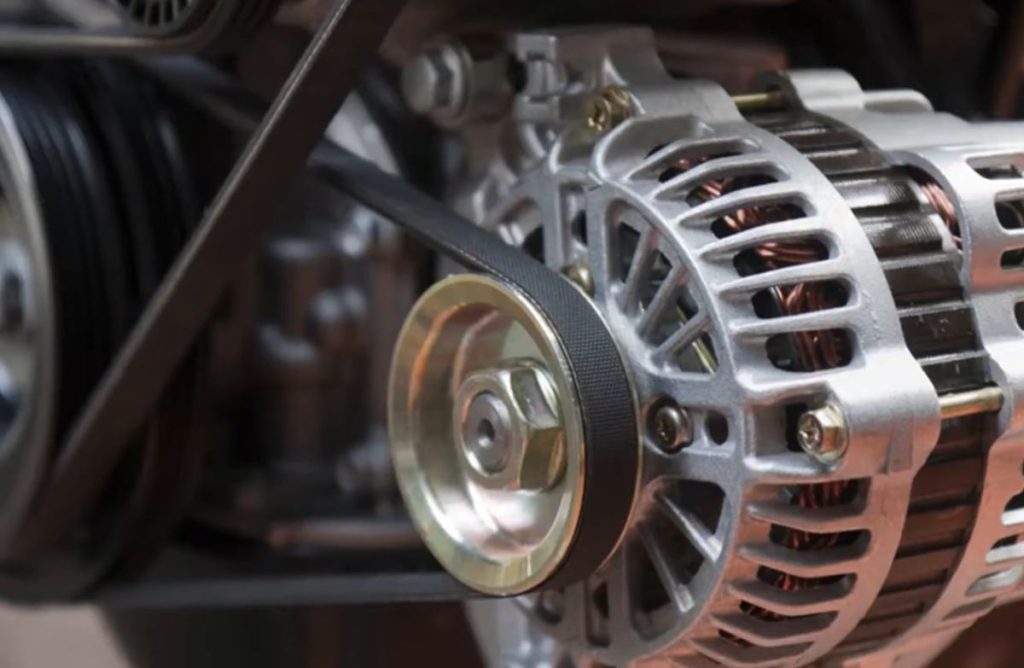
A slipping or glazed serpentine belt reduces the rotational speed of the alternator pulley, preventing the alternator from producing its rated amperage. When alternator output drops system voltage below 12.6V at idle, the Engine Control Unit (ECU) struggles to deliver sufficient electrical power to the ignition coils and fuel injectors.
This drop in available voltage increases fuel injector latency by up to 20% and weakens the spark plug arc. The resulting incomplete fuel atomization and delayed combustion create intermittent cylinder misfires. The driver feels these electrical starvation misfires as a rhythmic shaking or rough idle while stopped at a light.
How Does a Seizing Pulley Cause Parasitic Drag and Vibration at Idle?
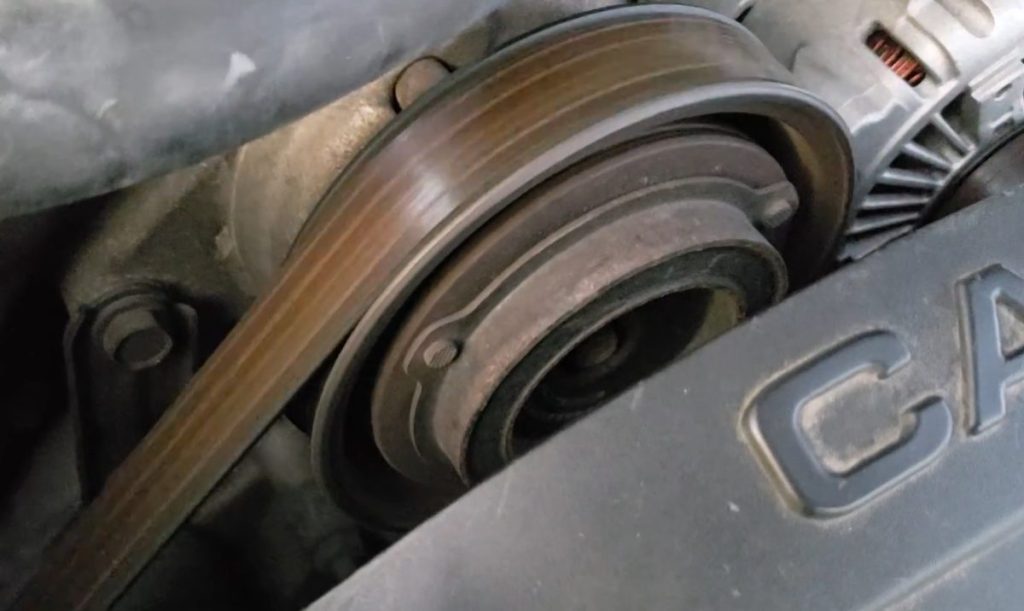
A seizing accessory pulley bearing creates massive kinetic friction, transferring severe mechanical resistance directly to the engine’s crankshaft pulley via the serpentine belt. At idle, an internal combustion engine operates at its lowest torque production state, making it exceptionally vulnerable to external loads.
The parasitic drag acts as an mechanical brake on the engine crankshaft. This load forces the engine idle speed to drop below its standard operating window (typically 700±50 RPM) down to 500 RPM or lower. This sudden drop in rotational speed triggers heavy low-frequency chassis vibrations and can lead to engine stalling.
Can a Frayed Serpentine Belt Trigger False Crankshaft Sensor Readings?
A severely frayed or delaminating serpentine belt can physically strike the Crankshaft Position (CKP) sensor or corrupt its magnetic signals. In many modern vehicle layouts, the CKP sensor is mounted adjacent to the main crankshaft harmonic balancer to measure engine speed and position.
12.6 V is battery rest voltage, not a fault threshold — the fault is charging output leaving its 13.5–14.7 V regulation band. Both branches end at a real rough idle, and the crankshaft sensor reports that low speed correctly.
When internal structural steel cords inside a degrading belt whip past a magnetic reluctance-type CKP sensor, they produce electromagnetic interference (EMI). This interference corrupts the voltage pulses sent to the ECU. Misinterpreting these micro-variations as physical crankshaft speed changes, the ECU dynamically adjusts ignition timing incorrectly, creating a self-induced erratic idle.
How Does Water Pump Belt Slippage Cause Thermal Expansion and Rough Idle?
When a serpentine belt slips over a mechanical water pump pulley, coolant circulation speed drops exponentially relative to engine speed. This sudden loss of coolant flow allows localized thermal hot spots to form inside the engine cylinder head within seconds, often before the dashboard coolant temperature gauge registers a change.
These rapid temperature spikes cause uneven thermal expansion across the engine block and valve train:
- Valve Clearance Alteration: Metal expansion reduces loose valve clearances, preventing intake or exhaust valves from seating fully.
- Compression Loss: Unseated valves allow combustion pressure to bleed off during the compression stroke.
- Geometry Distortion: Cylinder wall expansion creates minor ring blow-by, altering air-fuel ratios in specific cylinders.
The resulting loss of cylinder compression creates an uneven combustion cycle that manifests as a severe heat-induced rough idle.
What Does a Failing Serpentine Belt Sound Like at Idle?
A failing serpentine belt produces distinct acoustic signatures depending on the mode of physical breakdown. Identifying the exact noise at idle helps isolate whether the issue lies within the belt material, the auto-tensioner, or an driven accessory pulley.
| Sound Type | Primary Physical Cause | Immediate Action Needed |
|---|---|---|
| High-Pitched Squeal | Belt slippage due to fluid contamination, loss of tension, or surface glazing | Inspect belt tensioner torque and clean pulley grooves |
| Rhythmic Chirping | Pulley misalignment or worn internal belt rib grooves | Check pulley alignment using a laser tool; replace belt |
| Low Metallic Grinding | Seized accessory bearing (alternator, A/C, or idler pulley) | Remove belt and spin individual pulleys manually |
| Slapping or Thumping | Delamination, missing rib sections, or cracked belt backing | Replace belt immediately to prevent catastrophic snap |
What Are the Warning Signs of a Bad Serpentine Belt Versus a Bad Spark Plug?
Differentiating between a drive belt issue and a ignition misfire requires observing electrical and mechanical performance indicators alongside idle quality. While both issues cause vehicle vibration at idle, their supporting symptoms differ significantly.
- Symptoms Unique to a Bad Serpentine Belt: Headlights dim significantly when stopped, steering feels heavy at low speeds, a battery warning light flickers, or turning on the A/C causes an immediate squeal accompanied by severe engine drag.
- Symptoms Unique to Bad Spark Plugs: Engine misfires under heavy acceleration, hesitation occurs during throttle input, fuel economy drops consistently across long drives, and specific cylinder misfire codes (such as P0301 or P0304) stay constant regardless of electrical load.
What Technical Tolerances Indicate a Serpentine Belt Has Failed?
Determining if a serpentine belt or its drive system has failed requires measuring specific electrical, mechanical, and physical tolerances against manufacturer benchmarks.
- System Voltage Output: A healthy charging system maintains 13.8V to 14.4V at idle. System voltage falling below 12.6V under load indicates severe belt slippage or alternator failure.
- Rib Material Loss: Modern EPDM (Ethylene Propylene Diene Monomer) belts wear down by shedding material rather than cracking. A belt that has lost more than 10% of its original rib volume must be replaced.
- Automatic Tensioner Deflection: An operational spring-loaded tensioner applies between 80 lbs and 120 lbs of constant force. Internal spring fatigue causing the tensioner arm to vibrate or deflect more than 321 inch (≈0.8 mm) permits belt slip under sudden load changes.
- Idle Speed Deviation: Standard four-cylinder engine idle operates at 700±50 RPM. Mechanical drag pulling idle down by 100 RPM to 200 RPM signals severe accessory bearing resistance.
Will a Bad Serpentine Belt Trigger a Check Engine Light?
A bad serpentine belt will not trigger a direct belt-specific diagnostic trouble code, but it routinely sets secondary engine performance codes. When belt degradation disrupts sensor operation or electrical output, the ECU registers performance anomalies across multiple systems.
Typical fault codes triggered by a failing serpentine belt include:
- P0562 (System Voltage Low): Triggered when belt slip prevents the alternator from maintaining base operating voltage.
- P0300 (Random/Multiple Cylinder Misfire): Caused by low system voltage starving ignition coils or false crankshaft speed readings caused by belt whip.
- P0011 / P0014 (Camshaft Position Timing Over-Advanced or Over-Retarded): Occurs when low voltage or oil pump belt issues disrupt variable valve timing (VVT) solenoids.
How Do You Perform a Belt Removal Test to Isolate a Rough Idle?
The Belt Removal Test isolates a rough idle issue by temporarily disconnecting all external accessory loads from the engine crankshaft. This test proves whether the rough idle originates from the drive belt system or internal combustion components like fuel injectors, vacuum leaks, and spark plugs.
- Prepare the Engine: Ensure the engine is completely cold to maximize available run time before thermal build-up occurs.
- Document Belt Routing: Sketch or photograph the exact path of the serpentine belt across all engine pulleys.
- Relieve Tension and Remove: Rotate the tensioner pulley bolt using a serpentine belt tool or breaker bar to release tension, then slide the belt off.
- Execute the Cold Start: Start the engine and let it idle for no longer than 30 to 60 seconds.
- Evaluate Engine Stability: Observe idle quality. If the engine idle becomes perfectly smooth, the fault lies within the belt, tensioner, or an accessory pulley. If the rough idle persists, inspect combustion, ignition, and air intake systems.
Safety Warning: Operating an engine without a serpentine belt disables the water pump, power steering, and alternator. Running the engine past 60 seconds risks severe engine overheating and cylinder head warping.
Can a Stretched Serpentine Belt Cause a Car to Stall at a Red Light?
Yes, a stretched serpentine belt can cause a car to stall completely while idling at a red light. When an engine drops to its lowest rotational speed at a stop, a loose or stretched belt slips over the alternator pulley, causing system voltage to plummet instantly.
Modern electronic fuel injection (EFI) engines require continuous electrical current to power critical components:
- Electronic Throttle Control: Drops below minimum threshold voltage, forcing the throttle blade shut.
- Fuel Pump Relay: Loses holding current, causing fuel rail pressure to drop below combustion requirements.
- ECU Logic: Shuts down intermittently when operational supply voltage dips below 9.0V.
Without sufficient baseline voltage supplied by an active alternator, the engine starves of fuel and ignition spark, resulting in an immediate stall.
Why Does Steering or Turning on the A/C Make a Rough Idle Worse?
Turning the steering wheel or activating the air conditioning places immediate mechanical torque demands on the serpentine belt drive system. If the belt has lost its static friction coefficient or the tensioner spring has weakened, these additional loads trigger severe rotational resistance.
The A/C compressor and the steering pump each demand torque from the crankshaft, not kinetic energy — their loads add, and the belt slips only if that sum exceeds its friction capacity.
On vehicles equipped with hydraulic power steering, turning the wheel forces the power steering pump to generate fluid pressures up to 1,500 PSI. When the A/C engages, the compressor clutch locks, adding immediate resistance. If the belt slips under these extreme parasitic loads, it drags down engine crankshaft rotation, causing heavy cabin shuddering or engine stalling.
Modern vehicles using Electric Power Steering (EPS) bypass hydraulic pump drag entirely, shifting the mechanical load instead to the alternator, which increases electrical resistance on the belt.
How Much Does It Cost to Fix a Serpentine Belt Causing a Rough Idle?
Replacing a worn serpentine belt is one of the most cost-effective automotive repairs, though costs rise if driven accessory components have seized. Addressing the issue early prevents secondary component failure and expensive engine repairs.
- Standard Serpentine Belt Replacement: $100 to $200 total (Parts: $30–$70; Labor: $70–$130).
- Belt and Automatic Tensioner Assembly: $250 to $450 total (Replacing both ensures correct tension and extends belt life).
- Full Component Replacement (Belt, Tensioner, and Alternator/Pump): $500 to $1,200 depending on vehicle layout and component accessibility.
Is It Safe to Drive With a Serpentine Belt That Is Causing a Rough Idle?
No, driving with a serpentine belt degraded enough to cause a rough idle is unsafe and risks leaving you stranded. A belt operating at this stage of failure is prone to snapping, delaminating, or throwing itself off the drive pulleys entirely.
If the belt fails while driving, critical vehicle systems stop functioning instantly:
- Loss of Steering Assist: Power steering assist vanishes, making the vehicle difficult to maneuver in turns.
- Rapid Engine Overheating: The water pump stops circulating coolant, risking warped head gaskets within minutes.
- Battery Depletion: The charging system stops producing power, causing the vehicle electrical system to shut down within miles.
Should You Replace the Tensioner When Replacing a Serpentine Belt?
Yes, you should always replace the automatic belt tensioner when installing a new serpentine belt. An automatic tensioner relies on an internal steel spring and damping mechanism that wear out at the same rate as the belt itself.
Why the Tensioner Matters
Installing a new belt onto a tired tensioner spring leads to early failure. The weakened tensioner allows the new belt to slip under heavy electrical or mechanical loads, restoring the rough idle condition within a few thousand miles. Replacing the belt, tensioner, and idler pulleys together maintains proper tension and ensures long-term reliability.
Why Do Modern EPDM Belts Slip Without Making Any Squealing Sound?
Older automotive belts made from neoprene cracked visually and squealed loudly when slipping. Modern belts manufactured from EPDM (Ethylene Propylene Diene Monomer) resist cracking and temperature breakdown, but they wear down through gradual material erosion similar to tire tread.
As EPDM belt grooves lose depth and wall thickness, the belt bottoms out inside the pulley grooves rather than gripping the groove sidewalls. This loss of sidewall contact reduces the belt’s friction coefficient, allowing it to slip silently when wet, cold, or placed under heavy alternator loads. Mechanics call this phenomenon “Silent EPDM Slip,” and it routinely causes electrical starvation misfires without producing a single squeal under the hood.
The Bottom Line
A bad serpentine belt can definitely cause a rough idle by starving the engine ignition system of electrical voltage, creating parasitic mechanical drag, or corrupting timing sensor signals. Differentiating between a combustion misfire and accessory drive failure is easily accomplished using a 30-second cold belt removal test.
When replacing a slipping or degraded belt, always install a fresh automatic tensioner assembly at the same time to guarantee proper operational tension and eliminate idle vibrations permanently.


