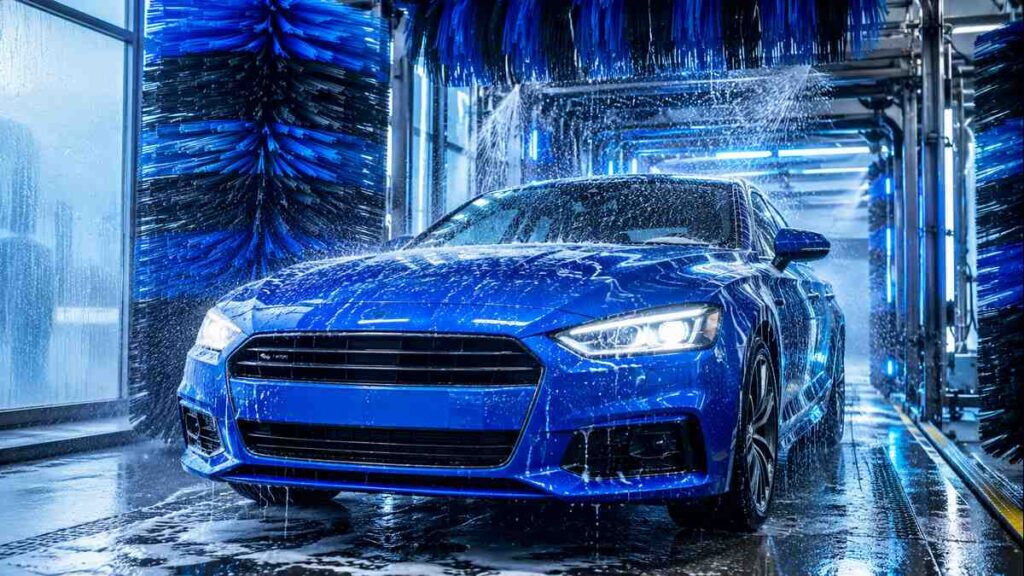
Automatic car washes are fast, convenient, and widely available. In only a few minutes, you can remove dust, mud, pollen, road film, and winter grime without carrying buckets or spending an afternoon in the driveway.
Yet many drivers hesitate before entering the wash tunnel. They have heard that automatic brushes act like sandpaper, touchless chemicals destroy clear coat, and every drive through wash leaves permanent scratches.
So, do automatic car washes damage your paint?
The honest answer is that some automatic car washes can contribute to paint damage, but the level of risk depends on the equipment, maintenance, chemicals, vehicle condition, and washing frequency.
A modern, properly maintained automatic wash will not necessarily ruin healthy factory paint after one visit. However, repeated use of contaminated brushes or cloth strips can create fine scratches and swirl marks. Touchless washes reduce the risk of physical scratching, but they may rely on stronger cleaning chemicals and may not remove stubborn road film completely.
This guide separates common myths from facts and explains how to choose the safest practical option for your vehicle.
How Car Paint Becomes Damaged During Washing
Most modern vehicles have several layers protecting the metal body:
- Primer
- Colored base coat
- Transparent clear coat
The clear coat provides gloss and protects the color underneath. It is durable enough for everyday driving, but it can still be scratched by sand, brake dust, road grit, dirty towels, and contaminated wash materials.
Most wash related swirl marks are not deep scratches through the paint. They are extremely fine marks in the clear coat that become visible when sunlight or bright lighting reflects across the surface.
The basic cause is simple:
Dirt plus pressure plus movement creates abrasion.
A soft cloth is not automatically safe if hard particles are trapped inside it. This is why a dirty microfiber towel, sponge, wash mitt, or automatic wash brush can leave marks even when the material itself feels soft.
Consumer Reports notes that brushes in some automatic washes can retain dirt particles from previous vehicles, potentially affecting the finish. It also recommends touchless automatic systems when paint protection is the main concern.
Myth 1: Every Automatic Car Wash Instantly Ruins Paint
Fact: The risk is usually gradual, not immediate
A single visit to a clean and well maintained automatic car wash is unlikely to destroy healthy factory paint. The more realistic concern is cumulative damage.
Repeated contact with contaminated washing materials can gradually produce:
- Fine swirl marks
- Light straight line scratches
- Reduced gloss
- A hazy appearance in direct sunlight
- Faster deterioration of wax or sealant
Dark colors such as black, navy blue, and deep red reveal these defects more clearly because bright light creates a stronger contrast against the paint.
White and silver vehicles may develop similar marks, but they are often less noticeable.
The quality of the facility matters significantly. A modern wash with frequently cleaned equipment, effective vehicle rinsing, and properly maintained water filtration is generally less risky than an older wash with worn brushes and poor maintenance.
Myth 2: Soft Cloth Automatic Washes Cannot Scratch Paint
Fact: Soft material can still carry abrasive contamination
Many modern facilities advertise soft cloth, foam, or gentle touch equipment. These materials are less aggressive than old, stiff nylon brushes, but the material is only one part of the equation.
The greater concern is what becomes trapped in that material.
Automatic wash equipment may contact hundreds of dirty vehicles. Mud, sand, brake dust, and road debris can transfer to the cleaning media. If the equipment is not rinsed effectively, those particles may be dragged across the next vehicle.
Even dirt collected from your own lower panels can be moved across cleaner areas of the car during the wash cycle.
This does not mean every cloth wash is dangerous. It means the phrase “soft cloth” should not be treated as a guarantee of a completely scratch free wash.
Myth 3: Touchless Car Washes Are Completely Harmless
Fact: They reduce abrasion but introduce different tradeoffs
A touchless car wash uses pressurized water and chemical cleaners instead of brushes or cloth strips. Because no washing material rubs across the body, the risk of contact related swirl marks is substantially lower.
However, touchless systems must clean without agitation. They may compensate by using stronger alkaline or acidic cleaning products.
Frequent exposure to aggressive chemicals may shorten the useful life of:
- Traditional wax
- Paint sealant
- Spray protection
- Some ceramic coating top layers
- Plastic and rubber dressings
Touchless washes can also leave a thin layer of road film because pressure and chemicals alone may not remove tightly bonded contamination. Consumer Reports describes touchless washes as safer for the finish, while noting that they may not clean as thoroughly as contact washing.
Therefore, touchless washing is usually the safer automatic option for preventing scratches, but it is not completely risk free or always perfectly effective.
Myth 4: Hand Washing at Home Is Always Safer
Fact: Poor hand washing can cause significant scratching
Hand washing gives you greater control, but only when you use the correct method.
Common home washing mistakes include:
- Washing a dry, heavily contaminated vehicle
- Using dish soap or household detergent
- Scrubbing with a kitchen sponge
- Using one dirty bucket for the entire car
- Applying excessive pressure
- Washing wheels and paint with the same mitt
- Dropping a towel and continuing to use it
- Drying with an old bath towel
- Washing in direct sunlight
- Moving a dirty cloth in circular motions
A dirty sponge dragged across dry paint may cause more damage than a properly maintained modern wash.
A safe hand wash requires an effective pre rinse, automotive shampoo, clean wash media, generous lubrication, frequent rinsing, and careful drying.
Meguiar’s explains that separating settled dirt from the wash mitt helps reduce contact with swirl inducing abrasives. Its snow foam guidance also emphasizes lubrication and reduced physical rubbing as ways to lower swirl risk.
Automatic Car Wash Versus Touchless and Hand Washing
The following comparison provides a realistic overview rather than treating any method as completely perfect.
| Wash Method | Scratch Risk | Chemical Risk | Cleaning Ability | Best Use |
|---|---|---|---|---|
| Brush or cloth automatic wash | Higher | Moderate | Good for general dirt | Older daily drivers where convenience matters most |
| Touchless automatic wash | Lower | Moderate | Moderate, may leave road film | Quick cleaning, winter salt removal, apartment living |
| Proper hand wash | Lowest | Low | Excellent | New cars, dark paint, corrected paint, protected vehicles |
| Poor hand wash | High | Moderate | Varies | Not recommended |
| Professional detailing wash | Lowest | Low | Excellent | Luxury cars, ceramic coatings, show vehicles, paint preservation |
Relative Paint Risk by Washing Method
This visual chart presents a practical risk estimate based on the amount of uncontrolled physical contact involved. It is an educational comparison, not a laboratory measurement.
Relative Risk of Wash Induced Paint Marks
What Real Drivers and Detailing Communities Report
Opinions among vehicle owners are mixed because their priorities differ.
Some drivers use automatic washes regularly and remain satisfied with the appearance of their cars. This is particularly common among owners of light colored daily drivers who prioritize convenience over a flawless finish.
Detailing enthusiasts are usually more cautious. They inspect paint under bright lights and notice defects that an average owner may never see. Discussions within detailing communities commonly warn that repeated brush washing creates visible swirls, while acknowledging that even hand washing can cause similar damage when performed incorrectly.
Both perspectives can be valid.
A family vehicle used every day does not require the same maintenance routine as a black collector car that has received professional paint correction. The right decision depends on the condition of the vehicle and the owner’s expectations.
Is Leaving Your Car Dirty Worse Than Using a Car Wash?
Sometimes, yes.
Avoiding every car wash is not a good paint protection strategy. Contaminants can become difficult to remove and may stain or etch the surface when left for too long.
Potentially harmful contaminants include:
- Bird droppings
- Bug residue
- Tree sap
- Road salt
- Mud
- Industrial fallout
- Fuel residue
- Hard water minerals
Bird droppings and insect residue should be removed promptly because they can affect the finish. Road salt also deserves quick removal, especially from wheel arches and the underside of the vehicle.
When the choice is between leaving corrosive winter salt on a car for weeks or using a touchless wash, the touchless wash is usually the more sensible option.
The goal is not to avoid washing. The goal is to choose the least damaging method available for the situation.
How to Choose a Safer Automatic Car Wash
Before entering an automatic wash, inspect the facility and its process.
Look for these positive signs
- Modern, clean equipment
- A thorough pre rinse
- Clearly maintained wash bays
- Touchless options
- Dedicated wheel cleaning equipment
- Spot free final rinse
- Strong air drying
- Consistently positive customer reviews
- Staff who can explain how equipment is cleaned
- No shared hand drying towels
Watch for these warning signs
- Dirty or frayed brushes
- Mud around the wash entrance
- Poorly maintained equipment
- Strong chemical staining around the bay
- Attendants using the same towel on several vehicles
- Brushes contacting wheels before paint
- Water that smells unusually strong or leaves residue
- Limited rinsing before physical contact
A vehicle should be rinsed thoroughly before brushes or cloth strips touch it. Removing loose grit first reduces the amount of abrasive material dragged across the finish.
Can Automatic Washes Damage Ceramic Coatings?
An automatic wash does not always remove a professional ceramic coating immediately. However, repeated exposure to strong cleaners and contaminated brushes may reduce its appearance and useful performance.
A ceramic coating improves chemical resistance and makes dirt easier to release, but it is not scratch proof.
Brushes can still create marks in the coating or underlying clear coat. Strong touchless detergents may gradually weaken water behavior and reduce the life of protective top products.
Owners of ceramic coated vehicles should follow the coating installer’s care instructions. A pH appropriate hand wash is generally preferred. When hand washing is impossible, an occasional touchless wash is usually a better compromise than a contact tunnel.
Are Automatic Car Washes Safe for Paint Protection Film and Vinyl Wraps?
Vehicles with paint protection film, vinyl graphics, loose decals, or wrapped trim require additional care.
Aggressive brushes or high pressure water directed at an exposed edge may lift or damage material that is already loose. Matte wraps can also develop uneven shine when scrubbed repeatedly.
Before using an automatic wash:
- Review the film or wrap manufacturer’s instructions
- Inspect edges for lifting
- Avoid brushes on damaged or loose material
- Tell wash staff about aftermarket accessories
- Choose touchless washing when approved by the installer
The same caution applies to roof racks, antennas, spoilers, loose trim, automatic wipers, and powered tailgates.
How to Protect Your Paint When You Must Use an Automatic Wash
Automatic washing may be the only realistic option for drivers who live in apartments, experience freezing winters, lack driveway access, or have limited mobility.
Use these steps to reduce risk:
1. Choose touchless whenever possible
Touchless systems minimize direct friction and are generally the safest automatic option for preserving gloss.
2. Avoid shared drying towels
A towel may look clean while holding abrasive particles. Use the air dryer or bring a clean microfiber drying towel.
3. Do not rub a partially clean car
A touchless wash may leave road film behind. Rubbing the remaining film with a dry towel can produce scratches. Use a safe drying aid or perform a proper contact wash first.
4. Maintain paint protection
Apply a quality wax, sealant, or suitable protective product regularly. Protection helps contaminants release more easily and reduces direct exposure of the clear coat.
5. Remove heavy mud before entering
Rinse thick mud and sand from the lower panels before using a contact wash. Heavy contamination creates a greater abrasion risk.
6. Inspect the finish periodically
Check the hood, doors, and rear panels in direct sunlight. Early detection helps you change your wash routine before the finish becomes heavily marred.
7. Use automatic washing selectively
A touchless wash can be useful for emergency cleaning or winter salt removal. It does not have to become the only method you ever use.
The Safest Way to Hand Wash a Car
For drivers who want maximum paint preservation, a careful hand wash remains the best practical method.
Step 1: Wash in a shaded area
Make sure the paint is cool. Hot panels cause soap and water to dry too quickly.
Step 2: Rinse loose contamination
Use free flowing water or a pressure washer with a wide spray pattern and reasonable distance.
Step 3: Apply a pre wash
Foam or pre wash solution helps soften dirt before physical contact.
Step 4: Prepare separate wash and rinse buckets
Place automotive shampoo in one bucket and clean rinse water in the second. A grit guard can help keep settled contamination away from the wash mitt.
Step 5: Wash from top to bottom
The roof and upper panels are generally cleaner than the lower doors, bumpers, and rocker panels.
Step 6: Use straight movements and light pressure
Let the shampoo and wash mitt do the work. Avoid aggressive scrubbing.
Step 7: Use separate tools for wheels
Brake dust is highly abrasive. Never move a wheel mitt or wheel towel onto painted body panels.
Step 8: Rinse thoroughly
Do not allow shampoo to dry on the surface.
Step 9: Dry carefully
Use clean, soft microfiber towels or a filtered vehicle dryer. Blotting or gently gliding the towel requires less friction than aggressive rubbing.
Can Car Wash Swirl Marks Be Removed?
Light swirl marks can often be reduced or removed through machine polishing. Paint correction levels the clear coat around the defects so light reflects more evenly.
However, polishing removes a small amount of clear coat. It should not be treated as an unlimited repair.
A professional detailer may inspect the paint, measure its condition, and use the least aggressive polishing method capable of producing the desired result.
Deep scratches that catch a fingernail may require more extensive repair and may not disappear through ordinary polishing.
Preventing defects is generally safer and more affordable than repeatedly correcting them.
Frequently Asked Questions
Do automatic car washes scratch every car?
No. One visit does not guarantee visible scratches. Risk depends on the wash equipment, contamination, maintenance, paint hardness, vehicle color, and previous paint condition. Repeated contact washing increases the likelihood of visible swirl marks.
Are touchless car washes safe for new cars?
Touchless washes are generally safer than brush washes for preventing physical scratches. However, frequent use may weaken wax or sealant, and the wash may leave some road film behind.
Are automatic washes safe for black cars?
They can clean black cars, but wash induced defects are easier to see on dark paint. Owners who want a highly reflective finish should prioritize proper hand washing or professional detailing.
Does a ceramic coating prevent car wash scratches?
No. Ceramic coatings are not scratch proof. They provide chemical resistance, easier cleaning, and improved water behavior, but contaminated brushes can still create surface defects.
Is a professional hand wash always safe?
Not automatically. A professional service can still cause damage if workers reuse dirty towels or use poor methods. Observe the process and choose a business that uses clean mitts, proper pre washing, separate wheel tools, and safe drying techniques.
How often should a car be washed?
Many daily driven vehicles benefit from washing every one to two weeks, but conditions matter more than a fixed schedule. Wash sooner after exposure to bird droppings, bugs, road salt, mud, tree sap, or coastal contamination.
Should I use an automatic wash before selling my car?
A clean vehicle usually presents better to buyers. Choose touchless washing or a reputable hand wash if preserving gloss is important. For a higher value vehicle, professional detailing may produce a stronger result.
Final Verdict: Do Automatic Car Washes Damage Your Paint?
Automatic car washes can contribute to paint damage, especially when contaminated brushes or cloth strips repeatedly contact the vehicle. The most common result is gradual clear coat marring rather than immediate paint failure.
Touchless automatic washes are generally the safer machine based choice because they avoid direct contact. Their disadvantages include stronger chemicals, incomplete road film removal, and possible reduction of wax or sealant life.
A properly performed hand wash provides the greatest control and the lowest practical risk. However, a careless hand wash can be just as damaging as a poorly maintained automatic system.
Choose your method according to your vehicle and priorities:
- Use a careful hand wash for new cars, black paint, corrected finishes, and special vehicles.
- Use a touchless wash when time, weather, or access makes hand washing impractical.
- Use a contact automatic wash only when convenience matters more than maintaining a nearly flawless finish.
- Remove harmful contaminants promptly rather than allowing them to remain on the paint.
- Maintain wax, sealant, or ceramic protection to make routine cleaning safer and easier.
The smartest approach is not to fear every automatic car wash. It is to understand the compromises, choose a clean and modern facility, and use better washing methods whenever possible.
Next Step
Want your vehicle cleaned without unnecessary swirl marks or harsh treatment? Contact a trusted local car care professional to discuss paint safe washing, exterior detailing, paint correction, and long term protection options.
Schedule a Paint Safe Car Wash