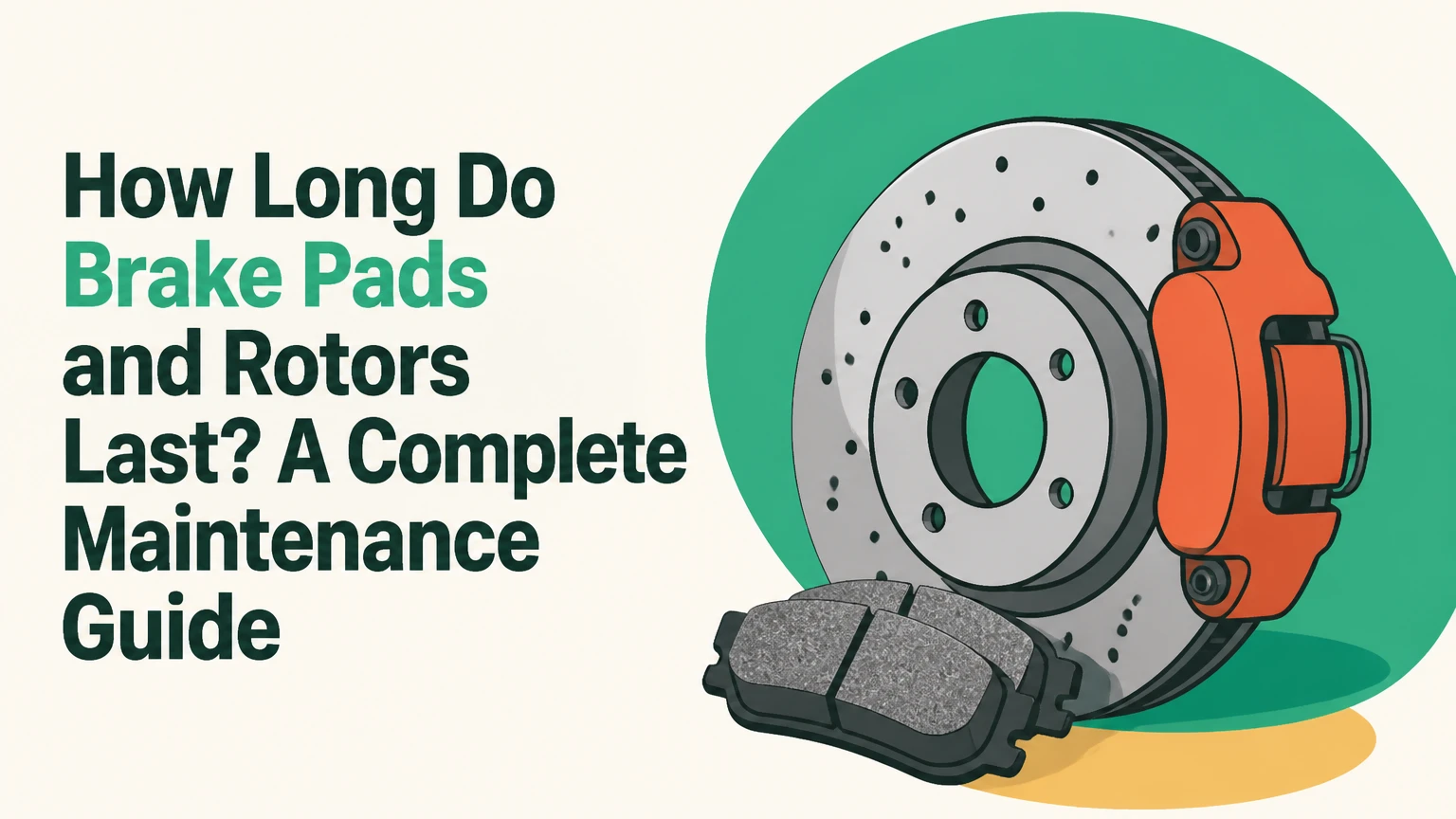
Brake pads typically last between 30,000 and 70,000 miles (48,000 to 112,000 kilometers). Brake rotors generally last 70,000 to 120,000 miles under standard driving conditions, while aggressive track setups may require rotor replacement every 30,000 miles. Total lifespan depends heavily on friction material, vehicle weight, and driving habits.
Key Facts At a Glance
- Front brake pads handle approximately 70 percent of a vehicle’s stopping power and wear out twice as fast as rear pads.
- New brake pads feature 10 to 12 millimeters of friction material and require immediate replacement at 2 to 3 millimeters.
- Ceramic brake pads offer the longest lifespan and lowest dust output but cost significantly more than organic alternatives.
- Replacing brake pads without replacing or resurfacing damaged rotors will destroy the new friction material within weeks.
- Heavy mountain driving and towing can reduce standard brake component lifespans by up to 50 percent due to extreme thermal load.
How Long Do Brake Pads and Rotors Last on Average?
Brake pads and rotors possess highly variable lifespans dictated by the mechanical demands placed upon them. The most common replacement window for standard passenger car brake pads falls right at the 50,000-mile mark. Rotors possess greater structural density and typically survive through two complete pad life cycles before requiring replacement.
Automakers design modern braking systems with a heavy front-end bias. When you press the brake pedal, the vehicle’s weight transfers forcefully to the front axle. This weight transfer forces the front braking components to dissipate significantly more kinetic energy than the rear components. Consequently, vehicle owners usually replace front brake pads twice as often as rear brake pads.
The following table breaks down expected lifespans based on axle placement and component durability.
| Component Placement | Expected Mileage Range | Expected Kilometer Range | Average Braking Load |
| Front Brake Pads | 30,000 to 60,000 miles | 48,000 to 96,000 km | 70% to 75% |
| Rear Brake Pads | 40,000 to 70,000 miles | 64,000 to 112,000 km | 25% to 30% |
| Standard Cast Rotors | 70,000 to 120,000 miles | 112,000 to 193,000 km | Distributed evenly |
| Track-Spec Rotors | 30,000 to 50,000 miles | 48,000 to 80,000 km | Extreme thermal load |
The Kinetic Energy Conversion Process Explained
Vehicle braking systems function by converting the kinetic energy of a moving heavy object into intense thermal energy. This energy conversion dictates how quickly components degrade over time. The driver initiates this sequence, but hydraulic and mechanical multiplication do the actual work.
When a driver depresses the brake pedal, mechanical leverage pushes a piston inside the master cylinder. This action pressurizes the hydraulic brake fluid traveling through the lines. The pressurized fluid reaches the brake calipers and forces internal pistons outward. These caliper pistons clamp the highly abrasive brake pads tightly against both sides of the spinning rotor. The resulting friction slows the wheel while generating temperatures that can exceed 500 degrees Fahrenheit during standard inner-city driving. Over time, this constant abrasion sheds microscopic layers of both the pad and the rotor.
What Are the Different Types of Brake Pads?
The friction material bound to the steel backing plate of a brake pad determines its operational lifespan, noise level, and thermal management capabilities. Automotive engineers categorize brake pads into three primary material compounds.
Non-Asbestos Organic (NAO) Pads
Organic brake pads consist of rubber, glass, carbon, and high-temperature bonding resins. They are exceptionally quiet and generate very little wear on the rotors. Because organic materials are softer, these pads offer an excellent bite in cold temperatures without requiring a warm-up period.
However, organic pads wear out incredibly fast compared to metallic compounds. They suffer from severe structural fade under high heat, making them dangerous for towing or track use. They also generate heavy black dust that coats wheels quickly. Organic pads serve best on lightweight commuter cars driven conservatively.
Semi-Metallic Brake Pads
Semi-metallic pads contain between 30 and 65 percent shredded steel wool, copper wire, and iron powder. This high metal content provides ultimate heavy-duty thermal dissipation and immense stopping power. They create a highly rigid, reassuring pedal feel under heavy load.
The drawbacks of semi-metallic pads include high operational noise and extreme abrasiveness. The hard metal compounds aggressively score and wear down cast iron rotors. They also require a brief warm-up period to reach maximum friction potential and create a corrosive metallic dust that can pit aluminum wheels if left unwashed. These pads belong on heavy towing trucks and track vehicles.
Ceramic Brake Pads
Ceramic brake pads utilize dense ceramic fibers mixed with copper strands and specialized bonding agents. They boast an extremely long operational lifespan and produce nearly zero audible noise during daily driving. Furthermore, the dust they generate is light-colored and non-corrosive.
Ceramic pads carry a high initial purchase cost and struggle with thermal management in high-stress racing environments. They also exhibit a slightly lower cold-climate bite force than organic pads. Despite these minor limitations, ceramic pads represent the premium upgrade choice for standard daily drivers and luxury passenger vehicles.
| Material Type | Primary Composition | Ideal Vehicle Use Case | Expected Mileage Lifespan |
| Organic (NAO) | Rubber, resins, glass | Budget daily commuters | 30,000 to 45,000 miles |
| Semi-Metallic | Steel wool, iron, copper | Heavy trucks, track cars | 40,000 to 60,000 miles |
| Ceramic | Ceramic fibers, copper | Luxury cars, daily drivers | 50,000 to 75,000 miles |
| Carbon-Kevlar | Carbon matrix, aramid | High-end exotics | 25,000 to 40,000 miles |
How Do Rotor Designs Affect Stopping Power and Wear?
Brake rotors (or discs) bolt directly to the wheel hub and spin symmetrically with the tires. The design of the rotor face dictates how effectively the system sheds heat, water, and waste gases.
Smooth and Blank Rotors
Smooth rotors feature a solid, continuous surface area that maximizes the contact patch with the brake pad. The vast majority of passenger vehicles leave the factory equipped with smooth cast iron rotors. They provide the most consistent braking feel, generate the least noise, and maximize pad longevity by offering a flat, uninterrupted friction surface. They are ideal for budget-conscious fleets and standard commuters.
Slotted Performance Rotors
Slotted rotors feature shallow channels carved across the outer face. These slots act as wipers, violently expelling trapped heat, water, and outgassed pad resins away from the contact patch. This constant wiping action prevents brake fade during extreme use.
Slotted rotors excel on heavy towing trucks and mountain driving vehicles. The trade-off is component longevity. The sharp edges of the slots act like a cheese grater against the brake pads, reducing pad lifespan by roughly 20 percent.
Drilled Track Rotors
Drilled rotors contain precision holes bored entirely through the disc into the central cooling vanes. This design maximizes structural cooling and provides an aggressive aesthetic popular on sports cars. They perform exceptionally well in wet climates because the holes allow water to escape instantly.
Unfortunately, drilled rotors are highly prone to structural cracking under extreme, repetitive track heat. The holes create stress risers in the metal. For dedicated racing, slotted high-carbon alloy rotors perform more reliably than drilled variants.
How Do Driving Habits Impact Brake Longevity?
Driver behavior influences brake component degradation more than any other variable. Highway commuters often see their brake pads last beyond 80,000 miles because they rarely touch the pedal. Conversely, delivery drivers operating in dense urban traffic frequently burn through pads in under 25,000 miles due to continuous stop-and-go friction.
Environmental Factors and Corrosion
Geography heavily dictates rotor survival rates. Vehicles operating in coastal regions or northern climates face heavy exposure to salt and humidity. Salt accelerates the oxidation of cast iron rotors, causing them to pit and rust deeply. When rust scales form on the outer edges of a rotor, it eventually encroaches on the swept area. This corrosion rapidly shreds the brake pad material and forces premature replacement regardless of the vehicle’s mileage.
Do Electric Vehicles Extend Brake Component Life?
Electric vehicles (EVs) and modern hybrids utilize regenerative braking systems that fundamentally alter component wear rates. In an electric vehicle, lifting your foot off the accelerator reverses the electric motor’s polarity. The motor becomes a generator, converting the vehicle’s kinetic energy back into electrical energy to recharge the battery.
This magnetic resistance aggressively slows the vehicle without engaging the physical brake pads and rotors. Because the hydraulic friction brakes are only required for sudden panic stops or coming to a complete rest, EV brake components experience minimal thermal stress. A standard EV driver will routinely see brake pads and rotors last well beyond 100,000 miles. Mechanics frequently recommend inspecting EV brakes for rust buildup, as the lack of regular use prevents the pads from scraping the rotors clean.
What Are the Warning Signs of Failing Brakes?
A braking system provides distinct audible and physical feedback when its mechanical components reach their structural limits. Ignoring these symptoms leads to catastrophic system failure and severe safety risks.
- High-Pitched Squealing: Brake pad manufacturers embed a small metal wear indicator tab into the pad. When the friction material degrades down to two millimeters, this tab makes contact with the spinning rotor. The resulting high-pitched squeal is a deliberate warning to replace the pads immediately.
- Steering Wheel Shaking: If the steering wheel vibrates violently during firm braking, the rotors have developed severe thickness variation. Excessive heat warps the flat surface of the cast iron, creating high and low spots. The caliper bounces across these imperfections, sending a shudder directly up the steering column.
- Spongy or Soft Brake Pedal: A brake pedal that sinks to the floor indicates a hydraulic failure rather than a friction material issue. Air bubbles may have entered the master cylinder lines, or the brake fluid has absorbed excessive atmospheric moisture. This requires a complete system flush.
- Grinding Metal-on-Metal Noise: A deep, gravelly grinding noise means the friction material is entirely gone. The steel backing plate of the pad is actively cutting deep grooves into the rotor. This scenario is dangerous and guarantees you must replace both the pads and the rotors.
What Are the Exact Specifications for Component Replacement?
Automotive technicians do not guess when to replace braking components. They rely on precise micrometers and manufacturer specifications to determine safety limits. A standard rule of thumb among certified mechanics dictates that replacing brake pads without resurfacing or replacing the rotors reduces the new pad lifespan by up to 50 percent.
According to Automotive Service Excellence guidelines, specific measurements dictate immediate action. The following table outlines the hard specifications for standard passenger vehicle brake components.
| Measurement Type | Standard New Specification | Minimum Safe Limit | Consequence of Limit Failure |
| Pad Friction Material | 10 mm to 12 mm thick | 2 mm to 3 mm thick | Rotor gouging, extreme heat |
| Lateral Rotor Runout | 0.01 mm to 0.02 mm | Maximum 0.05 mm (0.002 in) | Steering shake, uneven wear |
| Brake Fluid Moisture | 0% to 1% water volume | 3% to 4% water volume | Fluid boils, soft brake pedal |
| Rotor Thickness | Varies heavily by model | Stamped directly on rotor hat | Structural cracking under load |
How Much Does a Full Brake Replacement Cost?
Brake replacement costs vary based on the friction material selected, the vehicle’s complexity, and local labor rates. A standard single-piston caliper system on a domestic sedan costs significantly less to service than a six-piston setup on a luxury European SUV.
The following estimates represent average United States service center pricing per axle (meaning both front wheels or both rear wheels).
| Service Type | Average Parts Cost (Per Axle) | Average Labor Cost (Per Axle) | Total Estimated Cost |
| Brake Pads Only | $40 to $100 | $60 to $120 | $100 to $220 |
| Rotors Only | $60 to $150 | $80 to $150 | $140 to $300 |
| Full Standard Brake Job | $100 to $250 | $120 to $220 | $220 to $470 |
| Performance Upgrade | $250 to $600 | $150 to $250 | $400 to $850 |
How Do You Properly Bed New Pads and Rotors?
To ensure maximum component lifespan, drivers must mechanically “bed” new pads and rotors immediately after installation. Bedding is a controlled heating process that transfers an even, microscopic layer of pad friction material directly onto the bare iron face of the rotor. Without this transfer layer, brakes will squeak and suffer from inconsistent pedal feel.
- Initial Acceleration: Drive to a safe, open road with zero traffic and accelerate smoothly to 40 mph (65 km/h).
- Firm Deceleration: Apply smooth, firm pressure to the brake pedal to slow the vehicle down to 10 mph (15 km/h). Never come to a complete stop during this step.
- Cooling Cycle: Drive normally for 30 seconds to allow ambient air to cool the calipers and rotors slightly.
- Repetition: Repeat this moderate 40 mph to 10 mph deceleration loop five consecutive times.
- High-Heat Cycles: Accelerate up to 55 mph (90 km/h) and brake aggressively down to 10 mph. Repeat this high-heat sequence five times. You may smell burning resin, which is completely normal.
- Final Cool-Down: Drive uninterrupted for 10 minutes at highway speeds using the brakes as little as possible. This final step thermally stabilizes the metal and cures the transferred friction layer.
What Are the Most Common Brake Maintenance Mistakes?
Even high-quality brake components will fail prematurely if subjected to poor installation practices or destructive driving habits. Avoid these common errors to maximize your system’s longevity.
Slapping New Pads on Damaged Rotors
Placing brand-new flat brake pads onto grooved, warped, or rusted rotors is a costly mistake. The old rotor’s uneven surface prevents proper contact, causing the new pads to overheat and chunk apart within a matter of weeks. Always machine the rotors or replace them entirely.
Forgetting Caliper Pin Lubrication
Brake calipers slide on metal guide pins to apply even pressure. Failing to clean these pins and apply high-temperature silicone grease causes the caliper to seize. A seized caliper drags a single pad against the rotor constantly, resulting in rapid, uneven wear and severe heat damage.
Riding the Brakes Down Hills
Holding continuous, light pressure on the brake pedal during a long mountain descent causes extreme thermal glazing. The pads and rotors overheat and harden, completely destroying their ability to generate friction. Drivers should always shift into a lower gear and use engine braking on steep declines.
Using Unapproved Lubricants
Applying standard petroleum-based grease or anti-seize to sliding brake components is highly dangerous. Petroleum swells and destroys the rubber protective boots and hydraulic seals inside the caliper, leading to fluid leaks and total brake failure. Only use specialized silicone or synthetic brake lubricants.
Which Brake Setup Should You Choose for Your Vehicle?
Selecting the correct brake components requires matching the material chemistry to your specific driving demands.
The Budget Daily Commuter
If you drive at low speeds in the inner city, do grocery runs, and take short highway trips, prioritize low noise and low dust. Choose standard ceramic brake pads paired with smooth cast-iron rotors. This setup requires minimal maintenance and keeps your wheels clean.
The Heavy Towing Driver
If you pull heavy trailers, haul construction cargo, or navigate steep inclines in a truck, you need high thermal capacity. Choose heavy-duty semi-metallic brake pads paired with slotted rotors. This combination clears out trapped gasses under extreme clamping loads and handles high temperatures without melting.
The Track Performance Enthusiast
If you participate in spirited weekend driving or high-speed track events involving late-corner braking, prioritize maximum stopping bite. Choose high-friction track-specific metallic pads paired with high-carbon alloy slotted rotors. This setup prevents heat cracking and provides a brutally rigid pedal feel, though you must accept the high noise levels.
Conclusion
Understanding exactly how long brake pads and rotors last allows drivers to budget for maintenance and avoid catastrophic on-road failures. By selecting the proper friction materials for your vehicle and avoiding destructive habits like riding the pedal on descents, you can comfortably push standard components past the 60,000-mile mark. Always heed early warning signs like squealing or steering vibration, and never cut corners by installing new pads on structurally compromised rotors.
Frequently Asked Questions
Can you just replace brake pads and not rotors?
You can replace pads without swapping rotors only if a micrometer confirms the rotors possess adequate thickness and display zero lateral runout or deep grooving. However, most mechanics advise against this, as used rotors significantly reduce the lifespan and effectiveness of new brake pads.
How do I check my brake pads without removing the tire?
Many modern alloy wheels feature spokes wide enough to see through. Shine a bright flashlight directly at the brake caliper. You can usually view the outer brake pad pressing against the rotor. If the friction material appears thinner than a standard pencil eraser, schedule a replacement immediately.
Why do my new brakes squeak when stopping slowly?
New brakes often squeak if the mechanic failed to apply anti-squeal compound to the back of the steel pad plate, or if the pads were not properly bedded to the rotors. Lightly glazing the pads through gentle, low-speed stops before the bedding process completes can also trigger high-pitched vibrations.
Does brake fluid go bad over time?
Yes, brake fluid is highly hygroscopic, meaning it actively absorbs moisture directly from the atmosphere. Over two to three years, this moisture lowers the fluid’s boiling point and corrodes internal steel lines. You should test and flush your brake fluid every 30,000 miles to prevent internal decay.


