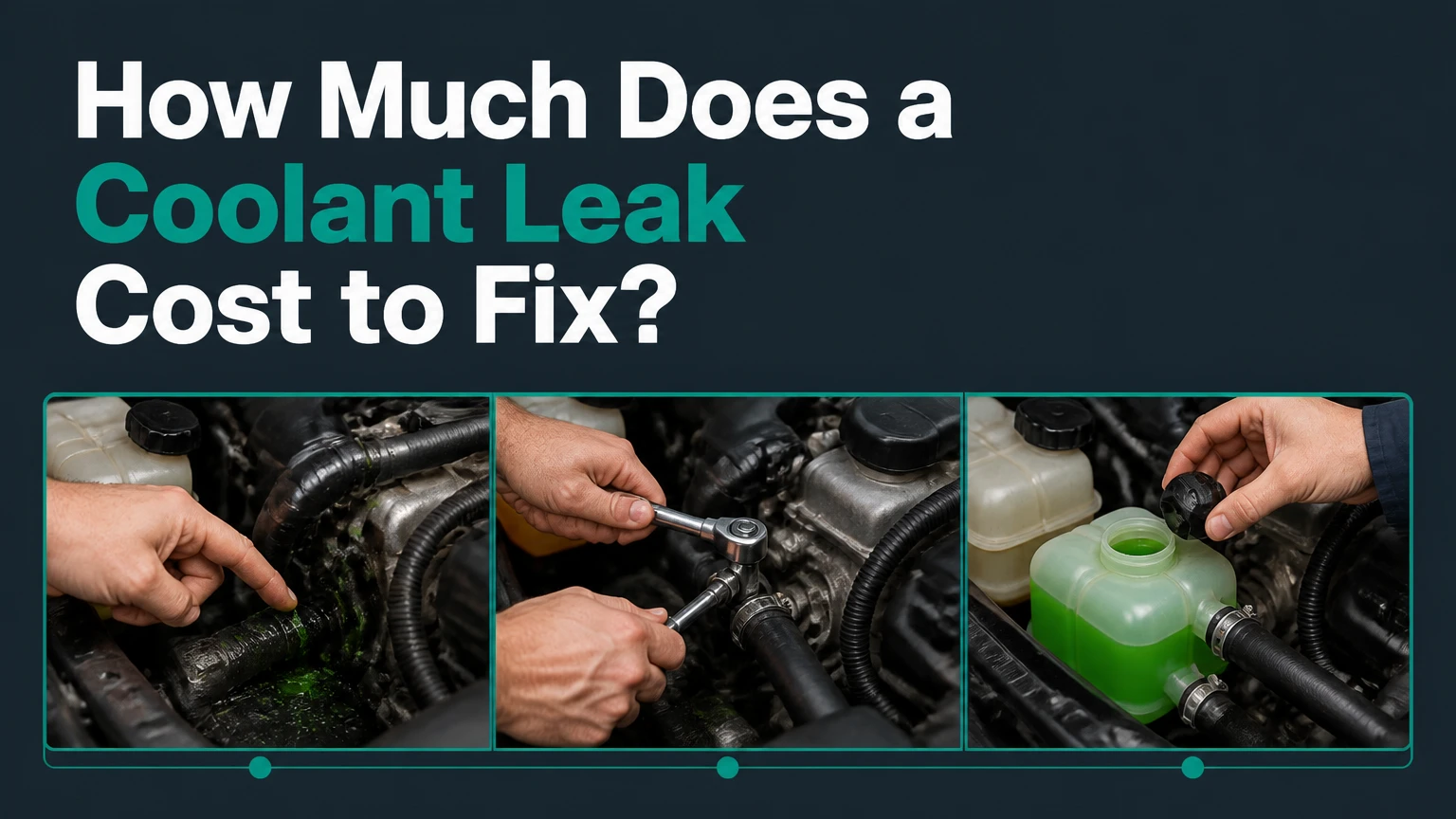
Fixing a coolant leak costs between $100 and $400 on average for basic repairs involving external hoses or plastic reservoirs. Prices escalate rapidly to $1,500 to $3,000 for severe internal engine issues like a blown head gasket. The final price depends entirely on the specific failed component and local labor rates.
Key Facts / At a Glance
- Basic rubber hose and clamp replacements typically range from $100 to $250.
- Water pump and radiator replacements require more labor and average between $300 and $900.
- Catastrophic internal leaks requiring head gasket replacement often exceed $2,000.
- Standard automotive cooling systems operate under 14 to 16 PSI of internal pressure.
- Sweet-smelling white exhaust smoke indicates an active internal combustion leak.
- Mixing incompatible antifreeze types creates a chemical sludge that destroys water pumps.
What Factors Influence the Price of Your Repair?
When you ask how much does a coolant leak cost to fix, the answer relies heavily on the accessibility of the broken part and the hourly rate of the repair facility. A 2024 analysis by the Automotive Service Association indicated that labor accounts for approximately 60 percent of the typical cooling system repair bill. Replacing a top-mounted radiator hose takes a technician 30 minutes, resulting in minimal labor charges. Conversely, replacing a leaking heater core requires complete removal of the dashboard and steering column. This specialized task demands eight to ten hours of labor, driving the final bill past $1,000 even though the replacement part only costs $75.
Location and facility type also dictate your final invoice. Independent local garages typically charge lower hourly rates than franchised luxury dealerships. Modern electric vehicles and advanced European sports cars utilize complex multi-stage thermal management loops. Servicing these intricate systems requires proprietary vacuum-filling tools and specialized software to purge air pockets, which commands a premium labor rate.
Labor Rates by Facility Type
| Facility Type | Average Hourly Rate (USD) | Best Used For | Warranty Support |
| Independent Local Shop | $90 – $130 | Older vehicles, basic hose repairs, water pumps. | 12-Month Limited |
| National Chain Garage | $110 – $150 | Standard diagnostics, radiator replacements, flushes. | 24-Month National |
| Domestic Dealership | $150 – $200 | Vehicles under factory warranty, OEM component swaps. | Manufacturer Backed |
| Luxury / EV Specialist | $200 – $280+ | High-voltage battery cooling loops, complex thermal issues. | Manufacturer Backed |
How Much Do Specific Component Repairs Cost?
Repair costs scale exponentially based on how deep a mechanic has to dig into the engine bay to access the failed component. A coolant leak is simply an unintended escape of antifreeze fluid from a vehicle’s closed-loop cooling system. The water pump forces a mixture of distilled water and antifreeze through passages in the engine block to absorb extreme combustion heat. This liquid carries the heat to the radiator, where air moving past the cooling fins drops the fluid temperature before it loops back. When any seal, hose, or metal surface along this route fails, system pressure drops and the engine loses its defense against catastrophic overheating.
The table below breaks down the average costs, expected labor times, and primary failure mechanisms for the most common cooling system components.
Component Repair Cost and Labor Breakdown
| Leak Type / Component | Average Cost Range (USD) | Estimated Labor Time | Primary Failure Cause |
| Radiator Hose or Clamp | $100 – $250 | 0.5 – 1 Hour | EPDM rubber degradation, dry rot, loose tension clamps. |
| Coolant Reservoir Tank | $150 – $300 | 1.0 Hour | Plastic heat cycling splits, cracked pressure cap seals. |
| Thermostat Housing | $200 – $450 | 1.0 – 2.0 Hours | Corroded metal housings, warped plastic mating surfaces. |
| Radiator Replacement | $300 – $900 | 2.0 – 4.0 Hours | Road debris punctures, aluminum seam failure, tank cracking. |
| Water Pump Repair | $400 – $800 | 2.0 – 5.0 Hours | Worn internal impeller bearings, weeping shaft seals. |
| Heater Core | $600 – $1,200+ | 6.0 – 10.0 Hours | Internal corrosion (requires extensive dashboard disassembly). |
| Head Gasket (Internal) | $1,500 – $3,000+ | 10.0 – 20.0 Hours | Extreme combustion pressures warping the aluminum cylinder head. |
| EV Battery Cooling Loop | $800 – $2,500+ | 4.0 – 12.0 Hours | Punctured base plates, failed dielectric fluid pumps. |
Minor External Leaks and Hoses
External leaks involving rubber hoses, clamps, and plastic overflow reservoirs represent the cheapest and easiest problems to resolve. Automotive hoses consist of EPDM rubber designed to withstand temperatures exceeding 250 degrees Fahrenheit. Over thousands of heating and cooling cycles, this rubber turns brittle and develops micro-cracks near the clamp connection points. Plastic expansion tanks suffer a similar fate, eventually splitting along their molded seams. Repairing these items simply requires draining the fluid below the level of the broken part, installing the new component, and topping off the system.
Moderate Replacements and Water Pumps
Radiators and water pumps fall into the moderate repair category. The water pump utilizes an internal impeller driven by the engine’s serpentine belt or timing belt. When the internal bearing begins to fail, the pump intentionally leaks fluid through a designed “weep hole” to warn the driver of impending failure. Replacing a water pump often requires removing belts, pulleys, and sometimes the front engine cover. Radiators fail when road debris punctures the thin aluminum fins or when the plastic end-tanks separate from the aluminum core.
Catastrophic Internal Gasket Failures
Internal leaks represent the most expensive automotive repairs. The head gasket sits between the heavy engine block and the cylinder head, sealing the combustion chambers while allowing oil and antifreeze to flow between the two halves. If the engine overheats, the aluminum cylinder head warps slightly. This warping breaks the gasket seal, allowing liquid to pour directly into the engine cylinders. Fixing this requires a technician to completely dismantle the top half of the engine, send the cylinder head to a machine shop for flattening, and reassemble the entire motor with new timing components.
How Do Mechanics Diagnose the Source of the Leak?
When you take your car to a professional shop, a technician follows a strict diagnostic methodology to isolate the exact point of failure without replacing unnecessary parts. Accurate diagnosis prevents the common mistake of throwing expensive parts at a hidden problem. Mechanics charge a diagnostic fee (usually one hour of labor) to perform these standardized tests.
- Visual Inspection: The mechanic raises the vehicle on a hydraulic lift to trace the path of the dripping fluid. They look for bright green, pink, or orange puddles beneath the engine bay, white chalky residue around rubber hose connections, or visible steam escaping from the radiator area.
- Pressure Testing: A manual pneumatic pump is attached directly to the radiator cap opening or expansion tank. The technician pressurizes the cold system to its maximum operating limit (typically 14 to 16 PSI). This forces cold fluid out of hidden pinholes, revealing the leak via a distinct hiss or visible drip.
- Chemical and Glow Testing: If the system loses pressure but shows no external drips, the technician suspects an internal engine leak. They add an ultraviolet dye to the system and scan the engine block with a UV flashlight to reveal hairline structural cracks. Alternatively, they place a combustion leak tester over the radiator neck. If the blue tester fluid turns yellow, it confirms that exhaust gases are actively bubbling into the cooling system through a ruptured head gasket.
- Fluid Evacuation: Once identified, the technician connects an evacuation machine to safely drain the toxic antifreeze into a sealed catchment basin for environmental recycling.
- Component Replacement: The faulty part is unbolted and replaced with a manufacturer-approved OEM part or a high-grade aftermarket equivalent.
- Refilling and Burping: The system is refilled with the exact chemical specification of antifreeze required by the manufacturer. The mechanic uses a vacuum-lift tool to draw the fluid into the engine under negative pressure. This eliminates trapped air pockets that cause localized hot spots and subsequent engine damage.
What Are the Most Common Symptoms of Escaping Antifreeze?
Identifying a coolant leak early saves thousands of dollars in secondary engine damage. The cooling system provides several olfactory and visual warning signs before it fails completely. Knowing how to read these symptoms helps you communicate effectively with your mechanic and prevents you from driving a critically compromised vehicle.
Symptom Identification Matrix
| Symptom / Diagnostic Test | Visual or Olfactory Cue | Likely Component Failure | Urgency Level |
| The Puddle Test | Bright green, pink, orange, or blue fluid pooling on the driveway. | Radiator, water pump, or degraded hoses. | High (Fix within days) |
| The Vents Test | Sweet chemical smell in the cabin, accompanied by greasy fog on the windshield. | Heater core leaking behind the dashboard. | Moderate (Monitor closely) |
| The Dipstick Test | Engine oil looks thick, frothy, and resembles light-brown chocolate milk. | Blown head gasket mixing oil and antifreeze. | Critical (Do not drive) |
| The Tailpipe Test | Heavy, sweet-smelling white smoke billowing continuously from the exhaust. | Cracked engine block or severe head gasket failure. | Critical (Do not drive) |
If you spot clear, odorless fluid dripping from the passenger side of the vehicle on a hot day, you do not have a leak. This is normal condensation draining from the air conditioning evaporator. Dark oily fluid indicates an engine oil or transmission fluid leak, which requires a completely different diagnostic approach.
Which Repair Option Matches Your Situation?
Vehicle owners face three distinct choices when addressing a compromised cooling system. The correct path depends heavily on the age of the vehicle, the mechanical aptitude of the owner, and the specific component that failed.
Professional Mechanic or Dealership Service
Taking your vehicle to a certified professional remains the safest and most reliable option. Dealerships and high-end independent shops possess the exact pressure diagnostic tools and vacuum-filling equipment required for modern vehicles.
- Pros: You receive written warranty protection on parts and labor. Technicians use correct air purging techniques to prevent secondary overheating.
- Cons: This is the most expensive tier of service due to high hourly labor rates and retail markups on replacement parts.
DIY Component Replacement
Mechanically inclined owners can easily replace simple external components like overflow reservoirs, upper radiator hoses, and standard hose clamps in a home garage using basic hand tools.
- Pros: You save hundreds of dollars in labor costs. Replacing a $30 reservoir tank yourself takes less than an hour and requires no special diagnostic equipment.
- Cons: Modern vehicles require precise “burping” procedures to remove trapped air. If you fail to bleed the system correctly, the trapped air will crack the cylinder head. You also face strict environmental fines if you improperly dispose of hazardous used antifreeze in residential drains.
Chemical Stop-Leak Additives
Brands like Bar’s Leaks and CRC manufacture liquid additives designed to seal cooling system leaks from the inside out. You pour these inexpensive chemical compounds directly into the radiator, where they circulate until they hit the air gap of the leak and harden.
- Pros: Stop-leak products cost between $10 and $30. They act incredibly fast to seal tiny pinholes in older radiators, offering a temporary lifeline for budget-conscious drivers.
- Cons: These chemicals are a temporary bandage, never a permanent mechanical fix. Additives cannot differentiate between a hole and a narrow passageway. They frequently clog the thin tubes inside the heater core and radiator, causing irreversible systemic overheating later.
“Always vacuum-fill the cooling system after a repair,” notes master technician David Marlett. “Gravity bleeding leaves trapped air pockets that will warp a modern aluminum cylinder head within minutes of starting the engine. Furthermore, pouring thick stop-leak compounds into a modern vehicle is a guaranteed way to destroy a $1,200 heater core to fix a $50 hose.”
Which Common Mistakes Must You Avoid?
Drivers and novice mechanics frequently compound cooling system problems by making basic operational errors. Avoiding these common mistakes prevents a minor inconvenience from escalating into a total engine replacement.
Opening a Hot Radiator Cap
Never unscrew the pressure cap on a hot engine. The cooling system operates under heavy pressure, which raises the boiling point of the liquid well past 212 degrees Fahrenheit. If you release that pressure suddenly, the superheated fluid instantly boils, erupts outward, and causes severe third-degree chemical burns to your face and arms. Always wait at least four hours for the engine to reach ambient temperature before opening the system.
Mixing Incompatible Antifreeze Types
Automakers utilize highly specific chemical formulas for their thermal management systems. Pouring older green Inorganic Additive Technology (IAT) fluid into a modern vehicle designed for orange Organic Acid Technology (OAT) fluid causes a severe chemical reaction. The incompatible silicates drop out of suspension and coagulate into a thick, abrasive gel. This chemical sludge destroys the water pump impeller and permanently blocks the narrow cooling passages inside the engine block. Always consult your owner’s manual for the exact fluid specification.
Ignoring a Minor Drip
A minor hose weep rarely stays minor for long. The system operates under continuous pressure and violent temperature swings. A slightly degraded hose can burst instantly under heavy acceleration, completely draining the engine block in seconds. Driving a vehicle without fluid for even two minutes will fry the piston rings and warp the cylinder head beyond repair.
The Bottom Line on Cooling System Repairs
Understanding how much does a coolant leak cost to fix ensures you avoid unnecessary markup at the repair shop. If you own an older commuter vehicle with a simple external leak, an independent local garage will replace the hose or radiator for under $500. If you drive a modern luxury vehicle or electric car, take it strictly to a specialized technician who possesses the correct vacuum-filling equipment. Never ignore sweet-smelling puddles under your car, and always treat cooling system maintenance as a critical priority.
Frequently Asked Questions (FAQ)
Can I drive my car with a coolant leak?
You should never drive a vehicle with an active, dripping leak. Even a small pinhole compromises the system pressure and lowers the fluid’s boiling point. If the degraded part bursts while driving, the engine will overheat and suffer catastrophic internal damage within minutes.
Does car insurance cover cooling system repairs?
Standard automotive insurance policies do not cover mechanical wear and tear, including failed water pumps or rotting hoses. Insurance only covers cooling system repairs if the damage resulted directly from a collision or an insured environmental event like a flood.
How long does it take to fix a leaking water pump?
A professional technician typically requires two to five hours to replace a water pump. The exact time depends on engine orientation. Transverse-mounted engines in front-wheel-drive vehicles offer tight clearances, forcing mechanics to remove multiple brackets and belts to access the pump housing.
Why does my car lose antifreeze but I see no puddle?
If you must constantly top off your reservoir but find no external puddles, your engine is burning the fluid internally. This indicates a failing head gasket, a cracked engine block, or a leaking EGR cooler. The fluid escapes into the combustion chamber and exits the tailpipe as white vapor.
How much does a coolant leak cost to fix for a luxury vehicle?
Luxury and European vehicles typically cost 30 to 50 percent more to repair than domestic brands. A basic radiator replacement on a BMW or Mercedes often exceeds $1,200 due to complex teardown procedures, higher OEM parts pricing, and premium labor rates at specialized repair facilities.


