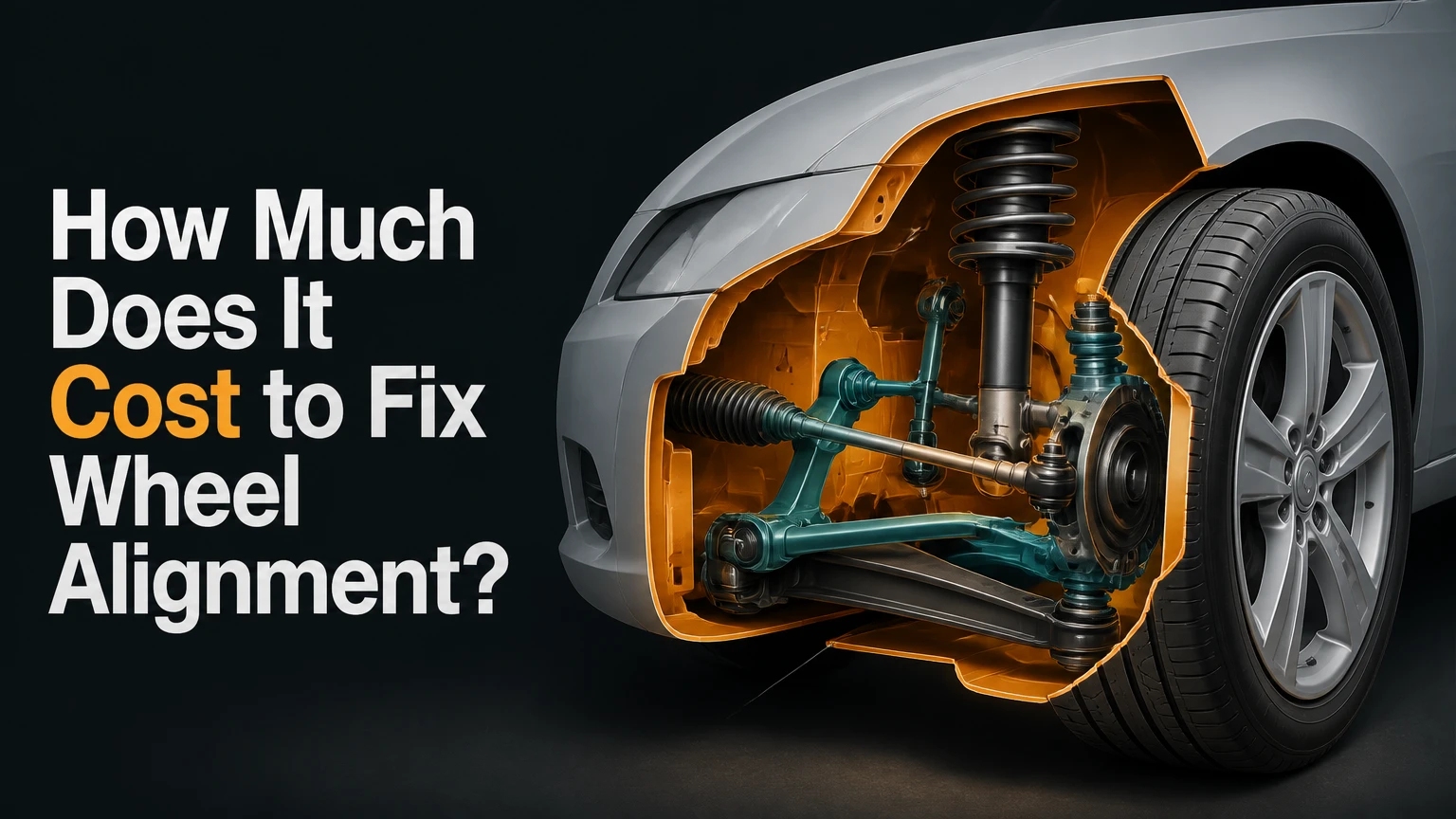
A standard four-wheel alignment costs between $100 and $175 for most mainstream sedans, crossovers, and trucks. Front-end two-wheel alignments cost between $50 and $125. However, specialty European vehicles, lifted trucks, or cars requiring Advanced Driver Assistance Systems (ADAS) camera calibration can push total costs between $350 and $700.
At a Glance: Wheel Alignment Pricing
- Standard Four-Wheel Alignment: $100 to $175
- Front-End (Two-Wheel) Alignment: $50 to $125
- Luxury, European, & EV Alignment: $175 to $300
- ADAS Sensor Recalibration Add-On: $250 to $500
- Lifetime Alignment Package: $150 to $250
- Average Service Duration: 30 to 90 minutes
What Is the Average Cost of a Wheel Alignment?
A standard wheel alignment costs $100 to $175 across the United States. This baseline pricing applies to modern passenger vehicles with four-wheel independent suspensions serviced at general automotive repair shops or tire centers.
+------------------------------------+------------------+------------------------------------+
| Alignment Service Type             | Average Cost     | Vehicle Compatibility              |
+------------------------------------+------------------+------------------------------------+
| Two-Wheel (Front-End)              | $50 - $125       | Older cars, solid rear axle trucks |
| Standard Four-Wheel                | $100 - $175      | Modern sedans, SUVs, AWD vehicles  |
| Luxury / European / EV             | $175 - $300      | BMW, Mercedes, Audi, Tesla, Porsche|
| ADAS Calibration + Alignment       | $350 - $700+     | Vehicles with lane-keep/radar units|
| Lifetime Alignment Plan            | $150 - $250      | High-mileage commuters (Chain shops|
+------------------------------------+------------------+------------------------------------+
The price covers mounting computer-calibrated targets to all four wheels, measuring toe, camber, and caster angles via digital sensors, and adjusting the factory tie rods, eccentric bolts, and control arms back into original manufacturing specifications.
Regional labor rates cause minor price fluctuations. Auto repair facilities in high-cost metropolitan areas generally charge $120 to $160 per hour for alignment labor, whereas rural shops charge between $75 and $105 per hour.
How Much Does a 2-Wheel Alignment Cost vs. a 4-Wheel Alignment?
A two-wheel alignment costs $50 to $125, while a four-wheel alignment costs $100 to $175. The fundamental price difference depends on the suspension geometry of the vehicle.
Two-Wheel Alignment ($50 - $125)        Four-Wheel Alignment ($100 - $175)
      [Front Axle Adjusted]                   [Front Axle Adjusted]
         /            \                           /            \
     (Wheel)        (Wheel)                   (Wheel)        (Wheel)
        |              |                         |              |
        |              |                         |              |
     (Wheel)        (Wheel)                   (Wheel)        (Wheel)
      [Fixed Rear Axle]                       [Rear Axle Adjusted]
Two-wheel (or front-end) alignments only adjust the steering components on the front axle. This service is reserved for older automobiles, rear-wheel-drive classic cars, and heavy-duty trucks featuring a solid rear beam axle that lacks built-in adjustment points.
Four-wheel alignments adjust both front and rear axles simultaneously. Almost all modern front-wheel-drive, all-wheel-drive, and independent-rear-suspension vehicles require a four-wheel alignment. Adjusting the rear wheels ensures the car tracks along a clean centerline (thrust angle), preventing the vehicle from “dog-tracking” sideways down the road.
How Much Do Dealerships Charge for Alignment vs. Independent Shops?
Dealership service departments charge between $150 and $300 for a standard alignment, whereas independent auto repair shops and national tire retail chains charge between $80 and $150 for the exact same service.
DEALERSHIP SERVICE CENTER ($150 - $300)
├── Higher hourly labor rates ($175 - $250/hr)
├── Factory-certified brand specialists
└── OEM alignment software and equipment

INDEPENDENT TIRE & REPAIR SHOP ($80 - $150)
├── Moderate hourly labor rates ($90 - $140/hr)
├── General ASE-certified technicians
└── Universal digital laser alignment systems
Dealerships maintain higher pricing due to elevated labor rates, which range from $175 to $250 per hour compared to $90 to $140 per hour at independent repair shops. Dealerships justify this price premium by employing factory-trained technicians, utilizing proprietary vehicle manufacturer software, and placing specific weight ballasts inside the cabin during the alignment procedure to simulate real driver conditions.
Independent specialty shops and national tire chains utilize universal computer alignment systems like Hunter Engineering equipment. For standard commuter vehicles, independent facilities provide identical performance to dealerships at a fraction of the cost.
Why Does a Luxury, European, or Tesla Alignment Cost More?
Luxury, European, and electric vehicles cost between $175 and $300 to align due to complex multi-link suspension systems, specialized alignment tools, and strict dealer service protocols.
Luxury & EV Cost Drivers:
[Complex Multi-Link Suspensions] ──> Extra labor time for manual adjustment
[Specialized Service Software]   ──> Requires expensive software licenses
[Air Suspension Calibration]    ──> Electronic height resets needed before mechanical adjustments
[Cabin Weight Ballasts]          ──> Vehicles must be weighted with sandbags during alignment
Automakers such as BMW, Mercedes-Benz, Audi, and Porsche engineering systems require custom eccentric bolts, proprietary software reset procedures, and specific sandbag weight ballasts inside the cabin to establish factory baseline ride heights before reading angles.
Electric vehicles like Teslas require specialized lifting procedures to avoid damaging chassis-mounted high-voltage batteries. Additionally, air suspensions found on high-end luxury trim packages require a digital suspension level reset via a diagnostic scan tool prior to mechanics making physical adjustments underneath the vehicle.
How Much Does ADAS Sensor Calibration Add to Alignment Costs?
Safety sensor recalibration adds $250 to $500 to a basic alignment bill, raising total service expenses to between $350 and $700+.
Total Service Cost Breakdown with ADAS Recalibration:
+--------------------------------------+--------------------+
| Component                            | Cost Range         |
+--------------------------------------+--------------------+
| Base 4-Wheel Alignment               | $100 - $175        |
| ADAS Static Target Calibration       | $150 - $300        |
| ADAS Dynamic Road Test Calibration   | $100 - $200        |
+--------------------------------------+--------------------+
| TOTAL COMBINED ESTIMATE              | $350 - $700+       |
+--------------------------------------+--------------------+
Modern cars utilize Advanced Driver Assistance Systems (ADAS) like lane-keep assist, automatic emergency braking, and adaptive cruise control. These electronic safety driver aids operate via front windshield cameras and bumper radar arrays.
Because ADAS targets depend directly on where the physical wheels point, changing toe or thrust angles manually changes camera direction. Mechanics must execute a secondary electronic recalibration using specialized target boards and software to align electronic vehicle systems with the new mechanical wheel geometry.
What Broken Suspension Parts Prevent a Car From Being Aligned?
Worn, loose, or bent suspension components prevent a vehicle from holding proper alignment angles. A technician cannot perform an alignment on damaged hardware, requiring component repairs first.
Common suspension repairs identified during alignment checks include:
- Tie Rod Ends ($100 to $200 per side): Connects the steering rack to the wheel knuckle. Loose tie rod ends allow wheels to flop inward or outward continuously.
- Camber Bolts ($35 to $100 per side): Specialty hardware required to manually adjust vertical wheel angles on cars lacking factory adjustments.
- Ball Joints ($300 to $700 per side): Pivot points connecting control arms to steering knuckles. Worn ball joints create dangerous wheel play that invalidates alignment settings.
- Control Arms and Bushings ($250 to $600 per side): Metal arms holding the wheel assembly frame. Cracked rubber bushings shift geometry under acceleration or braking.
How Much Extra Do Mechanics Charge for Rusted or Seized Bolts?
Removing rusted, frozen, or seized adjustment hardware adds $50 to $150 in extra shop labor fees to an alignment service bill.
In rust-belt regions or humid environments, road salt and water cause tie rod adjustment sleeves, camber bolts, and locknuts to fuse together over time. Mechanics must utilize induction heaters, oxy-acetylene torches, penetrant sprays, or pneumatic air hammers to break seized hardware free. Shops charge for this extra effort in 30-minute to 1-hour labor increments added to the baseline alignment fee.
What Is the Cost to Align a Lifted Truck or Lowered Car?
Aligning a heavily lifted truck or lowered sports car costs between $150 and $400, reflecting custom alignment labor requirements.
Factory Alignment Spec vs. Custom Aftermarket Alignment:
Factory Vehicle setup ────> Automatic digital scanner match ──> Fast adjustment ($100 - $175)
Aftermarket Lift/Lower ───> Custom geometric calculations ───> Manual adjustment ($150 - $400)
Modifying vehicle suspension height completely alters stock geometric angles. Standard computer alignment machines rely on pre-programmed factory databases. Lifted trucks and lowered cars bypass these factory limits, requiring technicians to calculate non-standard geometry manually.
Custom suspension setups often demand aftermarket adjustable control arms, aftermarket camber/caster plates, and custom drop pitman arms to restore safe drivability.
Is a Lifetime Wheel Alignment Package Worth the Money?
A lifetime wheel alignment package costing $150 to $250 is worth the investment for motorists planning to keep their vehicle for more than two years or drive over 15,000 miles annually.
National auto service networks like Firestone Complete Auto Care offer lifetime alignment programs. For an upfront fee roughly $50 higher than a single alignment, drivers receive free alignments every 6,000 miles or 6 months for as long as they own that vehicle.
Cost-Benefit Breakdown: Single Alignment vs. Lifetime Package
Year 1: 1st Alignment ($120) vs. Lifetime Plan ($180) ──> Lifetime costs $60 more
Year 2: 2nd Alignment ($240 total) vs. Lifetime Plan ($180 total) ──> Lifetime saves $60
Year 3: 3rd Alignment ($360 total) vs. Lifetime Plan ($180 total) ──> Lifetime saves $180
Drivers living in areas with rough road conditions, severe pot-holes, or active construction zones reach a financial break-even point by their second alignment visit.
Does Car Insurance or a Warranty Pay for a Wheel Alignment?
Car insurance and standard auto warranties do not pay for routine wheel alignments, as alignments fall under general maintenance obligations.
Comprehensive and collision car insurance covers alignment costs only if misalignment results directly from an insured accident, such as a severe collision or hitting a major curb object. Automobile factory warranties and extended extended service plans categorize alignments as wear-and-tear maintenance items, excluding coverage after an initial 12-month or 12,000-mile adjustment window post-sale.
Does a Steering Wheel Vibration Mean You Need an Alignment?
A steering wheel vibration does not mean a vehicle needs an alignment; vibration at highway speeds almost always indicates unbalanced wheels or bent rims.
+------------------------------------+------------------------------------+
| Symptom: Steering Wheel Shake      | Symptom: Vehicle Pulling/Drifting  |
+------------------------------------+------------------------------------+
| Primary Cause: Out-of-balance wheel| Primary Cause: Misaligned suspension|
| Secondary Cause: Warped brake rotor| Secondary Cause: Uneven tire PSI   |
| Corrective Fix: Tire Balance       | Corrective Fix: Wheel Alignment    |
| Average Cost: $15 - $30 per wheel  | Average Cost: $100 - $175 total    |
+------------------------------------+------------------------------------+
Wheel imbalances occur when rubber weights across a tire spin unevenly, creating high-speed vibrations felt inside the cabin steering wheel. Balancing a tire costs $15 to $30 per wheel.
Wheel alignment issues present as physical vehicle pulling, where the car drifts toward the left or right side of a flat road when releasing the steering wheel momentarily.
What Are the Warning Signs That a Car Needs an Immediate Alignment?
A vehicle requires an immediate wheel alignment when exhibiting clear mechanical symptoms of crooked suspension geometry.
Key warning signs include:
- Vehicle Drifting: The car pulls steadily to the left or right on a flat, level highway.
- Off-Center Steering Wheel: The emblem on the steering wheel rests crooked when driving straight forward.
- Uneven Tire Wear: Tread wear concentrates heavily along the inner or outer shoulder edges of a tire (camber/toe wear).
- Squealing Tires: Tires squeal during gentle turns or low-speed cornering maneuvers on smooth pavement.
- Unusual Steering Return: The steering wheel feels loose or fails to return to center naturally after completing a turn.
Do You Need an Alignment Every Time You Buy New Tires?
Yes, you should get a wheel alignment every time you purchase a set of new tires to protect your tire warranty and maximize tread lifespan.
Crooked Alignment Angles
       │
       ▼
Accelerated Edge Wear on Rubber
       │
       ▼
Premature Tire Failure (Sub-15,000 miles)
       │
       ▼
Tire Manufacturer Warranty Voided
Installing expensive new rubber tires on a vehicle with misaligned suspension geometry causes immediate scrubbing along tread edges. Uneven contact patches destroy new tire tread within 5,000 to 10,000 miles.
Major tire manufacturers like Michelin, Continental, Goodyear, and Bridgestone mandate documented proof of regular wheel alignments to validate mileage warranty claims.
How Long Does a Professional Wheel Alignment Take?
A professional four-wheel alignment takes between 30 and 90 minutes under normal working conditions.
Service Timeline Breakdown:
[00-15 Min] Vehicle drive-in, tire pressure check, laser target setup
[15-45 Min] Computer reading, mechanical tie rod/camber adjustments
[45-70 Min] ADAS electronic camera recalibration (if equipped)
[70-90 Min] Final test drive and computer printout generation
The service timeline extends beyond 90 minutes if mechanics encounter frozen adjusters requiring heat application, severe suspension rust, damaged aftermarket hardware, or complex ADAS safety sensor recalibration procedures.
Can You Perform a DIY Wheel Alignment at Home With String?
You can perform a crude DIY “string alignment” at home to temporarily adjust toe angles, but DIY methods cannot replace digital laser alignment racks.
DIY String Alignment                      Professional Laser Alignment Rack
├── Measures basic toe angle only        ├── Measures Toe, Camber, Caster, Thrust
├── High margin for human error          ├── 1/100th-degree laser accuracy
└── Zero ADAS system integration         └── Complete safety sensor recalibration
Home string alignments utilize jack stands, fishing line, and tape measures to set parallel distance across front tires. While useful for driving a rebuilt project car safely to a repair shop, manual string methods cannot accurately measure or adjust caster, camber, cross-angles, or thrust line parameters.
Skipping digital shop alignments risks severe tire scrubbing, poor fuel economy, and unexpected electronic stability control errors.
How Do You Verify the Shop Actually Completed Your Alignment?
You verify wheel alignment completion by requesting and reading the color-coded computer alignment printout before paying your invoice.
----------------------------------------------------------------------
                           ALIGNMENT SHEET
----------------------------------------------------------------------
SPECIFICATION      | BEFORE SPEC         | FINAL (AFTER) SPEC
-------------------+---------------------+----------------------------
Front Left Toe     | -0.45°  [RED/FAIL]  | +0.10°  [GREEN/PASS]
Front Right Toe    | -0.38°  [RED/FAIL]  | +0.10°  [GREEN/PASS]
Rear Left Camber   | -2.10°  [RED/FAIL]  | -1.00°  [GREEN/PASS]
Rear Right Camber  | -1.95°  [RED/FAIL]  | -1.00°  [GREEN/PASS]
----------------------------------------------------------------------
Digital alignment racks generate a detailed vehicle report sheet showing exact geometric measurements in degrees.
Review the sheet to confirm the “Initial” or “Before” column shows out-of-spec numbers highlighted in red, and the “Final” or “After” column displays corrected numbers brought into green factory spec tolerances. If a shop refuses to provide an alignment spec printout, they may lack proper diagnostic gear.
The Bottom Line
A standard four-wheel alignment costs between $100 and $175 for modern passenger cars, providing critical protection against uneven tire wear and poor handling.
Expect total costs to reach $350 to $700+ if your vehicle incorporates Advanced Driver Assistance Systems (ADAS) requiring sensor recalibration, or if mechanics encounter heavily rusted suspension bolts.
To maximize savings, consider purchasing a lifetime alignment package if keeping your vehicle long-term, and always inspect your shop’s color-coded alignment printout to confirm all wheel angles sit safely in the green factory specification window.


