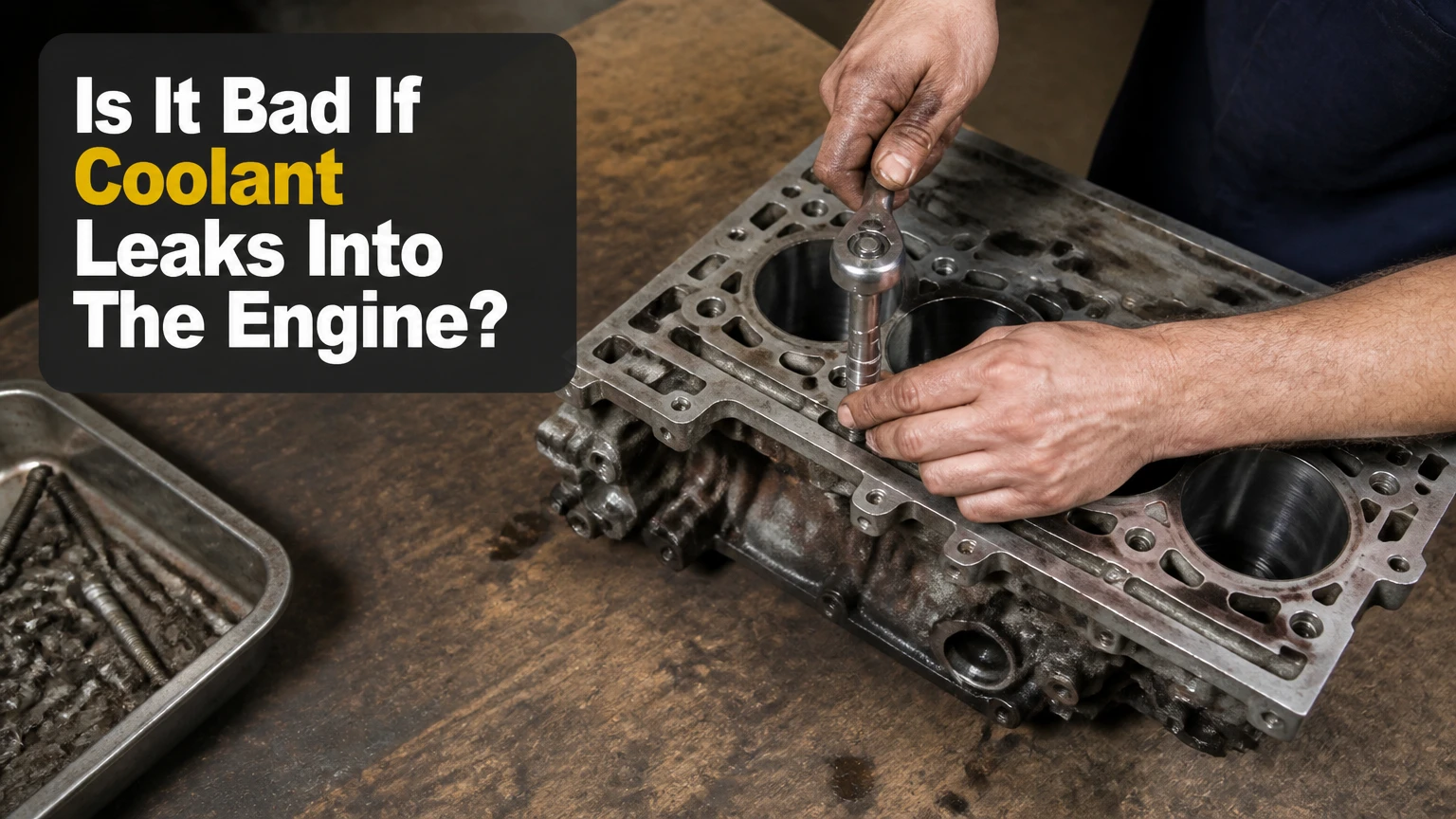
Yes, it is extremely bad if coolant leaks into your engine. This internal breach immediately destroys engine lubrication and causes catastrophic mechanical failure within minutes. Because coolant breaks down the chemical structure of engine oil, continuing to run the vehicle will result in seized bearings, bent connecting rods, and repair costs ranging from $1,500 for a gasket replacement to over $8,000 for a complete engine replacement.
Key Facts At a Glance
- Safe Driving Distance: 0 miles. Shut the engine off immediately if an internal leak is verified.
- Primary Culprit: A blown head gasket is responsible for over 80% of internal engine coolant leaks.
- Chemical Danger: Antifreeze strips away oil viscosity, leaving metal components to grind together completely dry.
- Critical Threshold: Engine temperatures exceeding 250°F (121°C) will rapidly warp aluminum cylinder heads and cause gasket failure.
- Worst Case Scenario: Liquid coolant entering the cylinder causes hydro-locking, which instantly shatters internal engine parts.
What Causes Coolant To Enter The Engine?
An internal coolant leak occurs when automotive antifreeze escapes its sealed pressurized cooling passages and breaches the engine’s internal chambers. Modern internal combustion engines contain three distinct fluid networks circulating in close proximity. These are high-pressure combustion gases, high-pressure oil channels, and low-pressure coolant passages. When the structural barriers keeping these fluids separate fail, cross-contamination happens.
The Head Gasket Failure
A blown head gasket is the most common cause of internal engine leaks. The engine block housing the pistons and the cylinder head housing the valves are separate massive metal components. A thin, multi-layer steel or composite gasket sits compressed between them to seal the system. Repeated thermal cycles, especially in engines with aluminum heads and cast-iron blocks, create shear stress that pinches and eventually tears this gasket.
Cracked Cylinder Heads and Engine Blocks
Intense thermal shock causes solid metal castings to fracture. If an engine overheats severely, or if a driver pours freezing cold water into a boiling hot radiator, the rapid temperature change will crack the cylinder head. In cold climates, failing to use the proper 50/50 ratio of antifreeze to distilled water allows the coolant to freeze, expand, and crack the main engine block itself.
Intake Manifold and Oil Cooler Breaches
Certain engine designs utilize intake manifolds that route coolant alongside air passages. Gasket degradation in these manifolds allows coolant to get sucked directly into the engine intake. Additionally, internal failures in an engine oil cooler will force high-pressure oil and coolant to mix, creating a severe contamination event without actually breaching the combustion chamber.
How Does Coolant Destroy Engine Internals?
The destruction caused by internal coolant leaks is a rapid, multi-stage process. Understanding this sequence explains why mechanics insist you never drive a vehicle experiencing this issue.
Phase 1: Chemical Oil Contamination
Once a seal is breached, coolant mixes with engine oil in the crankcase. The ethylene glycol and water in antifreeze immediately attack the chemical structure of the oil. They strip out the zinc dialkyldithiophosphate (ZDDP) anti-wear additives. Within minutes of circulation, the oil transforms from a slick lubricant into a thick, milky-brown sludge that resembles a chocolate milkshake.
Phase 2: The Friction Spike and Bearing Wipe
The resulting milky sludge cannot lubricate high-friction moving parts. As the engine runs, the camshaft journals, piston rings, and main bearings are suddenly grinding against each other with zero protective oil film. This causes a phenomenon known as “bearing wipe,” where the main bearings overheat, seize to the spinning crankshaft, and tear themselves out of their housings. This permanently ruins the lower half of the engine.
Phase 3: Combustion Sickness and Fouling
Simultaneously, coolant may leak directly into the combustion chambers where the spark plugs ignite fuel. The antifreeze drowns the spark plugs, corrupts the delicate air-fuel mixture, and causes severe engine misfires. The engine will burn the coolant and push it out of the exhaust system as thick, sweet-smelling white smoke.
Phase 4: Hydro-locking and Catastrophic Impact
The final and most violent phase is hydro-locking. The laws of physics dictate that liquids cannot be compressed. If a significant volume of liquid coolant fills a cylinder chamber while the engine is running at thousands of revolutions per minute, the rising piston will hit an immovable wall of water. The immense mechanical force instantly bends the forged steel connecting rods, shatters the piston heads, or punches a hole straight through the side of the engine block.
What Are The Symptoms Of Internal Coolant Leaks?
Detecting an internal leak early can mean the difference between a $1,500 gasket repair and a total vehicle write-off. Look for these definitive warning signs.
- The Oil Cap Test: Remove the engine oil filler cap and look underneath it. If you see a thick, frothy, milky-brown residue, coolant is actively mixing with your oil.
- Dense White Exhaust Smoke: A continuous plume of dense, sweet-smelling white smoke from the tailpipe indicates the engine is burning coolant. Do not confuse this with thin, wispy morning condensation that fades after the car warms up.
- The Bubbling Reservoir: Open the hood while the engine is idling and observe the plastic coolant expansion tank. Continuous aggressive bubbling indicates that high-pressure exhaust gases are shooting backward through a blown head gasket and into the cooling system.
- Unexplained Fluid Loss: The vehicle constantly triggers a low coolant warning, yet the driveway underneath the car remains completely dry.
- Steam-Cleaned Spark Plugs: Professional mechanics will pull the spark plugs for a visual inspection. A plug that looks unnaturally clean, bright white, or chalky compared to the others is a confirmed sign that boiling coolant is steam-cleaning that specific cylinder.
How Much Does It Cost To Fix An Internal Coolant Leak?
Repairing an internal coolant leak is highly labor-intensive. The cost depends entirely on the extent of the internal damage and the type of repair chosen.
| Repair Method | Typical Cost Range | Shop Timeframe | Best For |
|---|---|---|---|
| Chemical Liquid Sealer | $20 to $100 | 1 to 2 Hours | Vehicles valued under $2,000 needing a temporary fix to buy time. |
| Head Gasket Replacement | $1,500 to $3,500 | 2 to 4 Days | Vehicles caught early before major overheating or bearing damage occurred. |
| Used Engine Swap | $2,500 to $4,500 | 4 to 7 Days | Cars with ruined lower blocks where a brand-new engine is not financially viable. |
| Remanufactured Engine | $4,000 to $8,000+ | 5 to 10 Days | High-value commuter vehicles requiring a permanent factory-spec restoration. |
Can You Drive A Car With Coolant In The Engine?
You cannot drive a vehicle with coolant in the engine. The safe driving distance is zero miles.
Many drivers attempt to limp their vehicle home or to the nearest mechanic when it begins overheating and blowing white smoke. This is a critical financial mistake. Operating an engine with contaminated oil causes irreparable metal warping in a matter of seconds. Every additional block you drive increases the probability that the cylinder head will warp beyond the limits of machine shop repair. Pull over safely, shut the engine off, and call a tow truck.
Should You Use Pour-In Chemical Sealers?
Chemical pour-in sealers utilize sodium silicate and copper particulates to plug leaks from the inside out. When the liquid hits the extreme heat of the combustion chamber breach, it hardens into a glass-like seal.
These products are highly polarizing in the automotive industry. Professional mechanics strongly advise against them because the sealer cannot distinguish between a blown gasket and the tiny passages inside your vehicle heater core or radiator. Using these sealers frequently clogs the entire cooling system, leaving you without cabin heat in the winter and requiring a full system replacement.
You should only use chemical sealers as a last resort on “beater” vehicles valued under $2,000 where a proper mechanical repair exceeds the value of the car. It is a temporary band-aid, not a permanent repair.
How To Diagnose An Internal Coolant Leak
If you suspect an internal breach, rely on verifiable diagnostic testing rather than guesswork.
The most accessible method is a Chemical Block Tester kit, which you can rent from most auto parts stores. You place the testing cylinder over the open radiator neck and squeeze the rubber bulb to draw air through the blue testing fluid. If combustion gases are present in the coolant, the blue fluid will instantly turn yellow or green, confirming a blown head gasket.
Professional shops will take this further by performing a cooling system pressure test. They attach a hand pump to the radiator, pressurize the system to 15 PSI, and watch the gauge. If the pressure drops steadily but there are no external puddles, the coolant is being forced internally into the engine. Shops will also send an oil sample to a laboratory to test for microscopic traces of potassium and sodium, which are the chemical footprints of antifreeze.
What To Do Next Based On Your Vehicle Value
Your reaction to an internal coolant leak must be dictated by basic financial math.
High-Value Commuter Cars
If your vehicle is worth more than $5,000 and the body and transmission are in excellent shape, a professional head gasket replacement is the correct strategy. Tow the car to a reputable independent mechanic. Ensure they send the cylinder head to a specialized machine shop to be pressure tested for invisible cracks and resurfaced perfectly flat before reinstallation.
Low-Value Beater Vehicles
If your car is worth $1,500, spending $3,000 on a head gasket replacement makes zero financial sense. In this scenario, assess whether you can sell the vehicle for scrap or parts. If you desperately need the car for a few more weeks to commute to work while saving for a down payment, this is the only time a chemical sealer is a logical, albeit risky, gamble.
The DIY Mechanic Approach
Enthusiasts with a garage and specialized tools can save thousands of dollars in labor by performing a head gasket replacement themselves. The critical rule for DIYers is never to skip the machine shop. You cannot simply unbolt a warped head, slap a new gasket on, and bolt it back down. The mating surface must be perfectly flat, and you must use brand-new torque-to-yield head bolts during reassembly.
Common Mistakes To Avoid After A Cooling System Failure
- Opening a Hot Radiator: Never remove the radiator or expansion tank cap on a hot engine. The system is under intense pressure. Releasing the cap will cause boiling fluid to geyser outward, causing severe third-degree burns.
- Adding Pure Tap Water: Refilling a leaking system with pure tap water introduces heavy minerals that corrode aluminum parts. It also drastically lowers the boiling point of the fluid and removes winter freeze protection.
- Ignoring the Root Cause: A head gasket rarely blows on its own. It is usually the victim of another failed component. Replacing the head gasket but failing to replace the $15 stuck thermostat or dead radiator fan that caused the initial overheat will result in a second blown gasket immediately.
Frequently Asked Questions
Will an engine flush fix coolant in the oil? No. An engine flush only cleans out the resulting sludge, but it does absolutely nothing to fix the broken seal or cracked metal that allowed the coolant to enter the oil in the first place. The engine will instantly contaminate the new oil as soon as you start it.
Can a bad water pump push coolant into the engine? Generally, a failing water pump leaks externally onto the ground or simply stops circulating fluid, which leads to overheating. However, some specific engine designs integrate the water pump internally behind the timing cover. On these specific engines, a water pump seal failure will dump coolant directly into the oil pan.
How long does it take for coolant to ruin engine oil? The chemical breakdown is almost instantaneous. Once ethylene glycol mixes with engine oil under high heat and agitation, the oil loses its protective viscosity in a matter of minutes, triggering severe metal-on-metal wear.
Does car insurance cover a blown head gasket? Standard auto insurance policies do not cover mechanical wear and tear, including blown head gaskets or cracked engine blocks. Insurance only covers engine damage if it was directly caused by an accident, a flood, or a specific vandalism event.
Why does my car run fine even though I am losing coolant? An engine can have a very slow, minor internal leak that burns small amounts of coolant during combustion without immediately misfiring. However, this is a ticking time bomb. The breach in the gasket will inevitably expand under high pressure, leading to a sudden and complete loss of coolant and catastrophic overheating.


