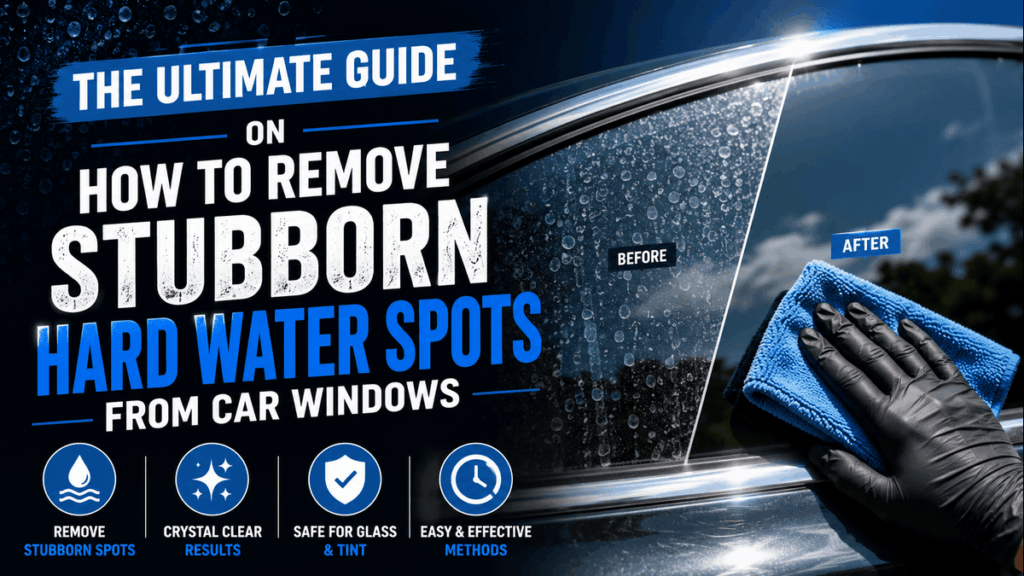
Have you ever parked near a lawn sprinkler or left your vehicle out in the rain only to return to a windshield covered in baked on white rings? You are not alone. These crusty mineral deposits are incredibly frustrating and can severely limit your visibility while driving under glaring sunlight or oncoming nighttime headlights. I remember scrubbing my own windshield for hours with standard glass cleaner and paper towels only to watch those exact same spots magically reappear the moment the glass dried. It was infuriating.
The secret to winning this battle is understanding the chemistry of what you are fighting. Standard glass cleaners will not cut it because you are battling tough calcium and magnesium deposits left behind by evaporated groundwater. When water dries on your vehicle, the liquid vanishes but the heavy alkaline minerals remain securely bonded to the porous surface of your windshield.
In this comprehensive guide, we will walk you through exact diagnostic steps and tiered solutions ranging from simple kitchen pantry fixes to professional auto detailing techniques. Whether you need a quick household remedy or a heavy duty machine polishing guide to dissolve mineral deposits car glass, you will find the exact blueprint right here. By the end of this read, you will have the knowledge to restore your automotive glass to a flawless state and keep it that way permanently.
The Diagnosis Are They Just Dirty or Etched?
Before grabbing any tools or buying expensive chemicals, you must understand what is happening on the surface of your auto glass. When mineral heavy water evaporates under the hot sun over several days, it leaves behind calcium and magnesium carbonates. Over time, these alkaline minerals bond tightly to the microscopic pores of your windshield.
There are two main stages of this problem surface mineral crust and permanent glass etching. Surface spots are relatively new and sit right on top of the glass. You can feel them if you put your hand inside a thin plastic sandwich bag and gently run your fingers over the freshly washed window. The plastic magnifies your sense of touch, allowing you to feel the gritty resistance of the minerals.
Permanent etching occurs when those deposits are left baking in the sun for weeks or months. The intense heat literally bakes the minerals into the glass, causing a chemical reaction that physically eats away the outer microscopic layer of the window. If your fingernail catches lightly on the edge of the spot but the center feels sunken, you are likely dealing with etching. Identifying your specific severity level dictates exactly which car window etching repair method you should choose below.
Level 1 Household DIY Solutions for Low Severity Stains
If you caught the problem early, you likely do not need to buy expensive specialty chemicals. The global auto detailing community broadly agrees that the most effective first line of defense is right inside your kitchen pantry. Because these white rings are highly alkaline, an acidic liquid will naturally break them down.
The White Vinegar Water Spots Remedy
Creating a mixture of equal parts distilled white vinegar and distilled water is the ultimate budget friendly trick to clear windshield water stains. The acetic acid gently dissolves the calcium without harming the surrounding clear coat on your paint.
- Mix your one to one ratio in a clean plastic spray bottle.
- Park your car in the shade to ensure the glass is completely cool to the touch.
- Spray the affected window generously with your vinegar solution.
- Allow the liquid to dwell on the glass for roughly five minutes. Do not let it dry.
- Wipe away the dissolved minerals using a plush waffle weave microfiber towel.
- Rinse the area thoroughly with plain water to neutralize the acid completely.
Baking Soda and Lemon Juice Paste
If the vinegar spray is too runny for the vertical sides of your vehicle doors, you can create a thick paste using baking soda and a few drops of water or lemon juice. Apply this paste directly onto the stubborn rings and gently rub it in circular motions using a foam applicator pad. The very mild abrasive quality of the baking soda combined with the citric acid will lift the stains effortlessly. Wash the glass thoroughly with automotive soap afterward to remove any gritty residue.
Level 2 Mechanical and Pro Chemical Removers for Medium Severity
When natural remedies fail to remove hard water spots from car windows, it is time to step up your detailing game. At this tier, we are looking at dedicated commercial products and gentle mechanical agitation to force the crust off the stubborn window.
The Grade 0000 Steel Wool Glass Technique
There is an ongoing debate within auto detailing circles regarding the safety of using metal on automotive glass. However, the expert consensus is incredibly clear Grade 0000 super fine steel wool is completely safe for windows as long as it is lubricated heavily. This ultra fine material acts like a microscopic razor blade, shaving the bonded minerals off the surface without scratching the harder glass material beneath.
To perform this method correctly, generously spray a quick detailer spray or dedicated glass lubricant onto the window. Gently glide a fresh piece of Grade 0000 steel wool over the wet area in overlapping crosshatch motions. Wipe the area clean with a fresh microfiber cloth. You must be extremely careful never to let the dry steel wool touch your painted surfaces or rubber weather stripping, as it will cause severe permanent scratching. Always mask off your rubber trim with painters tape before starting.
Dedicated Acidic Gel Removers
If you prefer the purely chemical route, products like the Chemical Guys water spot remover or CarPro Spotless are massive fan favorites. These commercial formulas are the absolute best way to clean car windows when household acids fail. They use stronger specialty acids suspended in a thick gel medium. The gel format is brilliant because it clings tightly to vertical windows rather than running down into the engine bay or door panels.
Apply a small amount of the gel to a microfiber applicator pad and work it aggressively into the glass. Let it sit for the exact manufacturer specified time, which is usually one to two minutes. You must immediately neutralize the area with car wash soap and water afterward. Leaving harsh professional acids on your vehicle too long can create permanent cloudy oxidation marks.
Level 3 Machine Polishing for High Severity and Etched Glass
If you have tried all the above chemical and mechanical methods and the ghost rings remain visible, you are no longer dealing with surface dirt. The minerals have physically etched into your windshield. A proper car window etching repair requires removing a microscopic layer of the glass itself to level the surface completely.
Dual Action Polishers and Cerium Oxide Glass Polish
This is the ultimate professional tier. You will need a dual action or rotary machine polisher equipped with a specialized rayon glass pad. Standard foam paint polishing pads are far too soft to correct extremely hard automotive glass.
The magic ingredient for this step is cerium oxide. Cerium oxide is a rare earth metal compound specifically designed to polish optical camera lenses and automotive glass. Apply a few pea sized drops of your cerium oxide glass polish to the rayon pad. Work in small sections using moderate downward pressure and slow arm movements. Ensure the glass stays cool to the touch by occasionally misting it with plain water, as excessive heat buildup can crack the windshield. Once the entire area is polished smooth, you will reveal a factory fresh, perfectly transparent glass finish.
Prevention and Protection Keeping Your Auto Glass Crystal Clear
Now that you have successfully managed to clear your glass of all defects, the single most crucial step is making sure they never return. Bare glass is highly porous at a microscopic level, giving future minerals plenty of textured hiding spots to grab onto. To prevent water spots on car windows moving forward, you must completely seal those open pores.
Applying Hydrophobic Sealants and Ceramic Coatings
A hydrophobic sealant forces water to bead up into tight spheres and roll off the window before the sun can evaporate the liquid. Accessible retail options like Rain X are fantastic for temporary surface protection, usually lasting a few weeks to a full month depending on your local weather conditions.
For serious automotive enthusiasts looking for a long lasting solution, applying a dedicated glass ceramic coating is the ultimate choice. A true ceramic coating creates a semi permanent, rock hard barrier over your windshield. Raindrops literally fly off the glass as you drive down the highway, virtually eliminating the need for wiper blades at higher speeds. More importantly, any incidental mineral deposits left behind by a rogue lawn sprinkler will sit harmlessly on top of the ceramic coating rather than the glass, making them effortlessly wipe away during your next routine weekend wash.
Conclusion
Dealing with crusty and stained automotive glass is an unfortunate rite of passage for any daily vehicle owner. By accurately diagnosing whether you have surface level deposits or deep structural etching, you can confidently choose the exact right method to tackle the problem head on.
Whether you utilize a simple kitchen pantry mixture of vinegar, step up to the incredible shaving power of super fine steel wool, or break out the heavy duty machine polishers for complete restoration, you now possess the precise knowledge to achieve a flawless finish. Always remember that the best hard water spot remover car strategy is a proactive one. Seal your hard work with a robust hydrophobic ceramic coating to protect your investment, vastly enhance your driving visibility, and enjoy the open road with total visual clarity.
Next Step: Are you ready to elevate your car detailing game even further and keep your entire vehicle looking showroom fresh? Subscribe to our weekly detailing newsletter today for more exclusive automotive tips, deep dive product reviews, and step by step cleaning guides sent straight to your inbox!