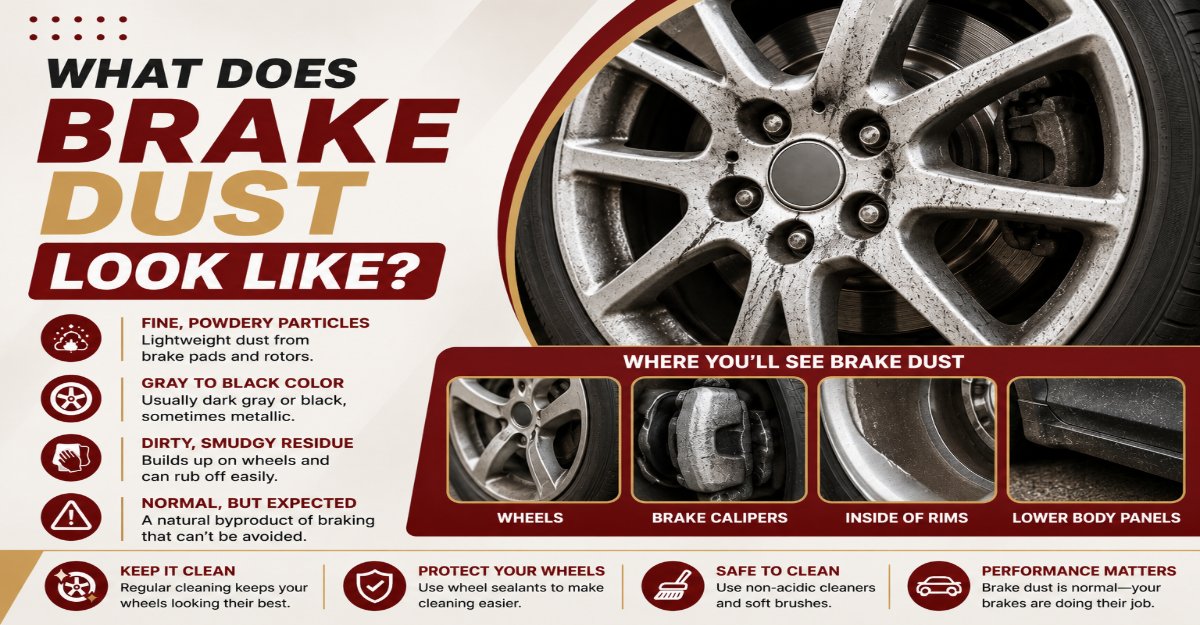
Brake dust typically looks like a dull, fine, dark grey or matte black powdery residue coating a vehicle’s wheels. When exposed to rain or moisture, it transforms into a sticky, dark brown or black sludge. Over time, high heat from braking can cause these metallic particles to burn directly into the wheel clear coat.
At a Glance
- Standard brake dust appears as a fine, charcoal-grey or matte black powder on rim surfaces.
- Moisture causes brake dust to turn into a thick, rust-stained or black sludge that clings to wheel spokes.
- Front wheels collect up to 80 percent of total brake dust due to forward weight transfer during braking.
- Ceramic brake pads produce a light tan or grey dust that is far less visible than metallic dust.
- Rust-colored dust indicates iron oxidation from damp weather or rotor wear, not necessarily pad failure.
- Baked-on iron particles require pH-neutral chemical iron removers to dissolve safely without stripping wheel finishes.
What is brake dust made of?
Brake dust is a compound residue composed of roughly 30 to 50 percent iron particles, 20 to 40 percent carbonaceous materials, and trace amounts of metallic alloys. The iron originates from the cast iron rotor wear, while the carbon, graphite, binders, and filler materials shed from the brake pad friction layer during use.
Brake Dust Composition
The friction generated when pressing the brake pad against the rotating rotor grinds down both surfaces, releasing microscopic debris into the air. Particle sizes range from 0.1 to 10 micrometers, categorizing brake dust as fine particulate matter (PM2.5 and PM10). Because the particles leave the braking system at temperatures exceeding 350 degrees Celsius, the hot iron fragments soften the wheel’s protective coat upon contact, embedding themselves into the clear finish.
Why do front wheels get dirtier than rear wheels?
Front wheels collect significantly more dust than rear wheels because a vehicle’s front braking system performs 70 to 80 percent of the total stopping work. During braking, momentum causes kinetic weight transfer to shift toward the front axle, requiring the front calipers and pads to squeeze with much greater hydraulic pressure.
Why Front Wheels Collect More Brake Dust
Because front rotors and pads are sized larger to manage this higher workload, they undergo faster material wear. Rear brakes handle smaller friction loads and often incorporate smaller pads, resulting in a dramatic difference in dust buildup between the front and rear rims over the same driving distance.
Why is my brake dust brown or rust-colored instead of grey?
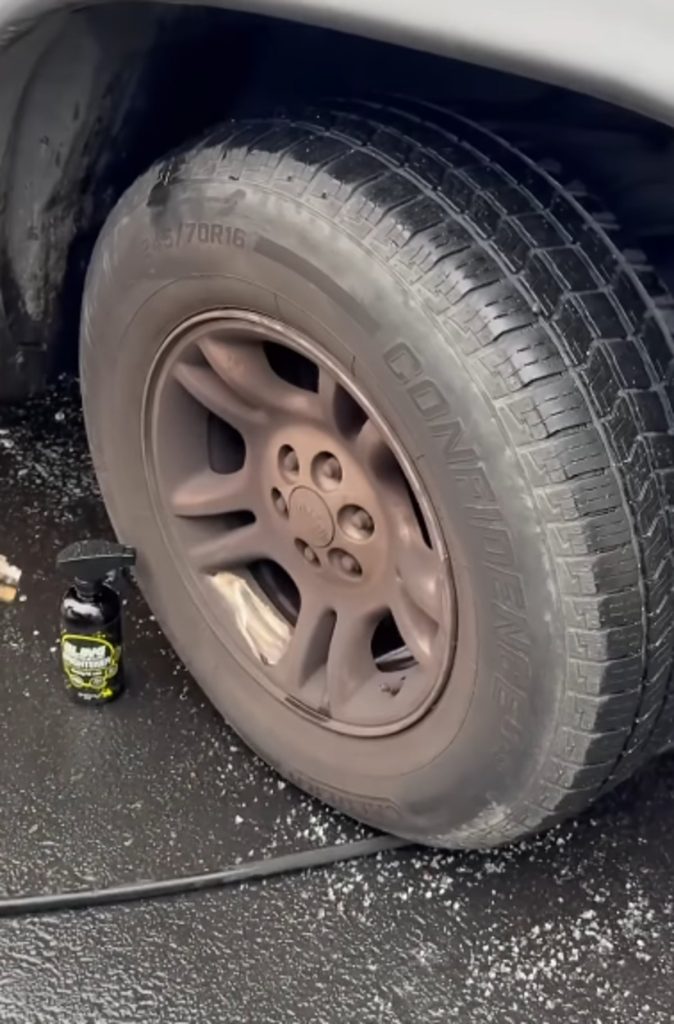
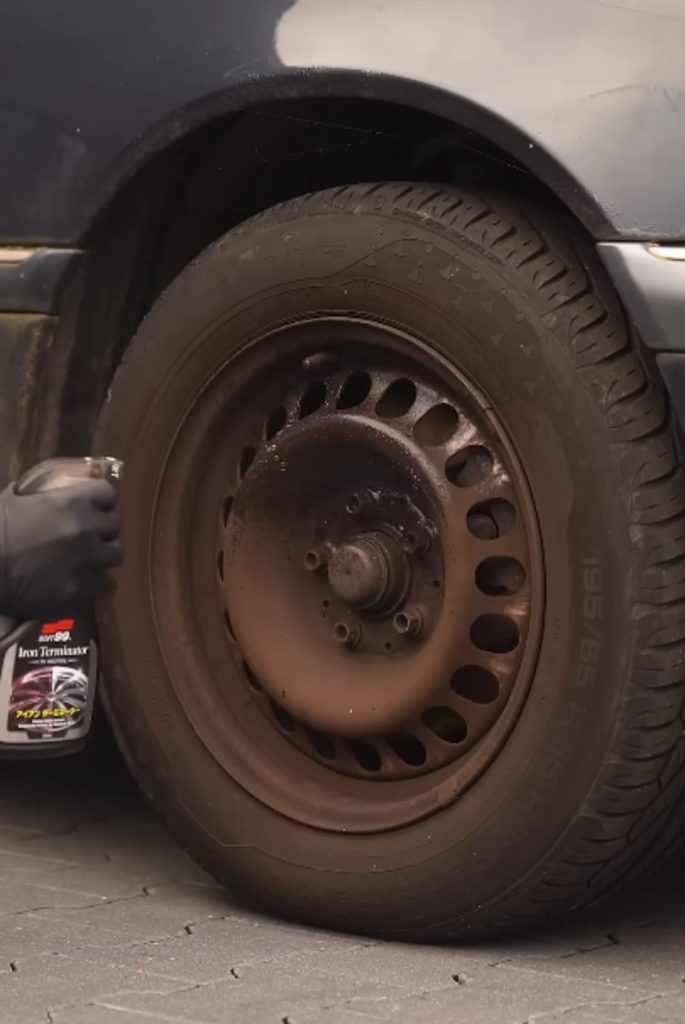
Brake dust turns brown or rust-colored when the iron particles shed from the brake rotors oxidize upon exposure to moisture and oxygen. While freshly ground brake dust leaves a charcoal-grey powder, standing water, rain, or high atmospheric humidity rapidly rusts the microscopic iron shavings on the wheel surface.
Rust-colored dust also occurs after a vehicle remains parked following wet weather. A thin layer of surface rust forms on the cast iron brake rotors within hours of rainfall. The next time the driver applies the brakes, the pads scrape off this flash rust layer, spraying bright orange-brown iron oxide dust across the wheel spokes and calipers.
How does brake dust appearance vary by pad type?
Brake dust appearance changes dramatically based on the chemical formulation of the brake pad friction material installed on the vehicle.
| Brake Pad Material | Dust Color & Appearance | Visibility | Adhesion Level |
| Semi-Metallic | Dark grey to black, granular | High | Very High (Sintering risk) |
| Low-Metallic | Dark charcoal, greasy residue | Very High | High |
| Ceramic | Off-white, light grey, or tan | Extremely Low | Low (Non-magnetic) |
| Carbon-Ceramic | Fine dark grey (negligible) | Near Zero | Extremely Low |
Semi-metallic brake pads contain 30 to 65 percent steel wool, iron powder, and copper. They generate large volumes of dark grey, highly adhesive dust that sticks aggressively to alloy rims.
Ceramic brake pads utilize dense clay ceramic compounds mixed with fine copper fiber. They yield a light tan or off-white dust that is far less noticeable against silver or chrome rims. Ceramic dust does not bond electrostatically or thermally to wheel paint in the manner metallic dust does.
Carbon-ceramic braking systems found on modern high-performance sports cars produce virtually no visible dust. The carbon-fiber-reinforced silicon carbide matrix resists wear so effectively under extreme thermal loads that debris generation remains near zero during street driving.
Is brake dust toxic or dangerous to breathe?
Brake dust poses serious respiratory health risks when inhaled because it consists of microscopic heavy metals, carbon fibers, and respirable particulate matter. Inhaling dust particles smaller than 2.5 micrometers allows heavy metals such as iron, copper, zinc, and nickel to settle deep inside human lung tissue, where they can trigger inflammation and respiratory irritation.
Modern brake formulations manufactured after regulations phased out asbestos still release hazardous airborne material. When servicing brakes or cleaning heavily soiled wheels, dry-brushing or blowing off dust using compressed air releases high concentrations of PM2.5 particulates into the air. Mechanics and DIY hobbyists should always use wet-cleaning methods alongside a calibrated N95 mask to prevent inhaling airborne metallic dust.
Does brake dust mean my brakes are wearing out?
Brake dust does not indicate that a braking system is failing or worn out; it is simply a natural operational byproduct of friction-based stopping power. Brand-new semi-metallic brake pads produce high volumes of dark dust from their initial bed-in period onward while maintaining full lining thickness and structural integrity.
Warning signs of genuine brake wear include metallic grinding noises, high-pitched squealing from built-in wear indicators, pedal pulsation, longer stopping distances, or pad friction material wearing thinner than 3 millimeters. A sudden drop in dust production can sometimes point to a seized caliper slider pin where the pad fails to engage the rotor surface properly.
How fast does brake dust accumulate on wheels?
Visible brake dust can accumulate on clean wheels in as little as 25 to 50 miles of city driving. Stop-and-go traffic demands frequent pedal applications, accelerating pad wear and generating noticeable dust coatings within two to three days of normal commuter use.
On long highway trips with minimal pedal engagement, a vehicle may travel 300 to 500 miles before visible dust coats the wheel rims. Vehicles equipped with high-friction semi-metallic performance pads will show visible grey dusting on clean silver rims after just a single afternoon of spirited mountain or track driving.
Why won’t normal car wash soap remove my brake dust?
Normal car wash soap fails to clean heavy brake dust because standard shampoos are designed to remove organic road grime, dirt, and oils, rather than thermally bonded metallic particles. The extreme heat generated during braking causes microscopic iron particles to sinter, or burn directly into the wheel’s clear coat layer, creating a semi-permanent mechanical bond.
Brake Dust Cleaning Pathways
Additionally, metallic brake dust carries a slight static charge and embeds itself into microscopic pores inside the paint finish. Standard surface-active agents in generic car soap lack the chemical chelating agents required to dissolve iron bonds or neutralize oxidized rust deposits. Spraying dirty wheels with regular soap leaves a stubborn, rough grey film behind.
How do you safely remove baked-on brake dust without damaging wheel finishes?
To remove baked-on brake dust safely, apply a pH-neutral, acid-free iron-dissolving wheel cleaner directly to cool, dry wheel surfaces. These specialized chemical formulations contain sodium thioglycolate, which reacts specifically with embedded iron particles, turning a deep purple color as it liquefies the metallic bonds without harming clear coat, paint, or anodized finishes.
Wheel Cleaning Process
- Spray Chemical Remover: Apply the pH-neutral iron remover evenly across the cold wheel, focusing heavily on inner barrels and spoke corners.
- Dwell and React: Allow the product to dwell for three to five minutes. Watch for the color-changing chemical reaction to turn bright purple, indicating active iron dissolution.
- Agitate Gently: Use a soft micro-fiber wheel brush or detail brush to agitate crevices, loosening stubborn carbon deposits and road tar.
- Rinse Thoroughly: Pressure-wash the wheel completely with clean water before the product dries, stripping away the dissolved iron slurry.
Never apply acidic wheel cleaners to custom powder-coated, bare aluminum, or matte black finishes. Harsh acids etch the protective clear coat, leaving permanent milky white streaks and chemical burns that require professional wheel repainting to correct.
Can brake dust permanently damage or pit alloy wheels?
Brake dust permanently damages and pits alloy wheels if left uncleaned for extended periods. The iron fragments embedded in the clear coat react with moisture and oxygen to form iron oxide, triggering galvanic corrosion. As the iron expands during oxidation, it cracks the surrounding protective lacquer, allowing moisture to penetrate beneath the paint layer.
Over several months, this corrosion process creates deep microscopic pits, surface roughness, and bubbling paint edges around the wheel spokes. Once galvanic corrosion eats beneath the clear coat into the underlying aluminum alloy, simple washing cannot restore the surface; the wheel must be chemically stripped, sanded, and clear-coated by a repair specialist.
How can you prevent brake dust from sticking to wheels?
You can prevent brake dust from bonding to wheels by applying a high-temp ceramic coating or synthetic wheel sealant to clean rims. Ceramic coatings form an ultra-slick, hydrophobic layer of silicon dioxide (SiO2) over the clear coat, creating a chemical barrier that prevents hot iron specks from melting into the paint.
Wheel Surface Protection Comparison
Applying a dedicated wheel wax every three months offers a cost-effective alternative that makes routine cleaning easier. The slick protective layer allows dust to slip off using a low-pressure rinse or standard car wash shampoo, eliminating the need for aggressive chemical cleaners during weekly washes.
Should you replace brake pads just to reduce brake dust?
You should replace brake pads to reduce brake dust if maintaining clean wheels outweighs the trade-off in initial brake pedal bite and extreme high-temperature resistance. Swapping dusty semi-metallic pads for premium ceramic pads reduces visible dust generation by up to 80 percent and eliminates stubborn metallic paint staining.
Switching to Ceramic Pads:
However, drivers must evaluate their specific performance needs before switching. Semi-metallic pads offer superior cold-weather response, immediate initial pedal bite, and higher resistance to brake fade under severe towing or track conditions. Premium ceramic pads work exceptionally well for daily commuting and highway driving, making the trade-off worthwhile for drivers frustrated by constant wheel cleaning.
The Bottom Line
Brake dust appears as a dark grey, charcoal, or matte black powder that turns into a sticky, rust-colored sludge when exposed to moisture. It is a natural byproduct of cast iron rotor and pad wear, with front wheels collecting up to 80 percent of total debris due to forward weight transfer during stopping.
While ceramic pads produce a light, far less visible dust, semi-metallic pads drop hot iron particles that burn directly into wheel coatings. Protect your wheels by applying a high-temp ceramic coating and treating baked-on dust with pH-neutral, iron-dissolving cleaners rather than harsh acids or aggressive scrubbing.


