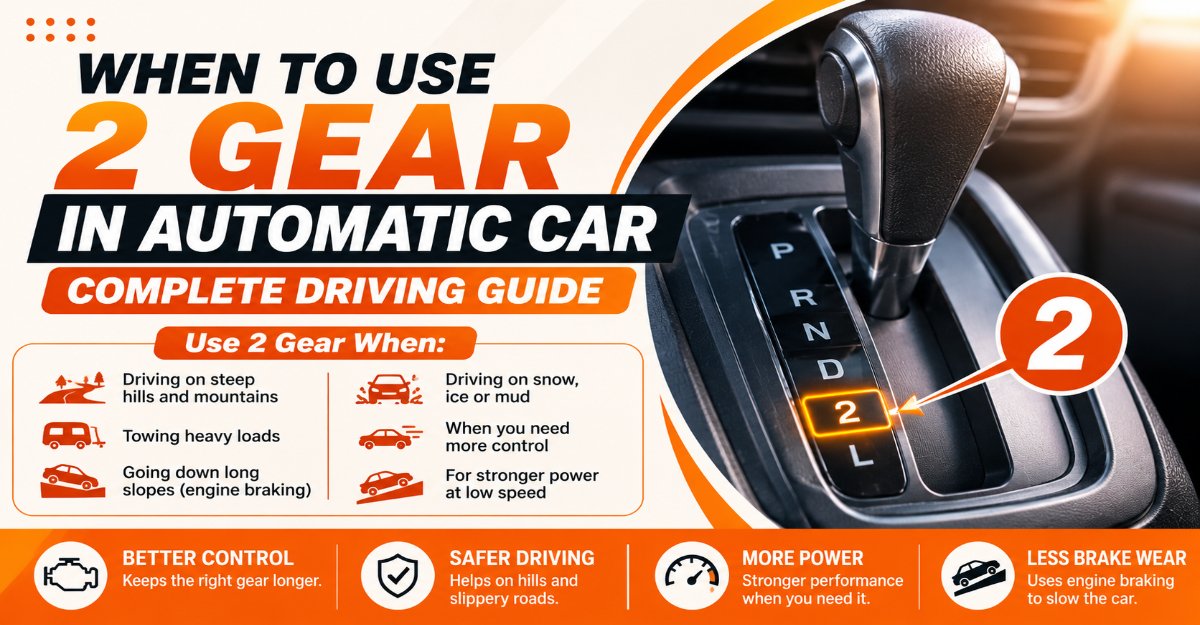
You should use 2nd gear in an automatic car when descending steep hills longer than a quarter-mile, climbing steep inclines where the transmission hunts for gears, towing heavy loads under 35 mph, or driving through deep snow, mud, and sand. Selecting “2” locks the transmission so it will not shift above second gear.
At a Glance
- Locking your transmission into 2nd gear forces engine braking, preventing hazardous brake overheating on steep downhill runs.
- Shifting to 2nd gear on sustained uphill climbs stops gear hunting, protecting the torque converter from destructive heat build-up.
- Driving in 2nd gear limits wheel spin on soft terrain like deep sand or loose mud by holding steady low-speed torque.
- Modern Engine Control Units prevent over-revving by delaying a manual downshift to 2nd gear until vehicle speed drops to a safe threshold.
- Downshifting to 2nd gear on black ice can break traction entirely; smooth brake application in Drive is safer on pure ice.
What Does 2nd Gear Do in an Automatic Transmission?
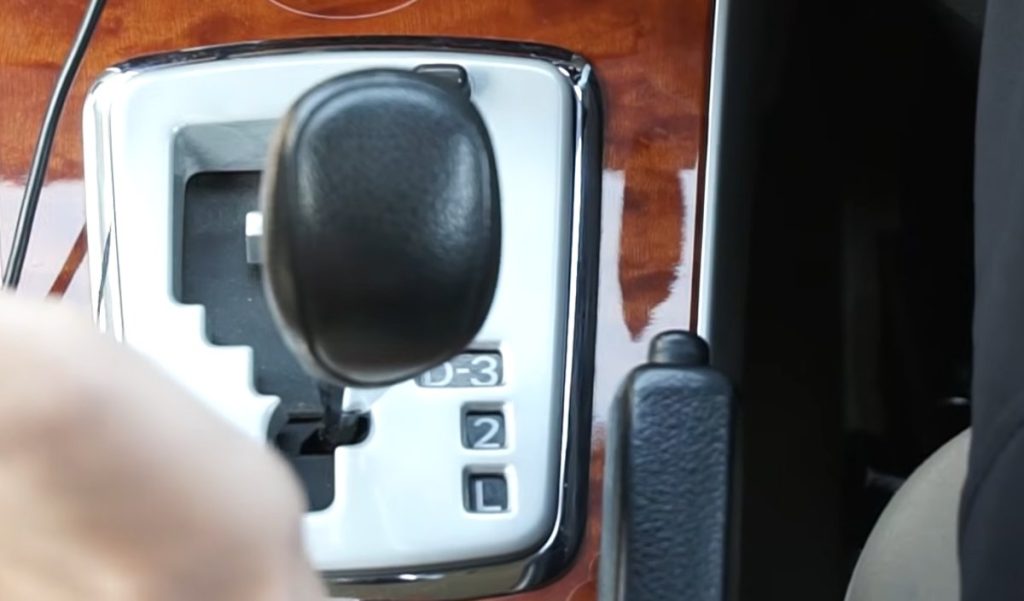
The “2” or “S2” setting on an automatic gear selector locks the transmission so it can shift between 1st and 2nd gear, but strictly prevents it from upshifting into 3rd gear or higher overdrive ratios. In traditional hydraulic and electronically controlled automatic transmissions, this setting restricts fluid flow inside the valve body, holding the second gear clutch pack engaged regardless of vehicle speed or accelerator position.
In older mechanical automatic vehicles, selecting 2 forces the vehicle to start in 1st gear and automatically upshift to 2nd as speed increases, holding 2nd gear continuously until the driver shifts back to Drive (D). In some modern electronic transmissions, selecting 2 locks the vehicle exclusively into 2nd gear even from a complete stop. By keeping the engine mechanically connected to the drive wheels at a lower gear ratio (typically between 1.4:1 and 2.0:1), 2nd gear trades high-end road speed for engine torque and mechanical resistance.
GEAR SELECTOR POSITIONS
When to Use 2nd Gear: Specific Driving Scenarios
1. Descending Steep Hills
You should shift into 2nd gear when descending mountain roads or hills with a slope gradient steeper than 6% to 8% for longer than a quarter-mile. Engaging 2nd gear forces the engine to spin faster (typically maintaining 3,000 to 4,500 RPM) against manifold vacuum resistance, creating an effect known as engine braking. This mechanical resistance holds the vehicle at a steady speed between 25 mph and 45 mph (40 to 70 km/h) without relying on the primary foot brakes.
Relying solely on conventional friction brakes during long downhill descents causes brake pads and rotors to reach temperatures exceeding 600°F (315°C). Extreme thermal stress boils brake fluid, glazed brake friction material, and causes complete brake fade, leaving the driver without stopping power. Engine braking in 2nd gear dissipates kinetic energy through the vehicle’s cooling system instead of friction materials, maintaining full brake responsiveness for emergencies.
2. Climbing Long, Steep Inclines
You should lock your automatic car into 2nd gear on sustained uphill grades whenever the transmission begins “hunting” rapidly shifting back and forth between 2nd, 3rd, and 4th gears. On steep highway climbs, an automatic transmission in Drive repeatedly upshifts to lower RPM for efficiency, loses momentum due to insufficient torque, downshifts to regain speed, and repeats the cycle indefinitely.
Transmission Gear Hunting Cycle:
Locking the gear selector in 2nd gear eliminates gear hunting by forcing the engine to stay above 3,500 RPM, placing gasoline engines directly inside their optimal peak power and torque band. Eliminating constant gear changes prevents excessive friction and heat generation within the transmission torque converter. Internal fluid temperatures above 220°F (104°C) break down transmission fluid properties and cause premature clutch pack failure; holding 2nd gear keeps fluid temperatures stable.
3. Heavy Towing and Hauling Up or Down Inclines
You should select 2nd gear when towing a trailer, boat, or heavy load approaching your vehicle’s maximum Gross Combined Weight Rating (GCWR) over hilly terrain at speeds under 35 mph (55 km/h). Heavy loads place massive strain on an automatic transmission’s fluid coupling, generating rapid thermal build-up when shifting under heavy throttle loads.
Holding 2nd gear keeps the engine coolant pump and engine fan spinning at higher speeds, maximizing thermal airflow through the radiator and transmission oil cooler. Simultaneously, the direct mechanical engagement of 2nd gear reduces internal clutch slippage inside the transmission valve body. This prevents transmission fluid degradation and protects critical internal components from thermal destruction.
4. Navigating Deep Snow, Sand, or Heavy Mud
You should select 2nd gear when driving through deep mud, loose gravel, soft sand, or heavy unplowed snow to maintain a slow, uninterrupted forward momentum under 20 mph (32 km/h). Driving through soft, yielding surfaces creates immense rolling resistance that requires continuous, predictable wheel torque to overcome.
If you leave the transmission in standard Drive (D) on soft surfaces, high wheel spin can trick the vehicle speed sensors into reading a higher speed than actual travel. The transmission computer responds by upshifting into 3rd or 4th gear, causing engine RPM to drop, torque output to collapse, and the vehicle to lose momentum and sink into the surface. Locking the shifter in 2nd gear provides constant wheel rotation without unexpected upshifts.
When Should You NOT Downshift to 2nd Gear?
You should never manually downshift to 2nd gear on glare ice, sheet ice, or wet black ice while traveling at speed. While traditional driving advice suggests downshifting to maintain engine braking control on slippery roads, doing so on smooth ice causes severe, sudden compression braking on the driven wheels.
ENGINE BRAKING VS. FOOT BRAKING ON ICE
When you downshift to 2nd gear on ice, engine braking abruptly slows only the drive wheels (front wheels on FWD, rear wheels on RWD) while the non-driven wheels roll freely. This abrupt difference in wheel speed breaks the minimal coefficient of friction between the tires and the ice, inducing an immediate skid or spin. On pure ice, keep the transmission in Drive, ease off the accelerator pedal completely, and allow your Anti-lock Braking System (ABS) to manage stopping forces equally across all four wheels.
Can You Start an Automatic Car in 2nd Gear on Slippery Roads?
Yes, starting an automatic vehicle in 2nd gear from a complete stop is a proven driving technique to prevent wheel spin on slick surfaces, provided your transmission electronics permit it. Selecting 2nd gear from a standstill reduces the initial mechanical advantage delivered to the drive wheels compared to 1st gear.
Lower overall gear torque lowers the torque applied to the contact patch of the tire, preventing the tires from breaking traction on wet pavement, packed snow, or glare ice. Modern cars equipped with electronic gear selectors, “Winter Mode” toggle switches, or manual paddle shifters often allow drivers to select 2nd gear while stationary for this purpose. Older mechanical automatics typically default to 1st gear first even when “2” is selected, making them incapable of 2nd-gear stationary launches.
STATIONARY LAUNCH COMPARISON (1ST VS 2ND GEAR)
Can You Shift from Drive (D) to 2 Gear While Moving?
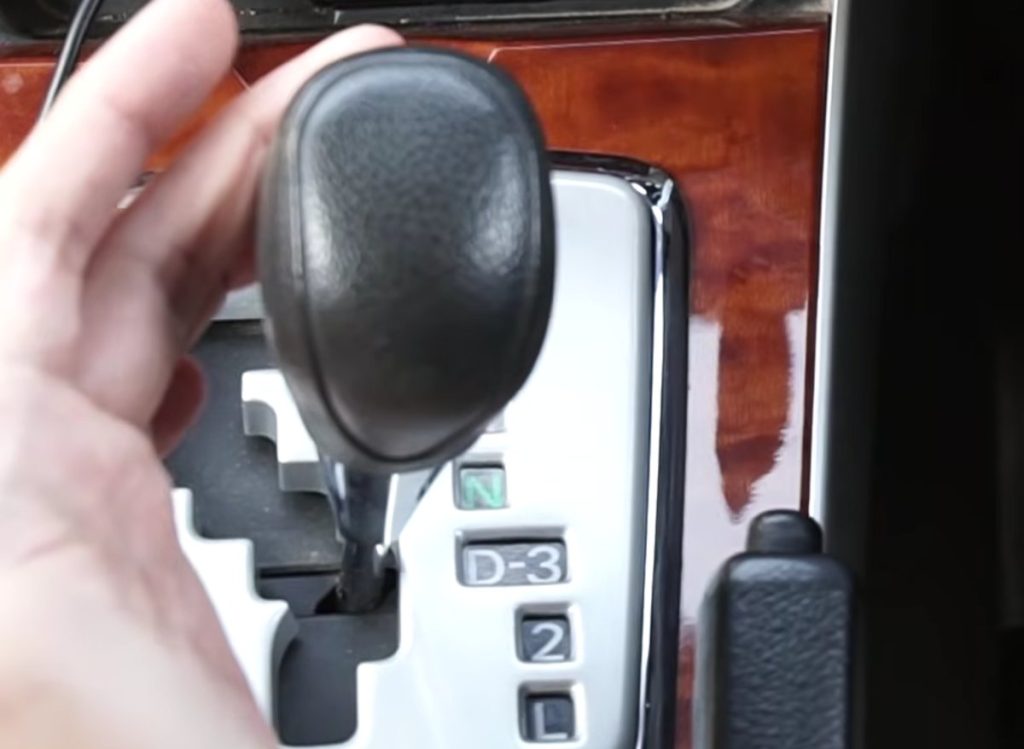
Yes, you can safely shift your automatic transmission gear selector from Drive (D) to 2 while the vehicle is moving forward without pressing the brake pedal or stopping the car. Modern vehicles manufactured after 2000 feature computerized Engine Control Units (ECU) and Transmission Control Units (TCU) that enforce automatic rev-matching and speed safeguards.
If you pull the gear selector into 2 while driving at 65 mph (105 km/h) on the highway, the TCU will recognize that engaging 2nd gear at that velocity would force the engine beyond its maximum allowable mechanical RPM redline. The transmission will hold the vehicle in its current safe gear until you apply the foot brake and road speed drops below approximately 40 to 45 mph (65 to 72 km/h). Once vehicle speed falls within safe parameters, the computer smoothly executes the downshift into 2nd gear.
What Is the Maximum Speed for Driving in 2nd Gear?
The maximum speed for driving in 2nd gear in most standard passenger cars, crossovers, and light trucks is between 50 mph and 60 mph (80 to 95 km/h). At this speed range, the engine reaches its maximum allowable mechanical limit, commonly known as the engine “redline” (typically 6,000 to 6,500 RPM for gasoline engines).
Engine Speed Spectrum in 2nd Gear:
While 60 mph represents the absolute mechanical limit before electronic rev limiters cut fuel flow, you should not travel at sustained speeds above 40 mph (65 km/h) while manually holding a car in 2nd gear. Running an engine continuously at high RPMs increases engine coolant temperatures, accelerates mechanical friction wear, and wastes fuel. Once you complete a mountain climb, clear a snow hazard, or finish a steep downhill descent, return the gear selector to Drive (D).
How Does 2nd Gear Differ from 1 (Low) and 3 (D3)?
The fundamental difference between 1 (Low), 2, and 3 (D3) on an automatic gear selector lies in the maximum gear ratio the transmission is permitted to select. Each numerical setting establishes an upper ceiling on upshifting while preserving lower gear access.
AUTOMATIC TRANSMISSION SELECTOR COMPARISON
(0 – 40 km/h)
(32 – 72 km/h)
(56 – 88 km/h)
How Do Modern Cars Replace the “2” Setting?
Modern vehicles replace physical “2” gear lever gates with electronic control interfaces, such as Sport Mode (S), Manual Mode (M), steering-column paddle shifters, or “Low” (L) buttons. Although the physical gear shift lever with “P-R-N-D-3-2-1” markings has largely been phased out, the underlying hydraulic and electronic control principles remain identical.
- Manual/Sport Mode (M/S): Moving the shifter into “M” or “S” allows the driver to select and lock 2nd gear manually by pushing the lever toward (+) or (-), or by clicking the left steering wheel paddle shifter once or twice.
- Continuously Variable Transmissions (CVTs): CVTs use pulleys instead of fixed metal gears. When a CVT vehicle features an “L” or “S” mode, the electronic control unit locks the pulley ratio to simulate a fixed 2nd gear ratio, providing engine braking on mountain descents.
- Grade Assist / Hill Descent Control: Many modern automatic crossovers feature software that automatically detects vehicle pitch on downhill runs. The computer downshifts to 2nd gear equivalent automatically when you tap the foot brake on a steep decline.
How Does Driving in 2nd Gear Impact Fuel Economy?
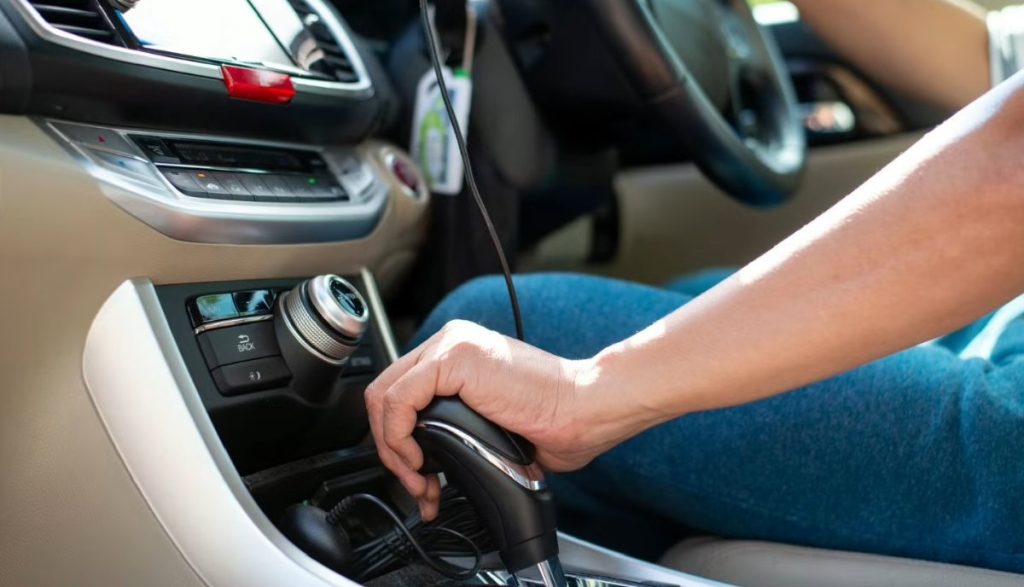
Driving continuously in 2nd gear dramatically reduces fuel economy, burning between 30% and 50% more gasoline per mile compared to driving in standard Drive (D). Cruising at 35 mph in 2nd gear forces the engine to spin at roughly 3,500 to 4,000 RPM, whereas cruising at 35 mph in Drive allows the transmission to select 4th or 5th gear, lowering engine speed to 1,500 RPM.
Higher engine RPM requires the fuel injection system to fire twice as frequently per minute, drawing significantly more air and fuel into the combustion chambers. You should treat 2nd gear strictly as a functional tool for obstacle management, mountain safety, and heavy towing. As soon as road conditions normalize, shift back to Drive to resume standard fuel efficiency.
What Happens if You Accidentally Drive in 2nd Gear on the Highway?
If you accidentally leave your gear selector locked in 2nd gear and drive onto a high-speed highway, the engine will quickly rev up to its redline limit, the exhaust noise will become loud, and the vehicle will resist accelerating past 50 to 60 mph.
Modern Engine Control Units prevent immediate engine destruction by engaging a soft fuel-cutoff rev limiter when the RPM hits the redline boundary (usually 6,200+ RPM). The car will jerk or stall its acceleration, signaling that the engine has reached its electronic limit. While modern safety cutoffs prevent immediate mechanical failure, driving for extended periods at redline in 2nd gear creates extreme heat, risks thermal breakdown of engine oil, and causes severe engine wear. If this occurs, release the accelerator pedal and pull the shifter back into Drive (D).
The Bottom Line
Locking your automatic transmission into 2nd gear is a vital safety technique designed for steep mountain driving, towing heavy loads, and navigating soft terrain under 45 mph. It forces engine braking on steep downhill descents to prevent catastrophic brake overheating, while stopping gear hunting on steep uphill climbs to protect your transmission fluid from extreme heat. Never downshift to 2nd gear on glare ice, and always return the gear selector to Drive once normal road conditions resume.


