How a Touchless Car Wash Works: Steps and Limits
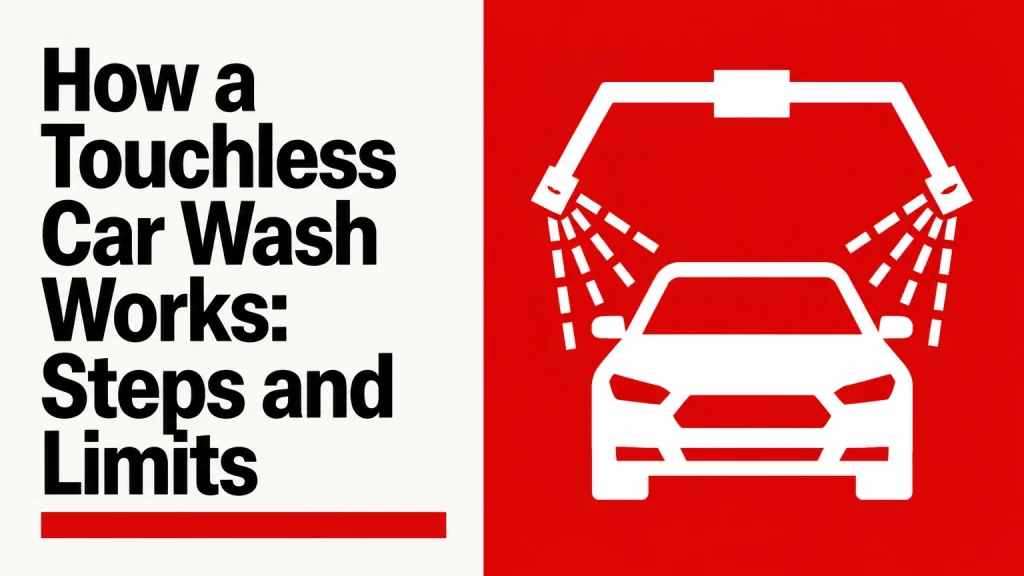
A touchless car wash cleans a vehicle without brushes, cloth strips, or foam friction media. The system applies detergents to loosen organic and mineral soil, uses high-pressure water to carry that soil away, then finishes with filtered rinse water and forced air. Cleaning quality depends on chemical concentration, dwell time, nozzle position, water volume, and […]
How Spot-Free Rinse Works: TDS, RO, DI, and Drying

A spot-free rinse uses water with very few dissolved minerals, usually produced by reverse osmosis, deionization, or both. When that water dries on a vehicle, it leaves little inorganic residue behind, so calcium, magnesium, and silica cannot form the visible rings associated with ordinary tap-water droplets. Key Facts at a Glance Spot-free water prevents mineral […]
Automatic Car Wash vs Hand Wash: Which Protects Paint?
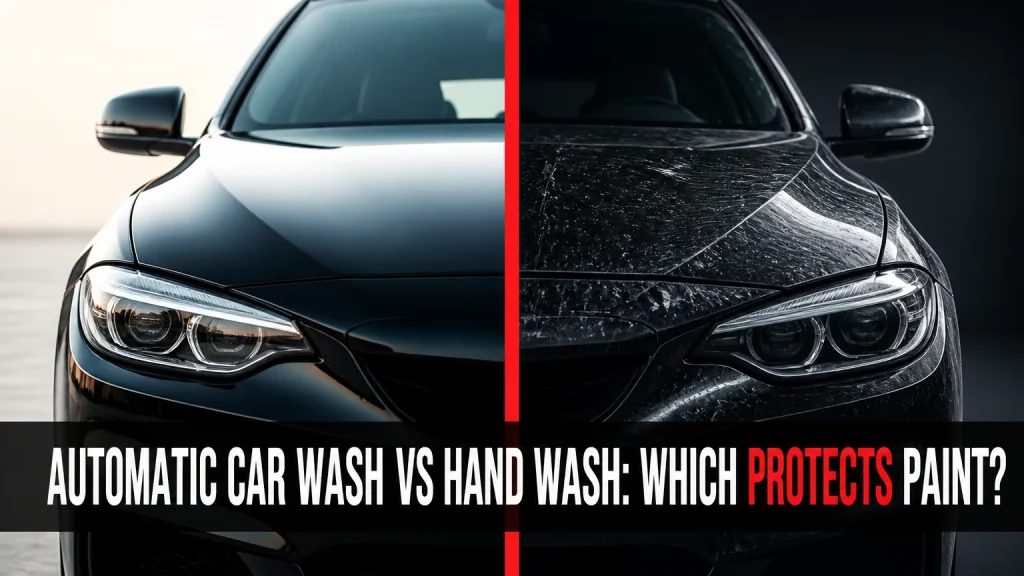
Automatic car wash systems prioritize speed and predictable cost, while hand washing provides greater control over dirt removal and contact with painted surfaces. For the lowest paint-marring risk, choose a careful two-bucket or professional hand wash; for convenience, use a modern touchless wash, especially when the vehicle is moderately dirty. Key Facts at a Glance […]
Brush Car Wash vs Touchless Car Wash: Paint or Clean?
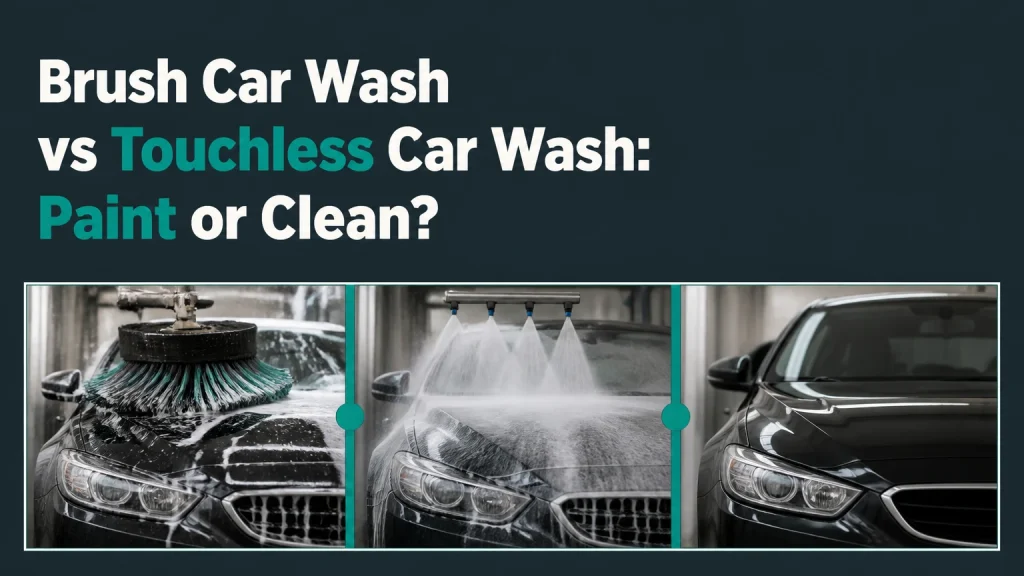
A brush car wash cleans with lubricated physical contact, while a touchless car wash uses detergents and high-pressure water without touching the vehicle. Touchless is usually safer for delicate paint, ceramic coatings, loose trim, and paint protection film, but a well-maintained soft-touch wash removes bonded road film and heavy grime more effectively. Key Facts at […]
Touchless Car Wash vs Automatic Car Wash: Which Wins?
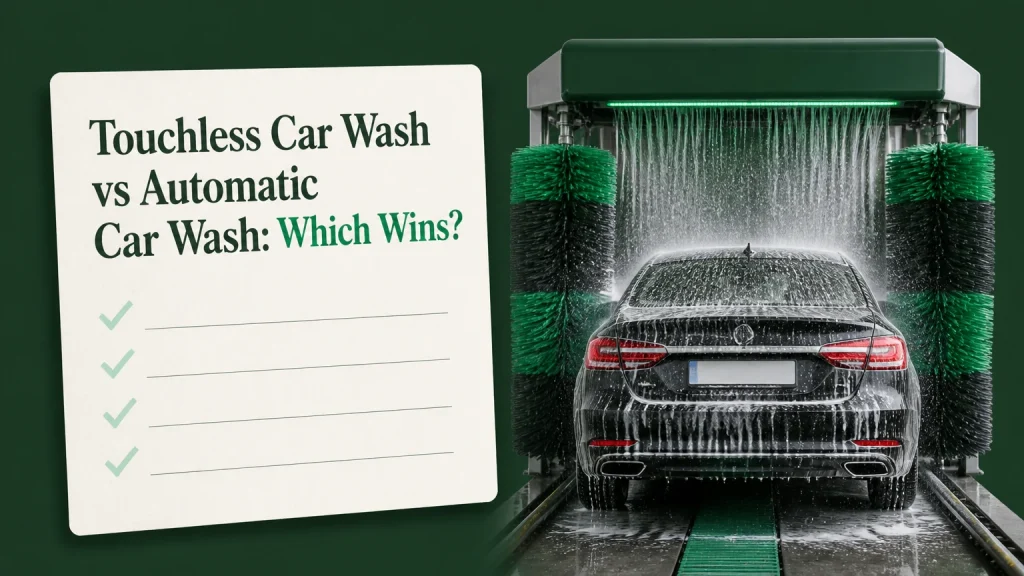
A touchless car wash is usually safer for paint because high-pressure water and chemicals clean without physical contact, while an automatic soft-touch wash removes more bonded grime through foam or cloth agitation. Choose touchless for delicate finishes and routine dust; choose soft-touch for heavy road film when superior soil removal matters more than minimizing swirl […]
How to Remove Road Salt From Undercarriage Safely
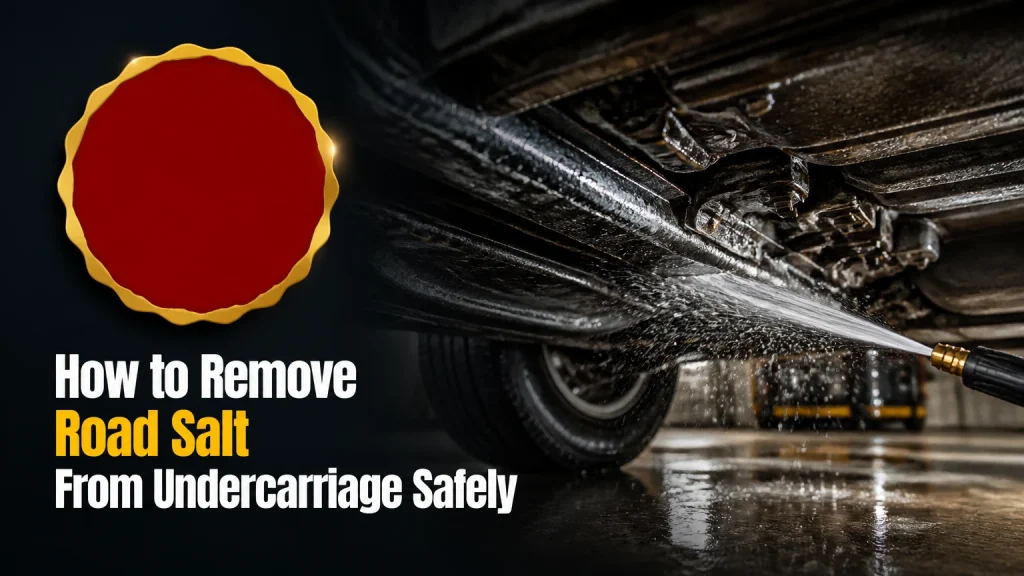
Road salt is removed from an undercarriage by flushing exposed surfaces with abundant fresh water, using a low-angle underbody wand to reach frames, wheel wells, shields, and suspension parts. For oily, compacted residue, apply a vehicle-safe salt remover, allow the labeled dwell time, rinse completely, then dry and inspect the vehicle. The complete process usually […]
How Long Does a Car Wash Take? Timing by Wash Type
A car wash usually takes 2-7 minutes for an automatic machine, 10-20 minutes at a self-serve bay, or 20-45 minutes for a professional hand wash. A mobile wash commonly takes 45-90 minutes, while a full interior and exterior detail takes 2-5 hours. Queue length, vehicle size, and contamination determine total visit time. Key Facts at […]
Soft Cloth Car Wash vs Touchless Car Wash: Which Wins?
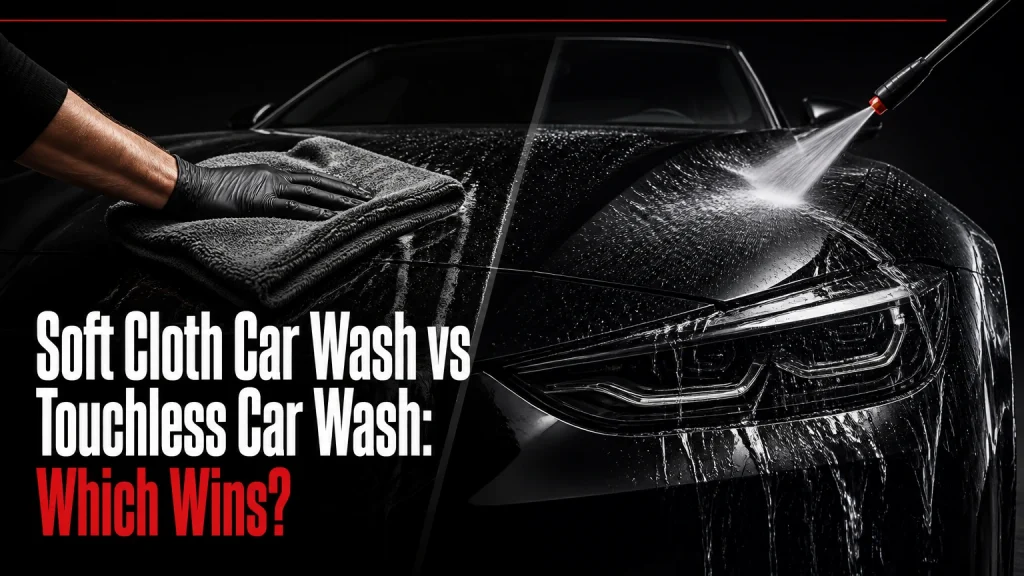
A soft cloth car wash usually removes bonded dirt more thoroughly, while a touchless car wash better protects paint from contact-induced marring. The best choice depends on contamination, paint condition, exterior modifications, and wash frequency: choose touchless for sensitive finishes and soft cloth for vehicles that need stronger physical cleaning. Key facts at a glance […]
Express Car Wash vs Full-Service Car Wash: Choose Well
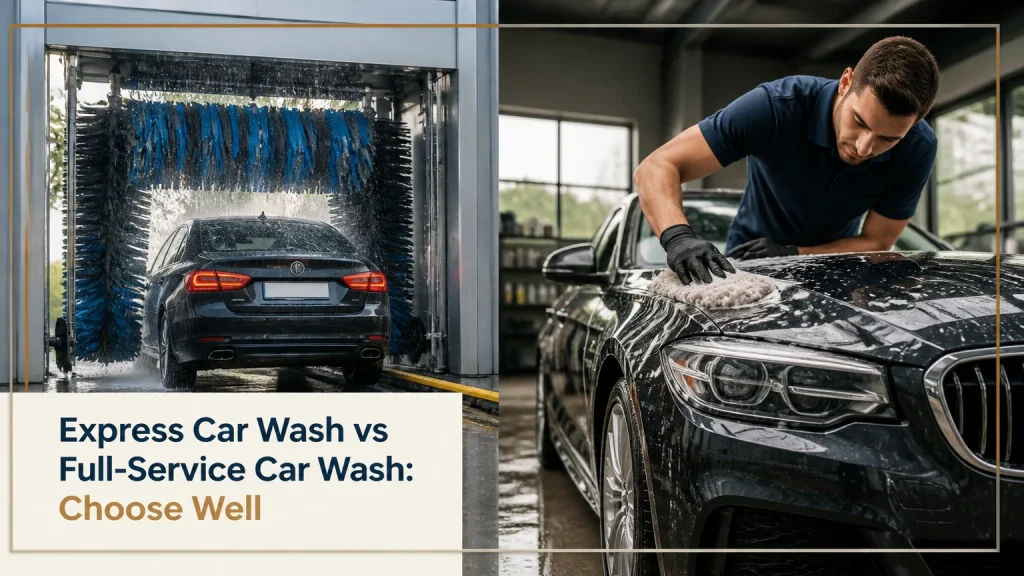
An express car wash is usually the better choice for fast, affordable exterior maintenance, while a full-service car wash is better when the cabin needs professional cleaning and the driver wants minimal effort. Choose based on the vehicle’s condition, available time, paint sensitivity, interior mess, and how often you will pay for service. Key Facts […]
How Often to Wash Car Undercarriage: A Safe Schedule
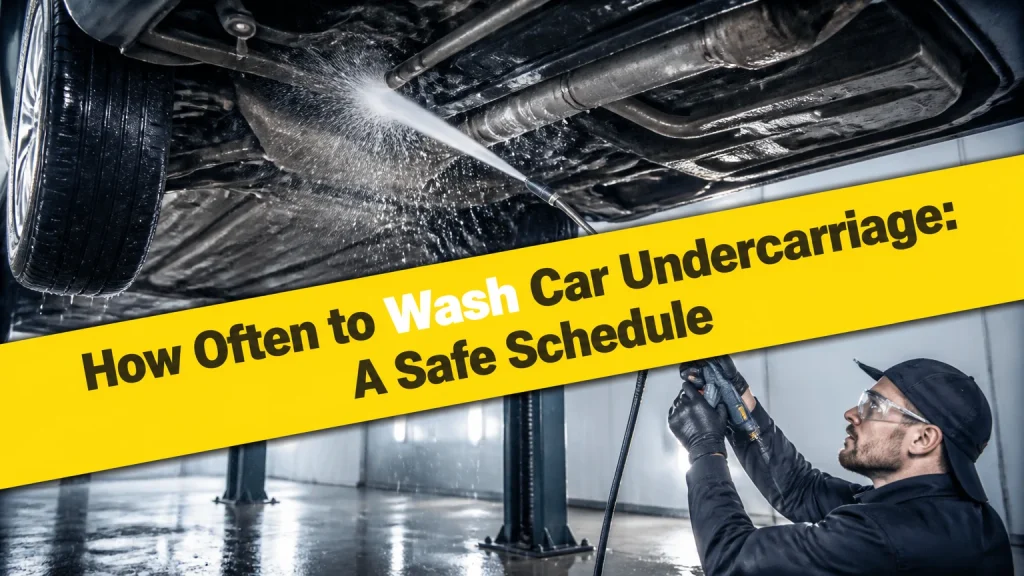
Most drivers should wash the car undercarriage once or twice yearly, ideally after winter and after heavily muddy or salty seasons. Drivers exposed to road salt should rinse the underside after major salting events and roughly every 1-2 weeks during active winter conditions; off-road and beach use requires cleaning within 24 hours. Key Facts at […]