How to Protect Wheels From Brake Dust: A Practical Guide
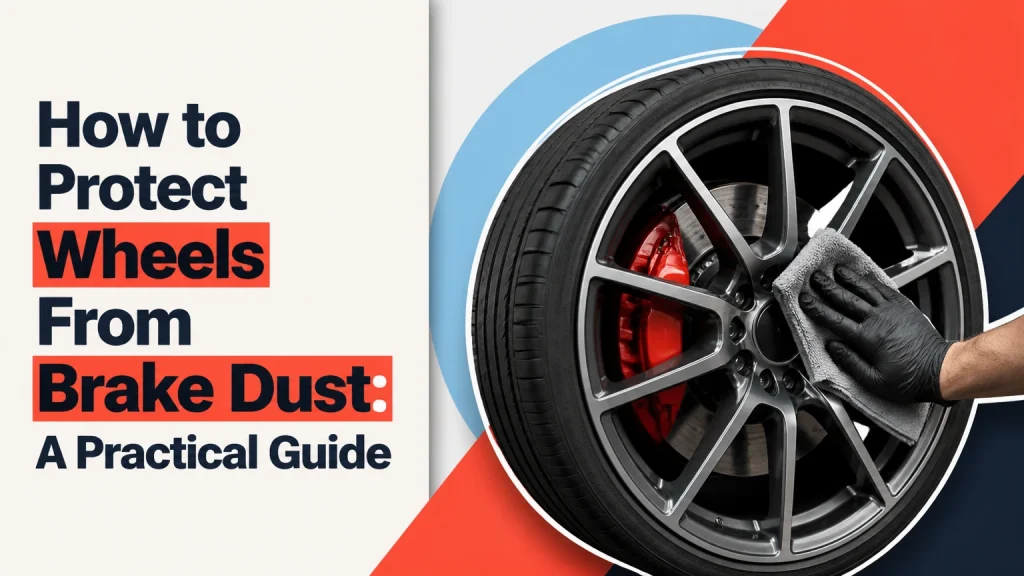
To protect wheels from brake dust, first remove bonded iron and road film from cool wheels, then apply a wheel-safe sealant, wax, or ceramic coating to the clean finish. Wash protected wheels every 1-2 weeks with pH-neutral soap, avoid abrasive or highly acidic cleaners, and renew the barrier when water no longer sheets or beads […]
What Does Brake Dust Look Like?
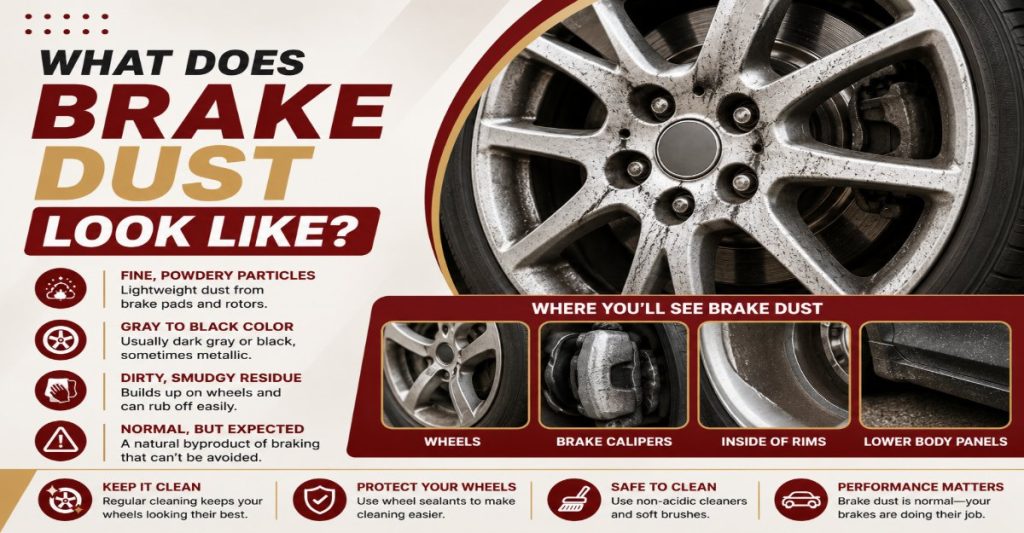
Brake dust typically looks like a dull, fine, dark grey or matte black powdery residue coating a vehicle’s wheels. When exposed to rain or moisture, it transforms into a sticky, dark brown or black sludge. Over time, high heat from braking can cause these metallic particles to burn directly into the wheel clear coat. At […]
How to Clean Brake Dust Off Wheels Safely
To clean brake dust off wheels, work on cool wheels in the shade, rinse away loose grit, apply a wheel-safe iron remover, agitate with soft dedicated brushes, rinse completely, and dry before adding protection. A typical four-wheel job takes 25-40 minutes, and the wheel finish determines which chemicals are safe. Key Facts at a Glance […]
Does Low Transmission Fluid Cause Check Engine Light?
Yes, low transmission fluid can cause the Check Engine Light (CEL) to illuminate on modern vehicles. When transmission fluid drops below its minimum operating threshold, hydraulic pressure degrades, causing internal clutch slippage, excessive friction, and rapid thermal accumulation. The Transmission Control Module (TCM) detects these parameter anomalies via speed and pressure sensors, logs Diagnostic Trouble […]
How to Clean Chrome Wheels for a Lasting Mirror Finish
Chrome wheels can be cleaned safely in about 30 minutes using cool water, a pH-neutral wheel cleaner, soft dedicated brushes, and immediate drying. Rinse loose grit first, clean the barrel before the face, avoid harsh acids and abrasive tools, then apply chrome polish only when oxidation or light surface rust remains. Key Facts Chrome wheels […]
How to Check Brake Rotors
Checking your brake rotors requires measuring minimum thickness, disc thickness variation, and lateral runout using precision measuring tools. By performing this 6-step inspection process, you will determine whether your brake discs require resurfacing or replacement within 45 minutes per wheel. Completing this task requires basic mechanical skills, a digital micrometer, and a dial indicator to […]
How Often to Clean Engine Bay: A Safe Care Schedule
Clean a typical engine bay every 6-12 months, but shorten the interval to every 3 months in road salt, coastal air, heavy dust, mud, or off-road conditions. Clean sooner after an oil or coolant leak, rodent nesting, or mud accumulation. Light visual inspections every 1-2 months matter more than following a rigid calendar. Key Facts […]
How to Check Your Brake Pads: Step-by-Step Inspection Guide
Checking your brake pads involves inspecting the friction material thickness on both sides of the brake rotor to ensure your vehicle stops safely. By following an eight-step process using basic hand tools, you can accurately measure pad wear in approximately 30 to 45 minutes. The critical factor for success is measuring only the friction material […]
Tire Shine vs Tire Dressing: The Safer Choice
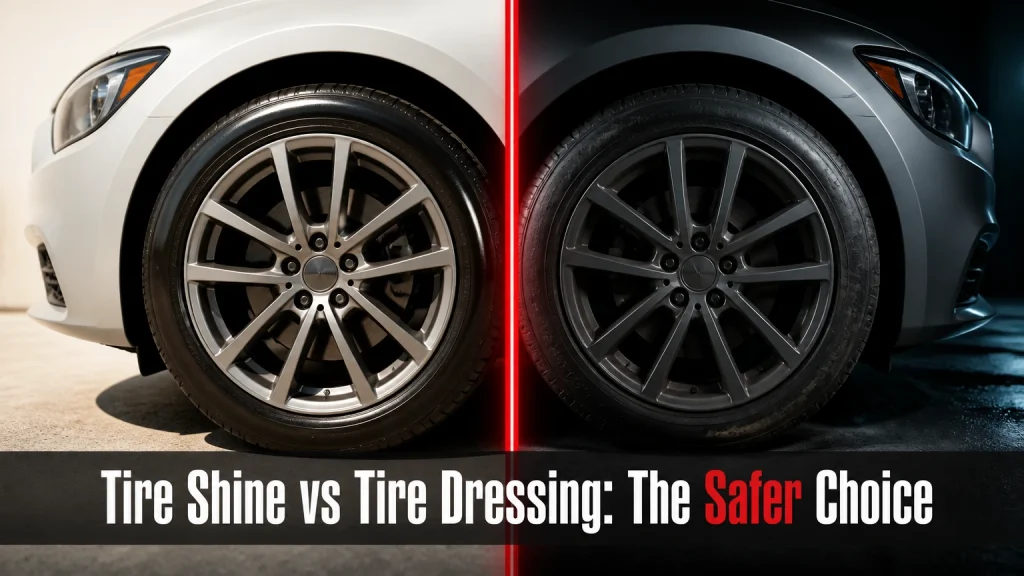
Tire shine and tire dressing usually describe the same broad product category, but their priorities differ: tire shine typically emphasizes visible gloss, while tire dressing emphasizes controlled appearance, surface protection, or longer-lasting finish. The formula, not the name, determines whether a product is water-based, solvent-based, or a dedicated tire coating. Key Facts at a Glance […]
How to Bleed Brakes After Changing Pads: The Complete Step-by-Step Guide
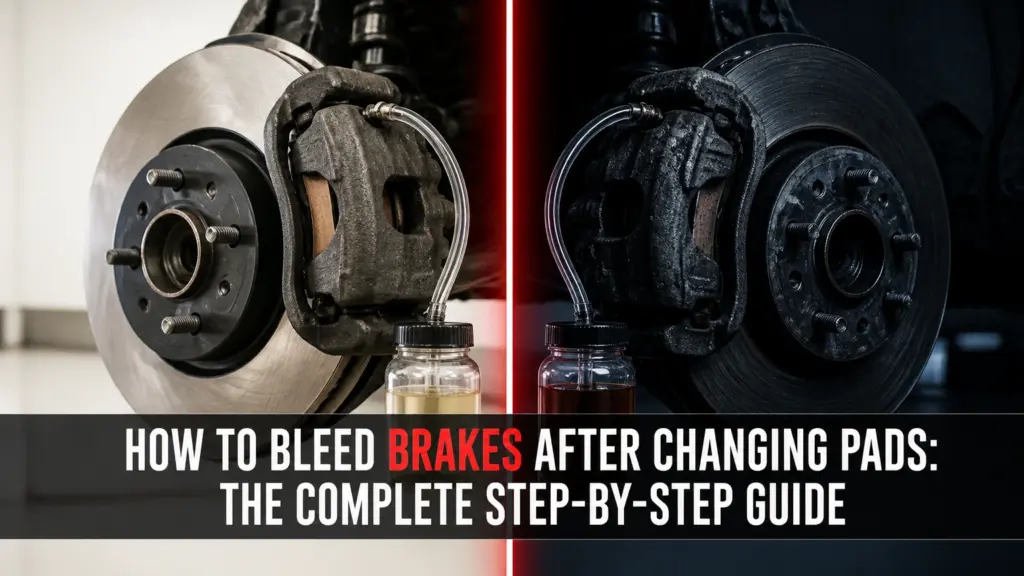
Learning how to bleed brakes after changing pads restores firm hydraulic pressure to your brake pedal and purges trapped air bubbles out of your vehicle’s braking lines. Bleeding your brake system involves a simple 6-step procedure: lifting the vehicle, preparing the master cylinder, attaching a catch tube, executing a fluid exchange sequence, topping off fluid […]